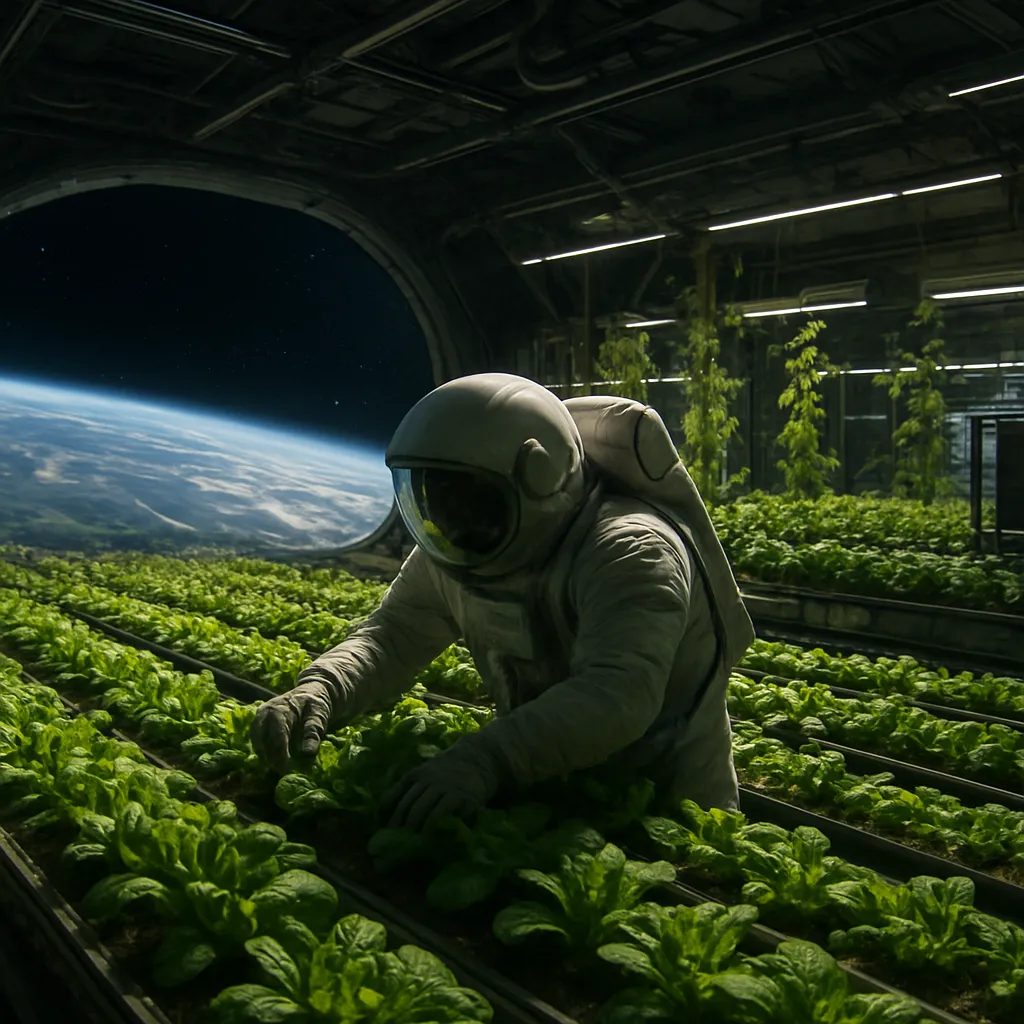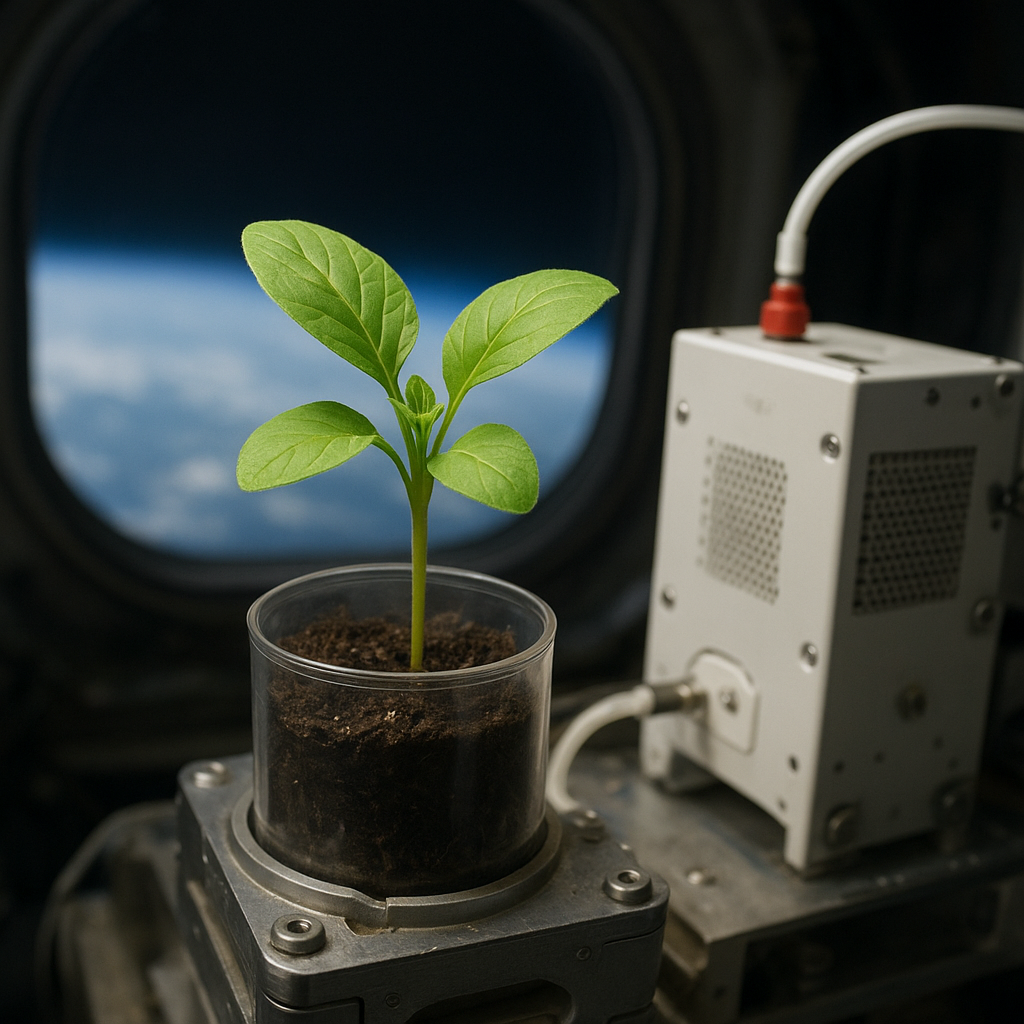
The pursuit of cultivating plants beyond Earth’s surface has emerged as a cornerstone in the quest for long-term human habitation in space. Integrating botanical research within extraterrestrial settings not only provides critical life support through oxygen generation and food production but also unlocks profound insights into fundamental biological processes. Investigations conducted aboard orbital platforms and simulated microgravity environments have revealed transformative changes in physiological, molecular, and developmental pathways. This article delves into the most pivotal findings in plant science under reduced gravitational forces, exploring their implications for future exploration and Earth-bound agriculture.
Background and Rationale
Recent decades have witnessed an unprecedented expansion of missions dedicated to understanding how plants respond to the absence of a consistent gravitational vector. Traditional Earth-based agriculture relies on gravity to guide root orientation, fluid distribution, and mechanical support. In contrast, spaceflight experiments confront plants with a near-zero gravitational pull, making them ideal models for dissecting gravity-dependent signaling networks. Insights gleaned from these studies are instrumental in designing reliable life support systems, advancing sustainability in closed-loop ecosystems, and engineering crops capable of thriving in harsh or non-terrestrial soils. Furthermore, the translation of microgravity research into novel agritech solutions holds promise for enhancing agricultural resilience against climate change on Earth.
Alterations in Growth Patterns and Morphogenesis
Microgravity exerts profound effects on plant morphology. Seedlings grown aboard the International Space Station (ISS) frequently exhibit altered stem elongation rates, leaf orientation, and overall architecture. Key observations include:
- Enhanced stem elongation in some species due to modulated cell wall composition and turgor pressure.
- Reduced mechanical stress leading to thinner cuticles and modified lignin deposition.
- Variations in phyllotaxy, resulting in atypical leaf arrangements that may impact light interception.
These morphological shifts underscore how plants integrate environmental cues into developmental programs. Disentangling the molecular underpinnings has revealed that genes associated with cell expansion, such as expansins, and those controlling cytoskeletal dynamics exhibit differential expression profiles in space. Such findings not only inform genetic engineering strategies for robust crop varieties but also deepen our understanding of fundamental morphogenetic regulation.
Photosynthetic Efficiency and Resource Allocation
Photosynthesis, the biochemical engine driving biomass accumulation, is sensitive to changes in fluid dynamics and light distribution. In microgravity, convection-driven gas exchange around leaf surfaces is diminished, resulting in localized fluctuations in CO2 and O2 concentrations. Experimental data indicate:
- Altered stomatal density and aperture regulation, potentially as an adaptive response to modified gas diffusion.
- Shifts in chloroplast positioning within mesophyll cells, which can influence light capture efficiency.
- Changes in resource allocation between shoot and root systems, mediated by hormonal cross-talk involving auxin and cytokinin.
Advanced spectroscopic analyses of space-grown plants have revealed that net photosynthetic rates can either decline or remain comparable to ground controls, depending on experimental design. Understanding these nuances is critical for the development of optimized lighting strategies and nutrient delivery in spacecraft-based horticultural modules. Simultaneously, such research sheds light on how radiation and microgravity synergistically affect photosynthetic apparatus stability and repair mechanisms.
Root Development and Tropic Responses
Roots serve as the primary interface for water and nutrient uptake, and their behavior in microgravity offers unique perspectives on gravitropism. Without a consistent downward cue, roots often grow in random trajectories, guided instead by subtle environmental gradients such as moisture and chemical signals. Key discoveries include:
- Identification of statolith-independent gravity-sensing pathways, involving mechanosensitive ion channels and cytoskeletal elements.
- Observation of hydrotropic responses intensified in the absence of gravitropic dominance, leading roots to actively seek moisture zones.
- Evidence of altered root hair morphology, potentially improving surface area for nutrient absorption under constrained conditions.
These findings open avenues for harnessing or manipulating tropism pathways to engineer root systems capable of thriving in non-traditional substrates, such as lunar regolith or Martian regolith simulants. Moreover, unraveling gravity perception at the cellular level informs broader studies in mechanobiology and adaptive growth.
Technological Innovations and Future Prospects
Efficient space agriculture relies on cutting-edge technologies that mitigate the challenges posed by microgravity. Breakthroughs include:
- Hydroponics and aeroponics systems optimized for fluid management without reliance on gravity-driven flow.
- Automated monitoring platforms equipped with sensors tracking nutrient composition, pH, and humidity in real-time.
- 3D-printed growth chambers tailored to modulate light spectra and intensity to maximize photosynthetic yields.
Artificial intelligence and machine learning frameworks are increasingly being integrated into growth systems to enable predictive adjustments, ensuring optimal conditions for plant health. Such automation not only conserves scarce resources but also reduces crew time devoted to horticultural tasks, allowing astronauts to focus on exploration objectives. Looking ahead, synbio approaches aim to introduce novel metabolic pathways into plant hosts, bolstering stress resilience against cosmic rays and extreme temperatures. The harmonization of biological insights with engineering innovations promises to propel space farming from experimental modules to robust agricultural ecosystems, forging pathways for humanity’s interplanetary expansion and enhancing food security on Earth.