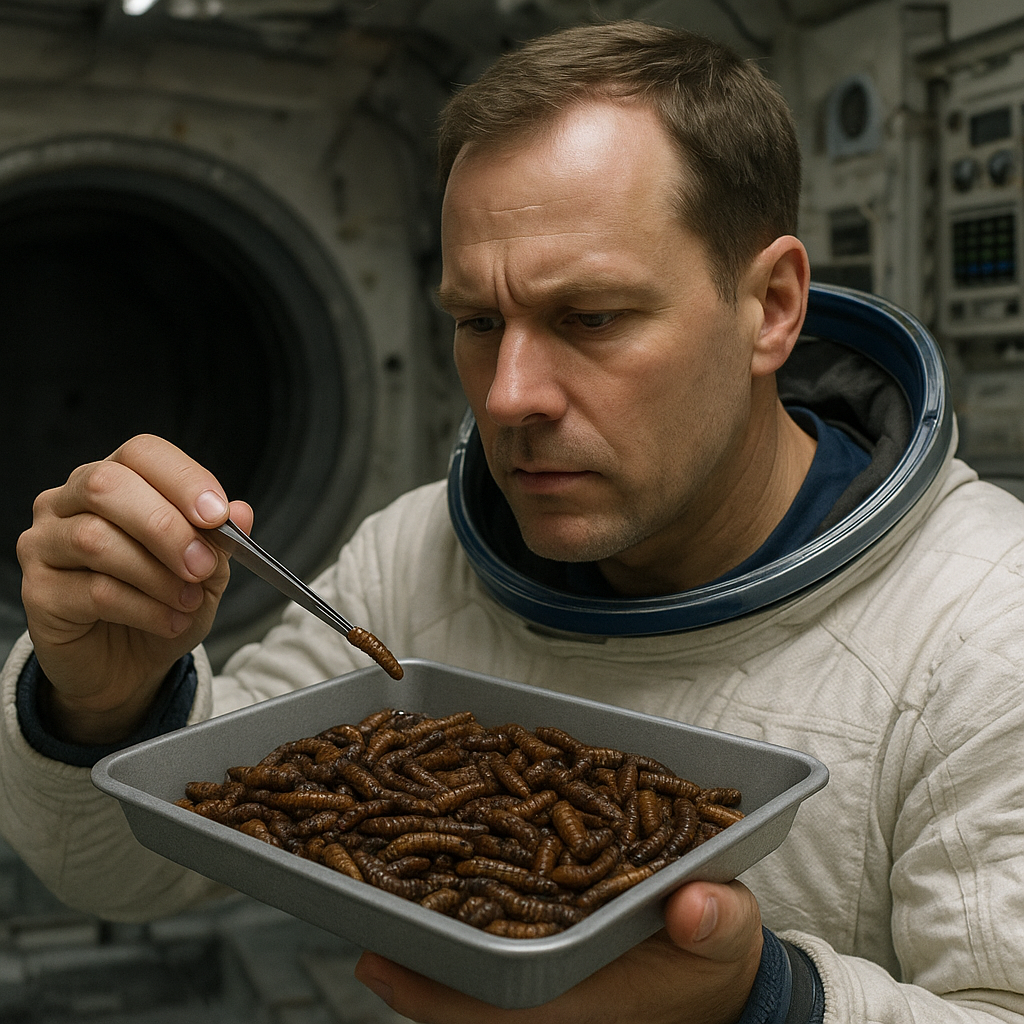
The prospect of rearing insects for food on long-duration space missions and extraterrestrial colonies is gaining momentum among researchers focused on agriculture in space. Insects offer a compact, high-yield source of protein and other essential nutrients, potentially transforming how astronauts meet their dietary needs beyond Earth. This article delves into the scientific, engineering, and operational aspects of insect-based farming under microgravity and controlled-environment conditions, evaluating its **sustainability**, **efficiency**, and potential to support future space outposts.
Exploring Insect-Based Protein Systems in Microgravity
Developing a robust insect rearing system for space requires deep understanding of how **microgravity** and closed-loop habitat conditions affect insect physiology, growth rates, and reproduction cycles. Researchers have begun to adapt terrestrial insect farm designs to small-scale bioreactors that fit within spacecraft modules or lunar habitats. These systems must maintain precise control over temperature, humidity, and atmospheric composition, while ensuring minimal water and nutrient loss.
Microgravity Effects on Insect Development
- Altered molting patterns and exoskeleton formation under reduced gravitational forces
- Changes in feeding behavior and locomotion in flight or fluid environments
- Impact on microbiome interactions that assist digestion and nutrient absorption
Initial experiments on parabolic flights and the International Space Station (ISS) have observed that certain insect species, such as Tenebrio molitor (mealworms) and Hermetia illucens (black soldier fly larvae), retain high growth efficiency, though adjustments to diet formulation and waste management protocols are necessary.
Nutrient Delivery and Waste Recycling
Insect farms in space can contribute to overall **resource** recycling strategies. Organic wastes from plant cultivation and food preparation can serve as feed substrate, while insect frass (excrement) can be processed into fertilizer for hydroponic systems. This creates a **closed-loop** ecosystem where:
- Plant residues feed the insects.
- Insects convert residues into protein-rich biomass.
- Insect frass replenishes nutrient solutions for crops.
Optimizing this cycle reduces the need for resupply missions and maximizes **resilience** against unexpected resource shortages.
Biological and Nutritional Benefits of Insects
Insects represent a **multifaceted** nutritional profile, with many species rich in amino acids, lipids, vitamins, and minerals. They also possess a favorable feed conversion ratio compared to traditional livestock, meaning less feed is required to produce the same amount of edible protein.
Key Nutritional Advantages
- High protein content (up to 70% dry weight in some larvae)
- Essential fatty acids, including omega-3 and omega-6 precursors
- Micronutrients such as iron, zinc, calcium, and B vitamins
- Bioactive peptides with potential immune-modulatory effects
Moreover, developing species-specific feed blends enriched with algae, bacterial biomass, or nutrient concentrates can further elevate the **nutritional** yield. For instance, supplementing insect diets with microalgae could enhance omega-3 fatty acid levels, essential for maintaining astronaut cardiovascular health.
Safety and Allergen Considerations
Ensuring food safety is paramount. Space-based insect farms must implement sterilization steps and microbial monitoring to prevent contamination by pathogens. Additionally, potential allergenic proteins require thorough characterization and possible removal through processing methods such as heat treatment or enzymatic hydrolysis.
Designing Closed-Loop Insect Farms for Space Habitats
The engineering of compact, automated insect rearing modules is vital for integration within space station or lunar/Martian base architecture. Key design goals include minimized mass and volume, low power consumption, and automated control systems with **real-time** monitoring capabilities.
Modular Bioreactor Components
- Growth Chamber: Transparent or translucent walls for visual inspection and light delivery
- Climate-Control Unit: Precision regulation of temperature (20–30 °C) and humidity (60–80%)
- Feed Dispensing System: Automated distribution of powdered or pelletized substrates
- Waste Collection and Processing: Mechanisms to separate frass and dead biomass for recycling
- Sensor Suite: Cameras, humidity sensors, gas analyzers, and weight scales
Recent concepts also integrate 3D-printed habitat components tailored to the unique shape and waste flow requirements of insect rearing. These in-situ resource utilization (ISRU) approaches could leverage regolith-derived materials on the Moon or Mars for fabrication, reducing Earth launch mass.
Automation and AI Integration
Given the limited crew time and the critical need for reliability, insect farms must rely on advanced control algorithms and artificial intelligence. Machine vision can identify growth anomalies or disease outbreaks early, while predictive models optimize feeding schedules and environmental setpoints to maximize yield and **efficiency**.
Challenges and Future Research
Despite encouraging progress, several challenges remain before insect-based protein can become routine on long-duration missions or planetary surfaces.
Behavioral and Ecological Balance
- Ensuring mutual compatibility between insect species and other life support systems
- Preventing invasive growth or contamination across adjacent modules
- Managing escape scenarios in microgravity where insects could interfere with equipment
Long-Term Genetic Stability
Space radiation and altered environmental stresses may drive **genetic** changes. Continuous monitoring of insect genomes and phenotypes is essential to detect drift that could reduce productivity or introduce unwanted traits.
Regulatory and Ethical Considerations
International space agencies must establish guidelines on the use of live organisms in closed environments, balancing human health, planetary protection, and ecosystem integrity. Ethical frameworks will govern the treatment and disposal of insects as sentient or semi-sentient beings.
Next Steps in Research and Demonstration
- Scaled-up ISS experiments with multi-generational rearing cycles
- Field tests in analog habitats (Antarctic stations, desert outposts)
- Integration with plant growth modules to validate full closed-loop performance
- Development of in-situ manufacturing techniques for modular farm components
By addressing these scientific and technological obstacles, insect-based agriculture may become a **cornerstone** of life support systems for missions to Mars, lunar bases, and beyond, offering a scalable, sustainable, and resource-efficient protein source for human explorers.