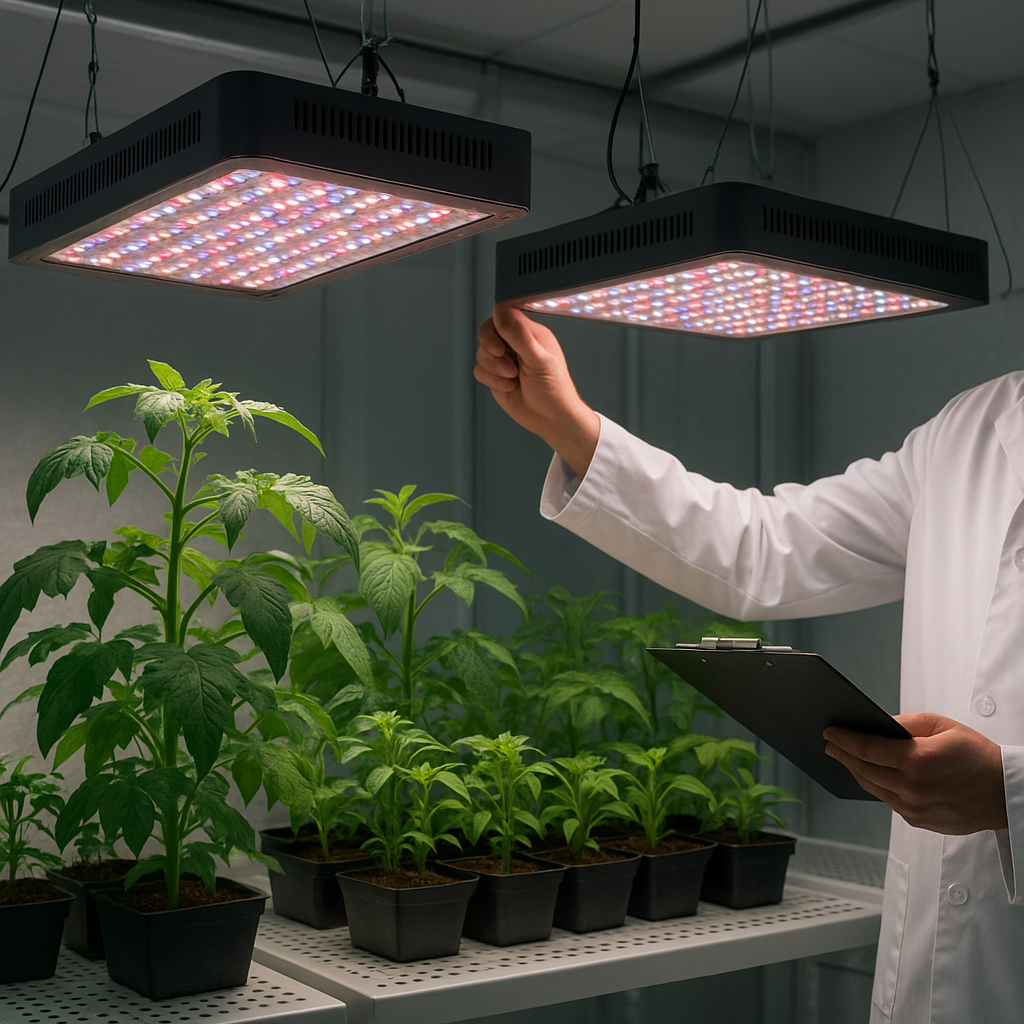
Designing lighting systems for cultivating plants beyond Earth presents unique challenges and opportunities. In closed habitats or orbital modules, reliance on natural sunlight is impractical, making artificial illumination a cornerstone of successful space agriculture. Engineers and biologists collaborate to balance energy consumption, plant physiology, and equipment mass, aiming to cultivate nutritious crops in environments where every watt and gram counts.
Light Spectra Optimization
Plants convert light into chemical energy through photosynthesis, a process highly sensitive to the wavelength composition of the light source. In terrestrial greenhouses, broad-spectrum sunlight covers the ideal range. In space, dedicated light-emitting diodes (LEDs) allow precise control over spectral output, maximizing growth while minimizing wasted energy.
Key Considerations:
- Spectral Quality: Blue (400–500 nm) promotes vegetative growth, while red (600–700 nm) drives flowering and fruiting. Far-red (>700 nm) and green wavelengths modulate canopy penetration and morphological responses.
- Photosynthetic Photon Flux Density (PPFD): Optimal PPFD varies by species; microgreens require 100–150 μmol·m−2·s−1, while fruiting plants may need 300–600 μmol·m−2·s−1. Balancing PPFD against power limits is crucial.
- Photoperiod Control: Simulating day–night cycles affects circadian rhythms, stress tolerance, and resource allocation. Programmable timers adjust light duration, intensity ramps, and spectral shifts to mimic sunrise and sunset conditions.
Spectral Blending Strategies
Advanced lighting arrays leverage configurable ratios of blue, red, far-red, and green LEDs. By dynamically adjusting spectral blends, researchers can steer plant architecture, increase leaf area, or accelerate flowering. Such optimization not only enhances yield but can tailor nutritional profiles, boosting antioxidant or vitamin content.
Engineering Hardware for Microgravity Environments
Operating in microgravity requires hardware designed to withstand launch stresses and function reliably without convective cooling. Thermal management, structural support, and modularity shape the development of lighting modules suitable for spaceflight.
Design Principles:
- Heat Dissipation: LEDs generate heat that, in the absence of gravity-driven airflow, must be conducted through heat pipes or radiation panels. Efficient thermal pathways preserve LED lifespan and prevent localized hot spots.
- Mass and Volume Constraints: Launch costs demand compact, lightweight lighting fixtures. Foldable panels, integrated harnessing for power and data, and use of aerospace-grade composites reduce mass while maintaining rigidity.
- Power Efficiency: Space habitats have limited energy budgets. High-efficiency LEDs (>2.7 μmol/J) paired with reflectors and light guides ensure most photons reach plant canopies.
Modularity and Maintenance
Modules with interchangeable LED boards and standardized connectors enable rapid replacement during missions. Fault-tolerant designs incorporate redundant drivers and real-time health monitoring, facilitating automation of diagnostics and minimizing crew intervention.
Integration with Life Support and Automation Systems
Lighting systems do not operate in isolation. They interface with climate control, nutrient delivery, and data networks to form an integrated plant growth chamber.
System Synergies:
- Environmental Sensors: Light intensity, spectral distribution, temperature, and humidity sensors feed data to control algorithms, adjusting lamp output to maintain optimal growth conditions.
- Hydroponic and Aeroponic Platforms: Water and nutrient flow rates can be synchronized with photoperiod schedules to align water uptake with peak photosynthetic activity, improving hydroponics efficiency and reducing resource waste.
- Data Analytics: Machine learning models predict plant responses to varying light recipes, enabling continuous refinement. Telemetry links allow Earth-based teams to monitor and tweak settings remotely.
Automation and Crew Workload Reduction
By automating routine tasks—lamp calibration, cleaning, and spectral tuning—crew members can focus on research and mission-critical operations. Automated shutters and diffusers adjust light distribution based on canopy expansion, maintaining uniform irradiance without manual repositioning.
Materials and Durability in Extraterrestrial Conditions
Radiation, temperature extremes, and vacuum cycles in deep-space or lunar habitats challenge material selection. Polymeric optics, adhesives, and semiconductor encapsulants must resist degradation under constant cosmic ray exposure.
Material Selection Criteria:
- Radiation Hardness: LED chips and driver electronics require shielding or radiation-tolerant components to maintain performance over multi-year missions.
- Outgassing Prevention: Components must meet stringent outgassing standards to preserve air quality in closed environments, preventing contamination of optical lenses or plant tissues.
- Longevity and Maintenance Intervals: High-reliability parts with mean time between failures (MTBF) exceeding mission durations minimize the need for spare shipments from Earth.
Future Directions in Space Crop Illumination
As missions extend to Mars, lighting systems must evolve. Concepts include:
- Bioluminescent Symbionts: Genetically engineered microorganisms producing light from metabolic processes could supplement LEDs, reducing energy demands.
- Dynamic Light Sculpting: Microelectromechanical systems (MEMS) mirrors directing photons only where needed, further improving efficiency.
- Integration with 3D-Printed Structures: In-situ resource utilization (ISRU) may allow fabrication of reflectors and housings from lunar regolith-derived materials.
Scalability and Sustainability
Long-term habitation demands closed-loop agriculture that recycles water, nutrients, and even plant residues. Lighting systems must adapt to shifting crop rotations, community dietary needs, and available power. Striking a balance between productivity and sustainability will define the next generation of extraterrestrial greenhouses.