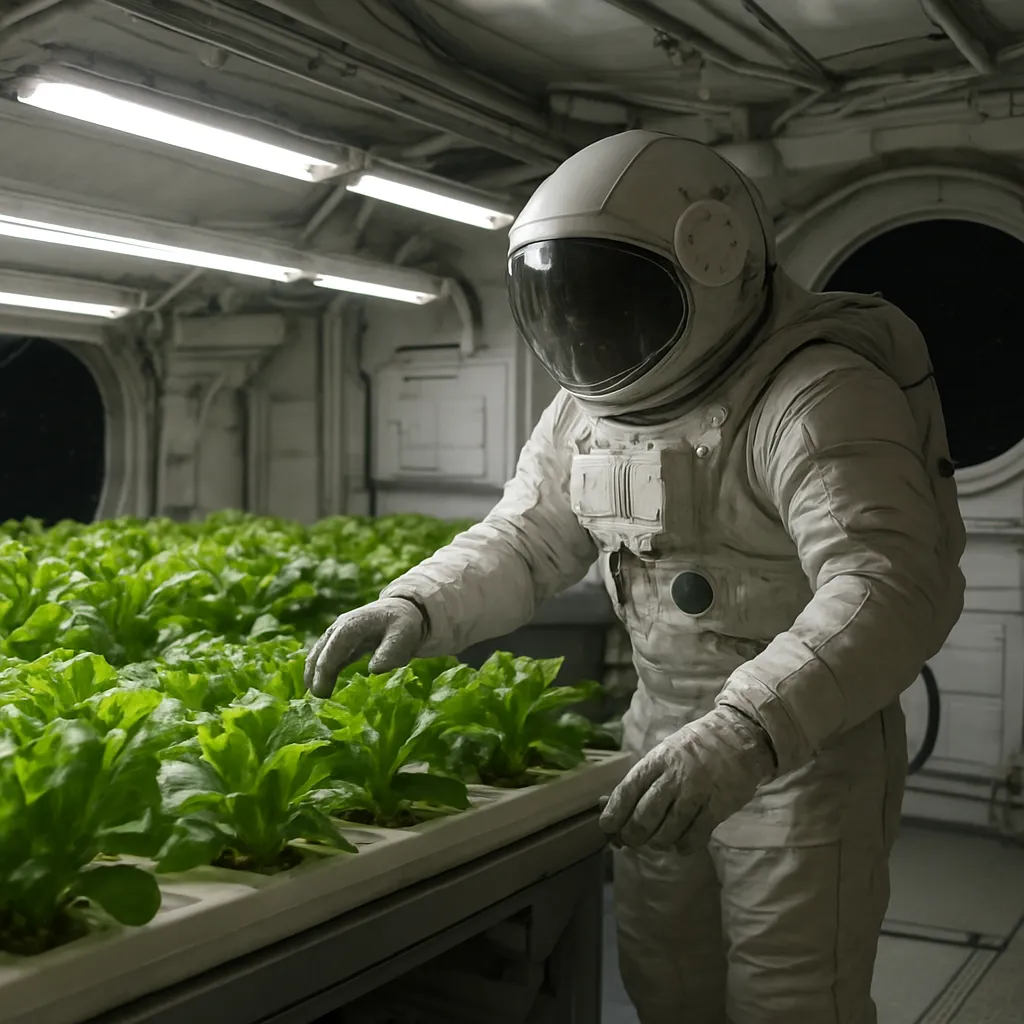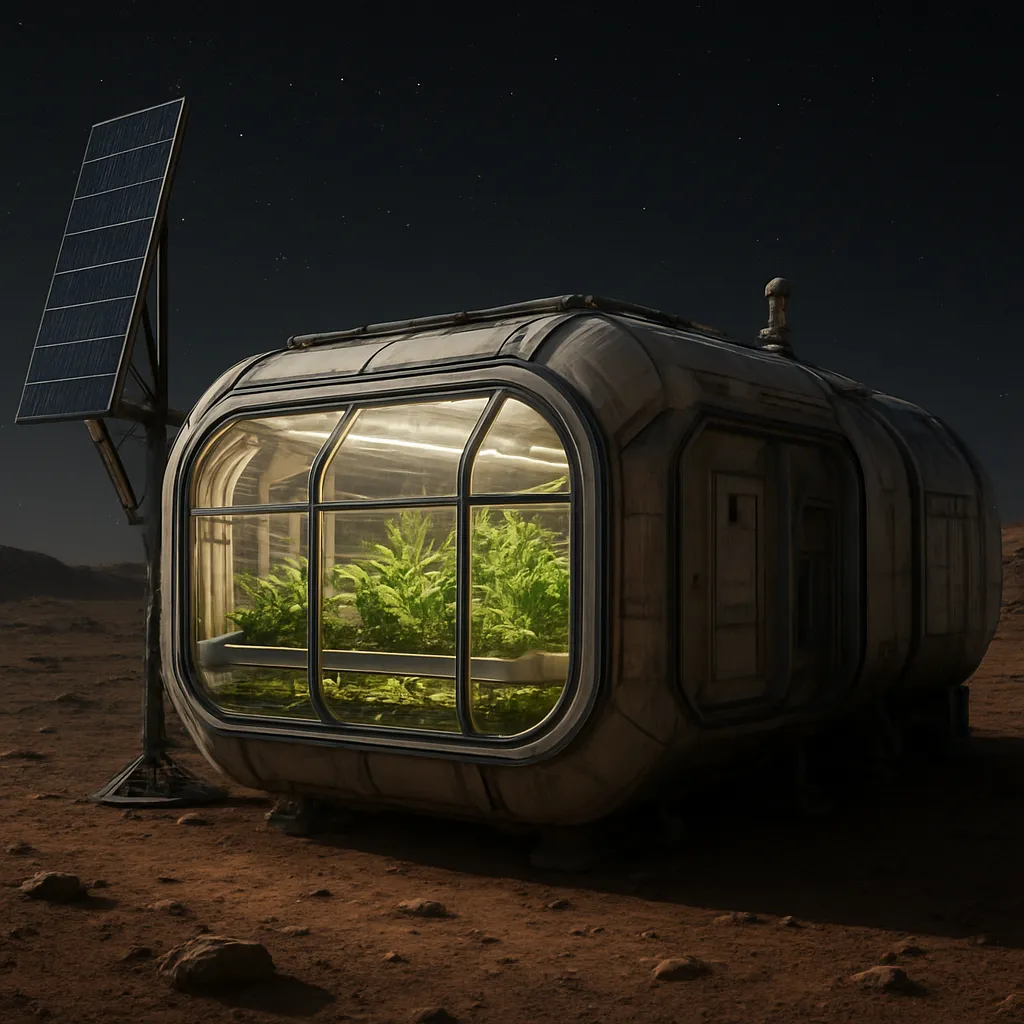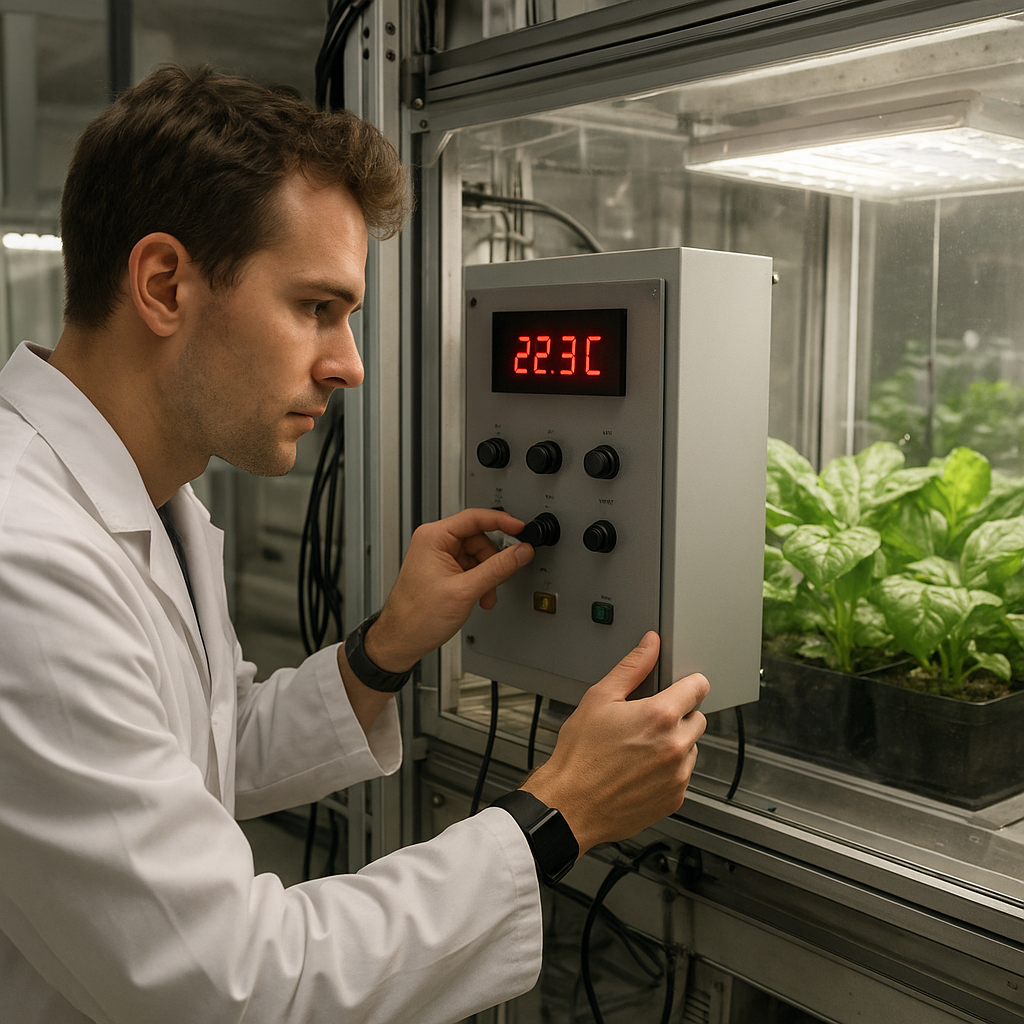
Cultivating plants beyond Earth demands a delicate balance of environmental factors, with temperature control emerging as a critical driver of crop success. Designing an effective climate management system for space-based greenhouses and crop chambers involves multidisciplinary efforts, from engineering robust hardware to developing adaptive software algorithms. Each element must account for the unique challenges posed by microgravity, limited resources, and radiation exposure.
System Architecture and Core Requirements
A robust temperature regulation system for space agriculture hinges on a clear understanding of functional requirements and operational constraints. Key design drivers include:
- Precise maintenance of target temperatures to support plant metabolic processes
- Energy conservation to match available power budgets
- Redundancy and fault tolerance for long-duration missions
- Compact packaging and minimal mass, given launch cost sensitivities
Environmental Constraints
Space habitats face vacuum or low-pressure surroundings, extreme temperature swings, and continuous radiation flux. Thermal insulation layers, reflective coatings, and multi-layer insulation (MLI) blankets mitigate heat loss and solar gain. Designers must also account for internal heat generated by lighting systems and electronic components.
Thermal Insulation and Heat Exchange
Effective thermal insulation maintains uniform temperatures inside the chamber. A combination of conductive, convective, and radiative heat transfer mechanisms must be balanced. Heat exchangers coupled with a coolant loop can distribute heat from localized sources, while phase-change materials (PCMs) help buffer transient loads.
Control Strategies and Technological Components
The heart of a temperature management system lies in its control loop, which senses deviations, computes corrective actions, and activates actuators. Modern space agriculture platforms often integrate:
- High-precision thermistors and infrared sensors arranged in a sensor network
- Variable-capacity heaters and thermoelectric coolers (TECs)
- Programmable logic controllers (PLCs) or onboard embedded computers
- Feedback algorithms such as proportional-integral-derivative (PID algorithm) loops
Sensors and Data Acquisition
Accurate temperature readings require strategically placed sensors to capture spatial gradients. Redundant probes ensure reliability, while wireless telemetry reduces wiring complexity. Data sampling rates must be sufficient to detect rapid fluctuations caused by lighting cycles or crew activities.
Actuation Methods
Heating elements often leverage resistive wire or flexible polyimide heaters bonded to chamber walls. Cooling can utilize loop heat pipes or TECs, which benefit from solid-state operation and precise setpoint control. Flow control valves regulate coolant distribution to match instantaneous heat loads.
Control Algorithms and Feedback Loops
Implementing an adaptive feedback loop ensures the system reacts smoothly to disturbances. Advanced approaches incorporate model-predictive control (MPC) to anticipate temperature drifts based on plant transpiration rates and external fluxes, improving energy efficiency.
Thermal Modeling and Simulation
Before hardware fabrication, engineers conduct detailed thermal modeling to predict system behavior. Computational fluid dynamics (CFD) simulations map airflow patterns and identify hotspots where temperature stratification could jeopardize crop viability. Finite element analysis (FEA) evaluates structural heat conduction paths.
Microgravity Analog Testing
Ground-based analogs, such as clinostats and parabolic flight experiments, expose prototypes to reduced gravity conditions. These tests reveal unanticipated convective phenomena, where buoyancy-driven flows are replaced by diffusion and forced circulation, necessitating adjustments to fan speeds and duct geometries.
Validation in Thermal Vacuum Chambers
Space agencies utilize thermal vacuum chambers to replicate the vacuum of space and cyclic thermal loads. By subjecting the control system to worst-case temperature extremes, designers confirm operational margins and validate fault detection routines.
Implementation Challenges and Future Directions
Integrating a temperature control solution into a fully operational space greenhouse presents unique hurdles. Mass and volume constraints demand compact pump and heat exchanger assemblies. Radiation-hardened electronics increase cost and limit component choices. Moreover, long-duration missions to Mars require systems with minimal maintenance and self-healing capabilities.
- Optimizing energy efficiency through dynamic setpoints aligned with crop growth stages
- Incorporating machine-learning models to predict thermal responses based on historical data
- Developing modular control units for scalable farm designs on lunar or Martian surfaces
- Ensuring compatibility with life support systems to recover waste heat for crew habitats
Emerging technologies such as inflatable greenhouse structures, variable-emissivity coatings, and phase-change thermal storage promise to revolutionize temperature management. By fusing cutting-edge engineering with plant science, future missions will harvest fresh produce in environments once considered inhospitable.