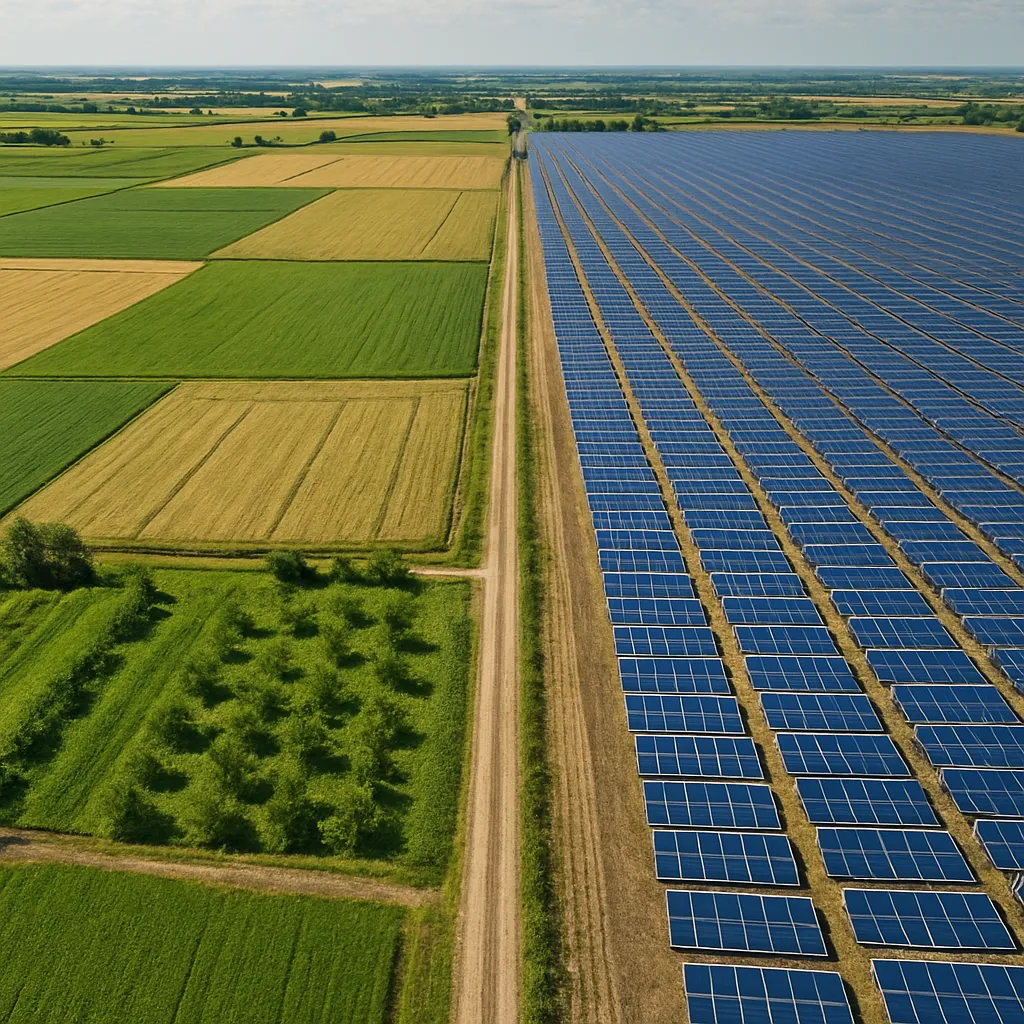
Modern agriculture is undergoing a profound transformation. Climate change, population growth and resource scarcity are forcing farmers, researchers and technology companies to rethink how food is produced, distributed and consumed. Increasingly, farms are becoming data‑driven, automated and environmentally conscious systems rather than simple plots of land. Platforms like agricole.co help connect farmers with tools, knowledge and services that enable this shift, supporting decisions that are more profitable and sustainable at the same time. From sensors in the soil to satellites in orbit, and from tiny beneficial insects to massive autonomous tractors, a wave of new solutions is reshaping fields, greenhouses and supply chains. These innovations are not just incremental improvements; they have the potential to redefine the relationship between agriculture, technology and the planet.
Precision agriculture and data‑driven farms
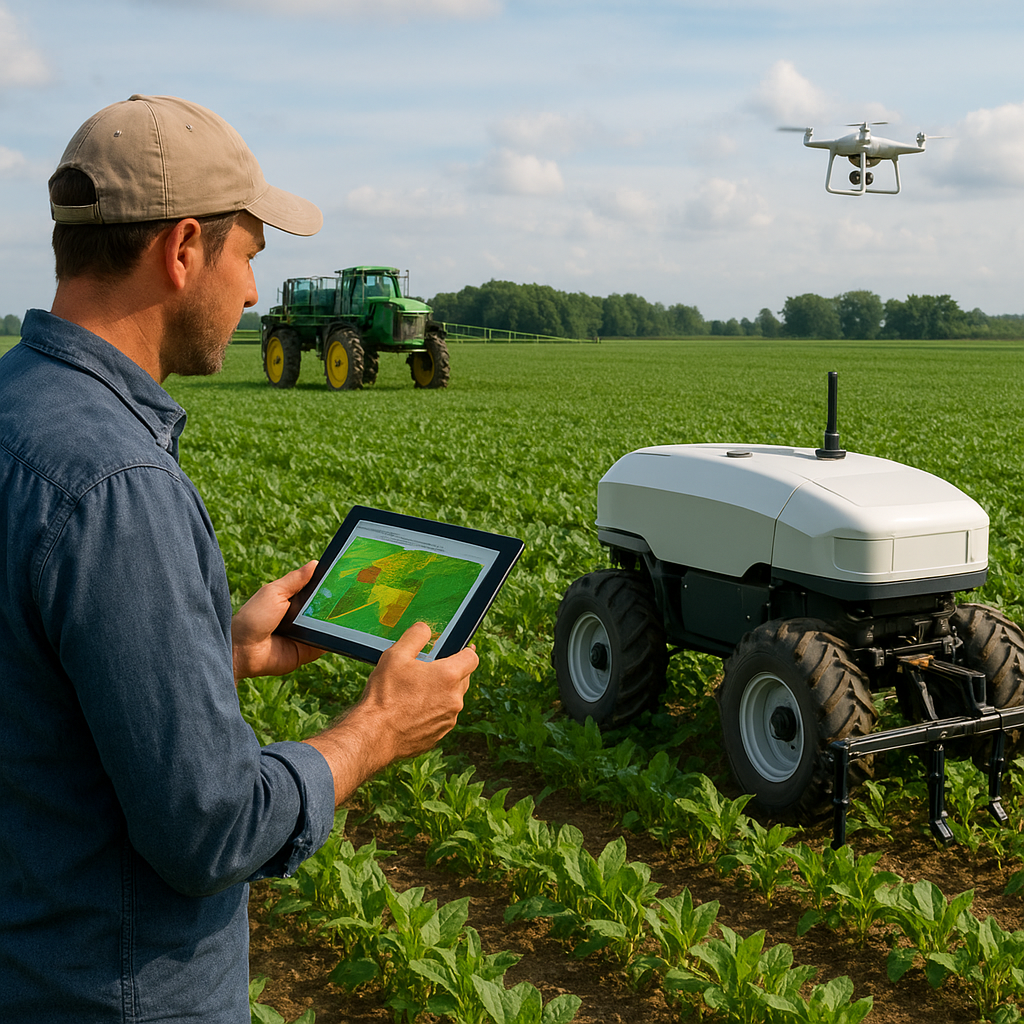
One of the most important breakthroughs in modern farming is the rise of precision agriculture. Instead of treating a whole field as if it were uniform, farmers now use data to understand small variations in soil type, moisture levels, nutrient content and plant health. With GPS‑guided machinery, drones, satellites and ground sensors, they can apply water, fertilizer and plant protection products only where they are truly needed.
High‑resolution satellite imagery reveals patterns that are invisible to the naked eye, such as early signs of drought stress or nutrient deficiencies. Multispectral cameras on drones can detect changes in leaf color and structure, predicting problems days or weeks before they become visible. Soil probes continuously measure moisture, salinity and temperature, sending real‑time data to cloud platforms for analysis.
This data‑rich approach reduces waste, cuts costs and protects the environment. When fertilizers and pesticides are used more precisely, emissions and runoff decline. Yields become more stable from year to year, as farmers can respond quickly to issues. Precision agriculture also unlocks new financial tools: with accurate field data, insurers can design better crop insurance, and banks can offer more tailored credit products to farmers.
Smart irrigation and water stewardship
Water scarcity is one of the defining challenges of 21st‑century agriculture. Traditional irrigation systems often deliver too much water at the wrong time, leading to both waste and lower yields. Smart irrigation technologies seek to match water delivery with the exact needs of crops in each moment.
Drip irrigation, controlled by soil‑moisture sensors and weather forecasts, delivers water directly to plant roots, minimizing evaporation and runoff. Automated valves open and close based on sensor data and predictive models, ensuring that neither over‑irrigation nor water stress occurs. In some regions, farmers integrate satellite‑based evapotranspiration measurements with local data, gaining an accurate picture of how much water their crops are actually using.
These systems can be managed from smartphones or tablets, allowing farmers to adjust irrigation schedules from anywhere. Over time, smart irrigation supports groundwater recharge and stabilizes river flows, improving the resilience of entire water basins. In arid and semi‑arid regions, such innovations are not just convenient; they are essential for keeping agriculture viable in the face of climate volatility.
Autonomous machinery and field robotics
Another innovation transforming farms is the emergence of autonomous tractors, robotic weeders and harvesters. Equipped with advanced GPS, cameras and machine‑learning algorithms, these machines can navigate fields with centimeter‑level accuracy, performing tasks that were once labor‑intensive and time‑consuming.
Small, lightweight robotic platforms patrol fields, mechanically removing weeds or applying micro‑doses of herbicides only where weeds are detected. This reduces the overall chemical load and helps slow the development of herbicide‑resistant species. In orchards and vineyards, robots equipped with robotic arms and computer vision can harvest fruit at night, when temperatures are lower and fruit quality is often higher.
Autonomous machinery addresses labor shortages that many farming regions face, particularly for seasonal work. At the same time, it opens the door to new farm management models. Instead of one large tractor, farms may use swarms of smaller robots that cause less soil compaction and can work continuously in shifts. Maintenance and monitoring of these robotic fleets become new professional roles in rural economies.
Biological solutions and regenerative practices
Technological innovation in agriculture is not limited to electronics and software. Biological solutions and regenerative approaches are equally powerful. Farmers increasingly rely on beneficial microbes, insects and cover crops to build soil health, reduce pests and enhance resilience.
Biofertilizers containing nitrogen‑fixing bacteria or mycorrhizal fungi help plants access nutrients more efficiently, reducing the need for synthetic fertilizers. Biopesticides derived from natural organisms or plant extracts can target specific pests while leaving beneficial species unharmed. Integrated pest management combines these tools with careful monitoring and biological control agents such as predatory insects or parasitoid wasps.
Regenerative farming focuses on rebuilding soil organic matter through practices like reduced tillage, diverse crop rotations and permanent ground cover. Healthy soils store more carbon, absorb more water and provide a richer habitat for microorganisms and invertebrates. As a result, fields become more resilient to droughts, floods and disease outbreaks while contributing to climate mitigation.
Vertical farming and controlled environments
In rapidly urbanizing regions, the distance between farms and consumers can be thousands of kilometers. Vertical farming and other forms of controlled‑environment agriculture bring production closer to cities by growing crops in stacked layers inside warehouses, containers or greenhouses.
These systems use LED lighting tailored to the needs of each crop, along with sophisticated climate control for temperature, humidity and CO₂ levels. Hydroponic or aeroponic setups deliver nutrients directly to plant roots in water or mist, eliminating the need for soil. Because the environment is tightly controlled, crops can be produced year‑round with extremely low water use and minimal pesticide application.
Leafy greens, herbs and some fruits thrive in vertical farms, which can be located near distribution centers or even inside supermarkets. This shortens supply chains, improves freshness and reduces food waste. While energy consumption remains a challenge, improvements in LED efficiency and renewable‑energy integration are steadily reducing the environmental footprint of indoor farming.
Digital marketplaces and financial inclusion
Beyond the field, digital platforms are transforming how farmers access markets, inputs and financial services. Online marketplaces connect producers directly with buyers, allowing farmers to compare prices, negotiate contracts and diversify their customer base. This transparency helps stabilize incomes and reduces dependence on intermediaries who may capture a large share of the value.
Mobile applications provide weather forecasts, agronomic advice and price information, giving smallholders tools that were once reserved for large commercial operations. Digital payment systems make it easier to receive money securely and quickly, even in remote areas. With transaction histories and production data stored digitally, farmers can build a verifiable record of their business performance.
This data becomes the foundation for inclusive finance. Lenders can use digital records, satellite imagery and yield estimates to assess creditworthiness more accurately. Small farmers gain access to loans, crop insurance and input financing on terms that reflect their actual risk rather than outdated stereotypes. Over time, this contributes to rural development and greater economic stability.
Genomics, breeding and climate‑ready crops
Rapid advances in plant genomics and breeding techniques are enabling the development of crops that can withstand heat, drought, salinity and new diseases. By sequencing plant genomes and analyzing huge datasets, researchers identify genes associated with desirable traits. Marker‑assisted selection speeds up conventional breeding, allowing scientists to focus on the most promising lines.
New breeding tools also enable precision changes in plant characteristics without introducing foreign DNA, depending on the regulatory framework of each region. These methods can improve yield potential, nutrient use efficiency and resistance to pests and pathogens. In many cases, the goal is to maintain or even increase nutritional quality while enhancing resilience to climate shocks.
For farmers, climate‑ready varieties can mean the difference between harvest and crop failure. When combined with sustainable management practices, improved seeds help stabilize food supplies in vulnerable regions. They also open opportunities for diversifying crops, introducing varieties that are better suited to evolving local conditions.
Artificial intelligence and predictive analytics
The vast quantities of data generated by modern farms are only useful if they can be turned into actionable insights. Artificial intelligence and machine‑learning tools now analyze images, sensor streams and historical records to support decision‑making at every stage of production.
Computer vision systems can detect diseases, nutrient deficiencies or pest infestations from smartphone photos or drone imagery. Algorithms trained on thousands of examples recognize subtle patterns that human observers might miss. Yield prediction models integrate weather forecasts, soil data and crop growth stages, helping farmers plan harvests, logistics and sales strategies.
AI also plays a role in optimizing input use. Decision‑support systems recommend fertilizer rates, planting dates and crop protection strategies tailored to specific fields. Over time, these systems learn from outcomes, improving their recommendations with each season. As connectivity expands and devices become more affordable, advanced analytics will reach even the smallest farms, accelerating knowledge transfer across regions.
Food traceability and consumer trust
Consumers around the world are increasingly interested in where their food comes from, how it was produced and how it affects their health and the environment. In response, farmers, processors and retailers are adopting digital traceability systems that track products from field to fork.
Using batch identifiers, QR codes and secure databases, each step of the supply chain can be recorded: planting, input use, storage, transportation and processing. This transparency helps manage food safety incidents, allowing rapid identification and removal of affected products. It also creates opportunities for value‑added claims such as organic, fair trade or low‑carbon footprint, which can be verified more easily.
For farmers, traceability can unlock access to premium markets that reward sustainable practices. It also encourages continuous improvement, as data about quality, losses and waste become visible throughout the chain. In the long term, digital traceability supports a more resilient and trustworthy global food system.
Social innovation and knowledge sharing
Technological tools alone are not enough to change the world of farming. Social innovation, education and collaborative networks are equally important. Farmer‑to‑farmer learning platforms, digital advisory services and cooperative models help spread best practices quickly and adapt them to local conditions.
Online communities allow producers to share field experiences, troubleshoot problems and compare the performance of different technologies. Extension agents and agronomists use video calls, messaging apps and remote diagnostics to support farmers in real time. Training programs focus not only on technical skills but also on business planning, risk management and environmental stewardship.
By combining new tools with strong human networks, agriculture can evolve in a way that is inclusive and fair. Smallholders, women farmers and young entrepreneurs gain opportunities to participate in innovation, shaping solutions that reflect their priorities and knowledge.
Toward a resilient and sustainable food future
The innovations reshaping agriculture today are diverse, but they share a common goal: producing more and better food with fewer resources and lower environmental impact. Precision tools, smart irrigation, robotics, biological solutions, vertical farming, digital finance, genomics, AI, traceability and social innovation are converging into a new model of farming that is more adaptive, transparent and resilient.
Realizing this potential requires investment, supportive policies and collaboration across sectors. It also demands attention to equity, ensuring that small and medium‑sized producers are not left behind as technology advances. When innovation is guided by the needs of farmers, communities and ecosystems, agriculture can become a powerful force for climate mitigation, biodiversity protection and rural prosperity.
As these changes accelerate, the farm of the future will likely look very different from the farm of the past. Yet its core mission remains the same: to nourish people and sustain livelihoods. By embracing thoughtful, well‑designed innovations, the global agricultural system can rise to the challenges of our time and build a food future that is both abundant and sustainable.