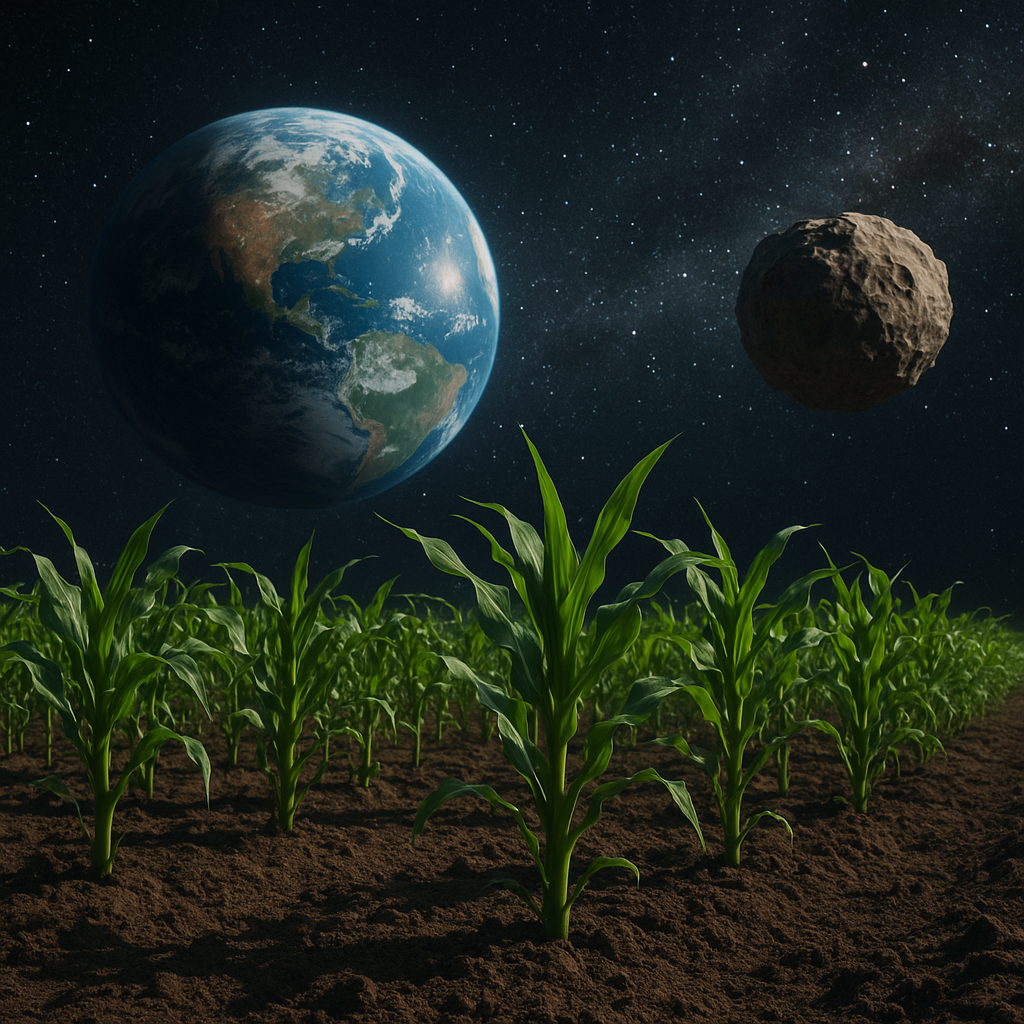
Exploring the growth of plants beyond our planet presents a complex challenge where cosmic radiation meets biological systems. This article examines how high-energy particles interact with seeds and vegetation, and what strategies scientists employ to ensure sustainable cultivation in extraterrestrial environments. Understanding these dynamics is vital for long-term missions and establishing self-sufficient habitats on the Moon, Mars, or deep-space vessels.
Radiation Environment Beyond Earth
Outside Earth’s protection of a thick atmosphere and magnetic field, crops are exposed to an array of energetic particles. Galactic cosmic rays (GCRs), solar particle events (SPEs), and trapped radiation belts comprise a harsh cocktail of ionizing radiation. Each source differs in particle type, energy, and temporal variability:
- Galactic Cosmic Rays: High-energy protons and heavy ions penetrate deep into biological tissue, causing dense ionization tracks.
- Solar Particle Events: Sporadic bursts of protons and helium nuclei can sharply increase radiation dose over hours or days.
- Trapped Radiation Belts: Electrons and protons circling a planetary magnetic field, relevant for habitats in low planetary orbit.
These factors contribute to both direct DNA damage in plant cells and the generation of reactive oxygen species (ROS). The cumulative effect can reduce germination rates, impair photosynthesis, and alter metabolic pathways.
Impact on Plant Physiology and Growth
Extensive research in simulated environments reveals several key physiological responses to space-like radiation exposure:
- Seed Viability: Even low doses of heavy ions can break chemical bonds in nucleic acids, leading to mutations or complete loss of germination potential.
- Growth Rate: Young seedlings exhibit stunted shoots and lower biomass accumulation when exposed to chronic radiation.
- Leaf Morphology: Microscopic changes in stomatal density and leaf thickness may arise as protective adaptations against ROS.
- Reproductive Success: Flowering time can be delayed, and pollen viability often decreases.
Beyond direct damage, indirect effects from radiation-induced free radicals can impair water and nutrient uptake, further compromising resilience of space-grown crops.
Synergy with Microgravity Stress
Although often considered separately, microgravity and radiation stresses interact synergistically. In reduced gravity:
- Cell wall structure can weaken, making tissues more vulnerable to radiation-induced fractures.
- Altered fluid dynamics in plant vasculature affect nutrient transport, magnifying damage from radiation by hindering repair mechanisms.
- Signal transduction pathways that mediate stress responses may be dysregulated, reducing the efficiency of antioxidant defenses.
Experiments on the International Space Station (ISS) demonstrate that simultaneous exposure to microgravity and radiation yields more severe growth inhibition than either factor alone. Addressing this combined threat is critical for ensuring crop viability on long-duration missions.
Strategies for Mitigating Radiation Damage
Several innovative approaches aim to protect plants or enhance their innate tolerance:
Shielding Techniques
- Physical Barriers: Walls made of regolith or water tanks can attenuate incoming particles, though mass constraints limit thickness.
- Electromagnetic Shields: Concepts include superconducting coils generating magnetic fields to deflect charged particles.
- Layered Materials: Composites combining hydrogen-rich polymers and metals achieve improved stopping power per kilogram.
Genetic and Biochemical Approaches
- Genetic Engineering: Introducing genes for DNA repair enzymes, such as photolyases, or overexpressing antioxidant proteins like superoxide dismutase.
- Selective Breeding: Screening terrestrial cultivars for natural radiation resilience before adapting them to space environments.
- Radioprotective Compounds: Application of exogenous antioxidants, radioprotective vitamins, or plant growth regulators to mitigate ROS damage.
Systems Integration in Bioregenerative Life Support
Integrating crops into a closed-loop life support system adds complexity but offers potential benefits:
- Waste Recycling: Plant waste can serve as a barrier material or be processed into bio-shielding compounds.
- Atmospheric Regulation: Enhanced CO₂ absorption by plants can support crew needs while also boosting photosynthesis rates.
- Dynamic Cultivation Modules: Rotating plant chambers or adjustable shielding elements adapt to varying radiation fluxes.
Case Studies and Experimental Platforms
Recent missions and ground-based analogs have provided valuable data:
Spaceflight Experiments
- Veggie and Advanced Plant Habitat on the ISS: Revealed mutation spectra in Arabidopsis and leafy greens after multi-week exposure.
- Lunar Greenhouse Simulators: Terrestrial facilities using lunar regolith analog and radiation sources to replicate lunar farm conditions.
Ground-Based Simulations
- Particle Accelerators: Facilities deliver controlled beams of protons, heavy ions, and neutrons to test plant responses.
- Cobalt-60 Gamma Chambers: Offer uniform gamma radiation, ideal for assessing threshold levels for physiological changes.
Findings suggest that certain cereals, legumes, and microgreens can maintain acceptable yields if combined with effective shielding and biochemical protection.
Future Directions in Extraterrestrial Agriculture
Ensuring sustainable food production beyond Earth requires ongoing innovation in both technology and biology. Key research avenues include:
- Advanced Crop Varieties: Editing genomes for ultra-fast life cycles and enhanced stress tolerance.
- Smart Cultivation Systems: Automated sensors and AI-driven controls to detect early damage and adjust environmental parameters.
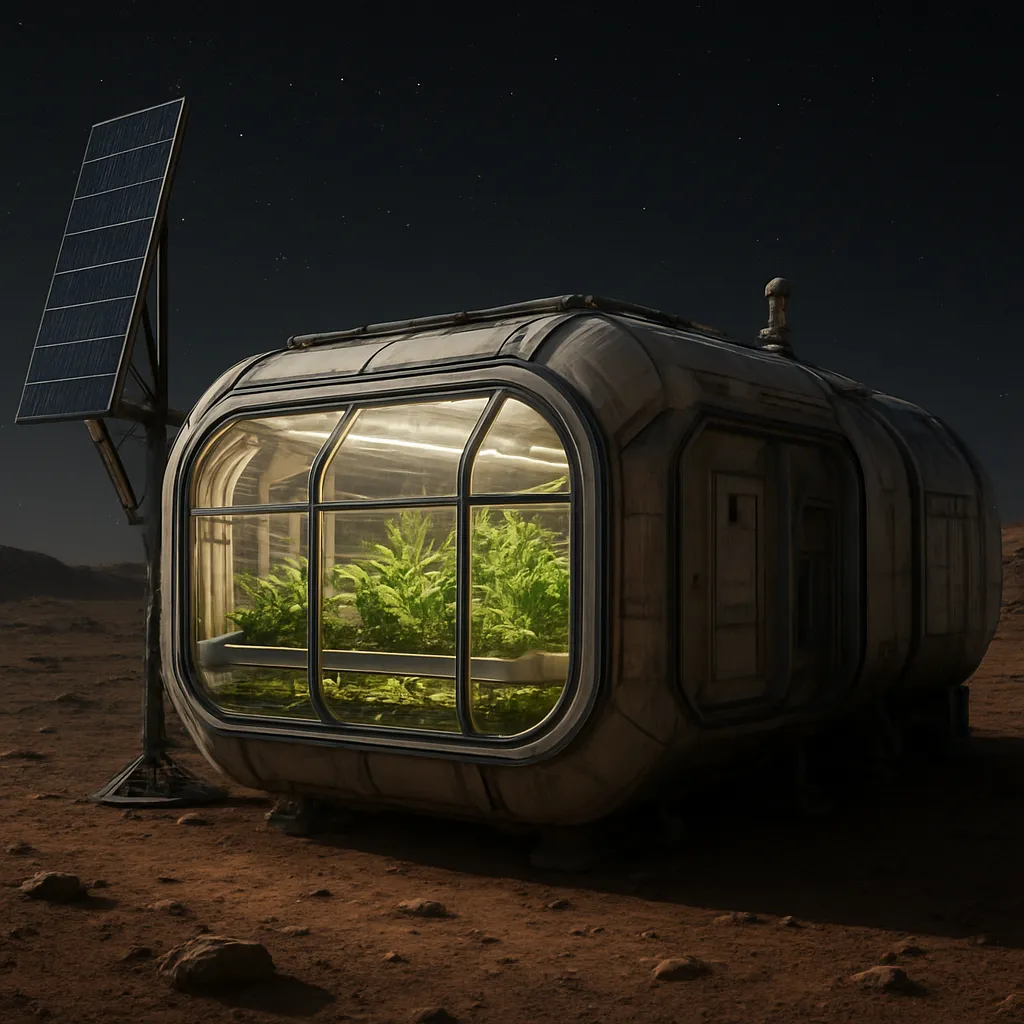
- Modular Farming Units: Rapid-deploy greenhouse habitats with scalable shielding solutions.
- Symbiotic Microbial Consortia: Leveraging beneficial bacteria and fungi to boost nutrient uptake and provide additional radioprotection.
Progress in these areas will be essential for establishing permanent bases on the Moon and Mars, and for designing crewed missions to deep-space destinations. By bridging the gap between fundamental plant science and engineering, we move closer to a future where astronauts can rely on fresh produce as part of their life support system.