Advances in controlled-environment agriculture are revolutionizing the way crops are cultivated beyond Earth’s atmosphere. By fine-tuning the light spectrum, researchers aim to enhance plant growth, maximize resource efficiency, and ensure reliable food production for future space missions. Light spectrum optimization is at the intersection of photobiology, agricultural engineering, and space life support, offering a promising pathway to sustain astronauts on long-duration flights and extraterrestrial habitats.
Photosynthetic Efficiency under Varied Light Spectra
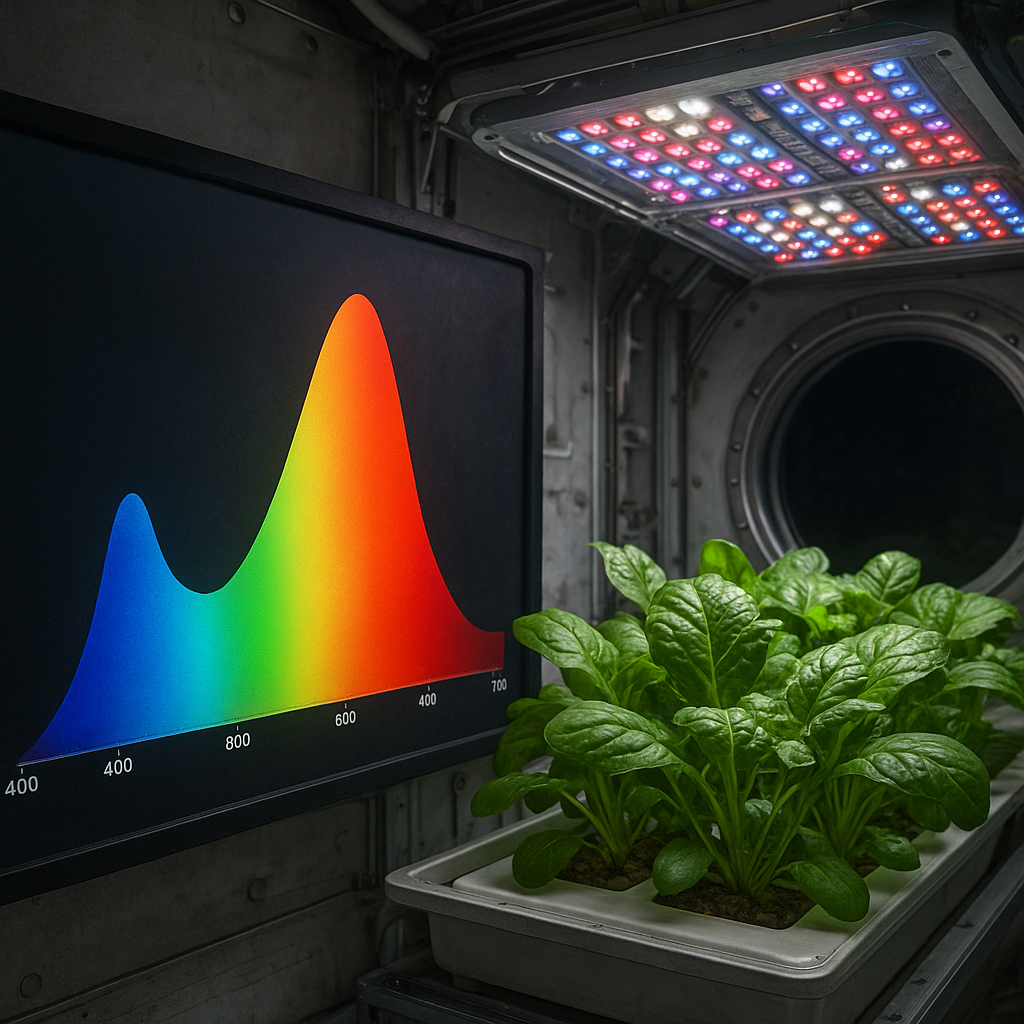
Plant photosynthesis relies on photons absorbed by chlorophyll and accessory pigments across specific spectral bands. Traditional solar-emulating lamps deliver broad-spectrum output, but modern LED arrays enable tunable wavelengths that align with the action spectrum of photosynthesis. By adjusting the ratio of red (600–700 nm), blue (400–500 nm), and far-red (700–750 nm) light, scientists can optimize:
- Net assimilation rate
- Stomatal conductance
- Photomorphogenesis
For example, a higher proportion of red light supports robust biomass accumulation, while blue light influences leaf morphology and secondary metabolite synthesis. Integrating low levels of far-red can trigger shade-avoidance pathways, promoting stem elongation and resource allocation to edible tissues.
Implementing Advanced LED Systems in Microgravity
Space-based cultivation systems must be compact, energy-efficient, and highly reliable. LED technology has advanced to include multi-channel fixtures capable of dynamic spectral control. In microgravity, all plant-environment interactions shift:
- Convection is limited, affecting heat and gas exchange
- Root-zone aeration and water distribution require active management
- Phototropic responses may alter shoot orientation
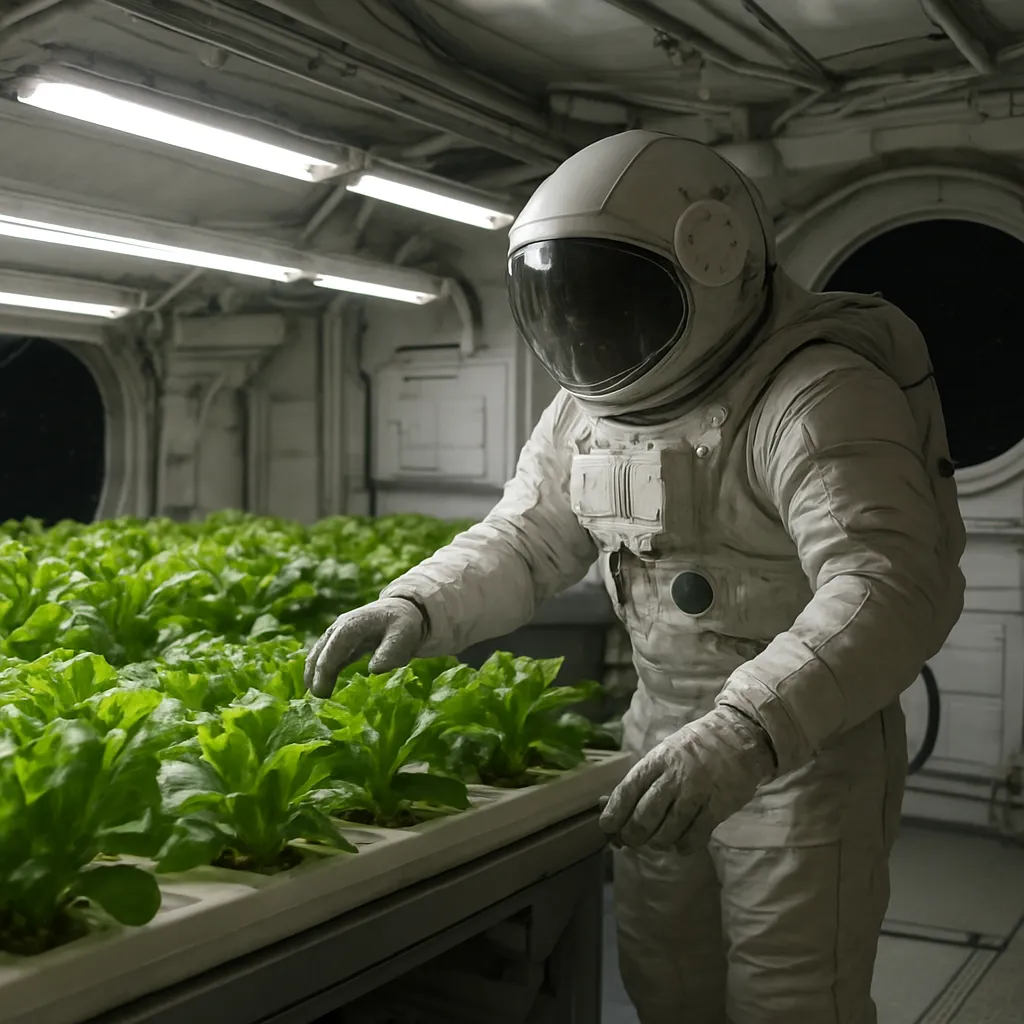
Engineers incorporate programmable light recipes that adjust spectral intensity in real time, based on environmental sensors monitoring CO₂, humidity, and plant transpiration. These systems must also minimize power draw, as spacecraft have constrained energy budgets. Combining red:blue ratios of 4:1 with intermittent far-red pulses has shown promising yield gains of up to 20% in lettuce grown aboard orbiting platforms.
Interactions of Light Quality with Nutrient Delivery
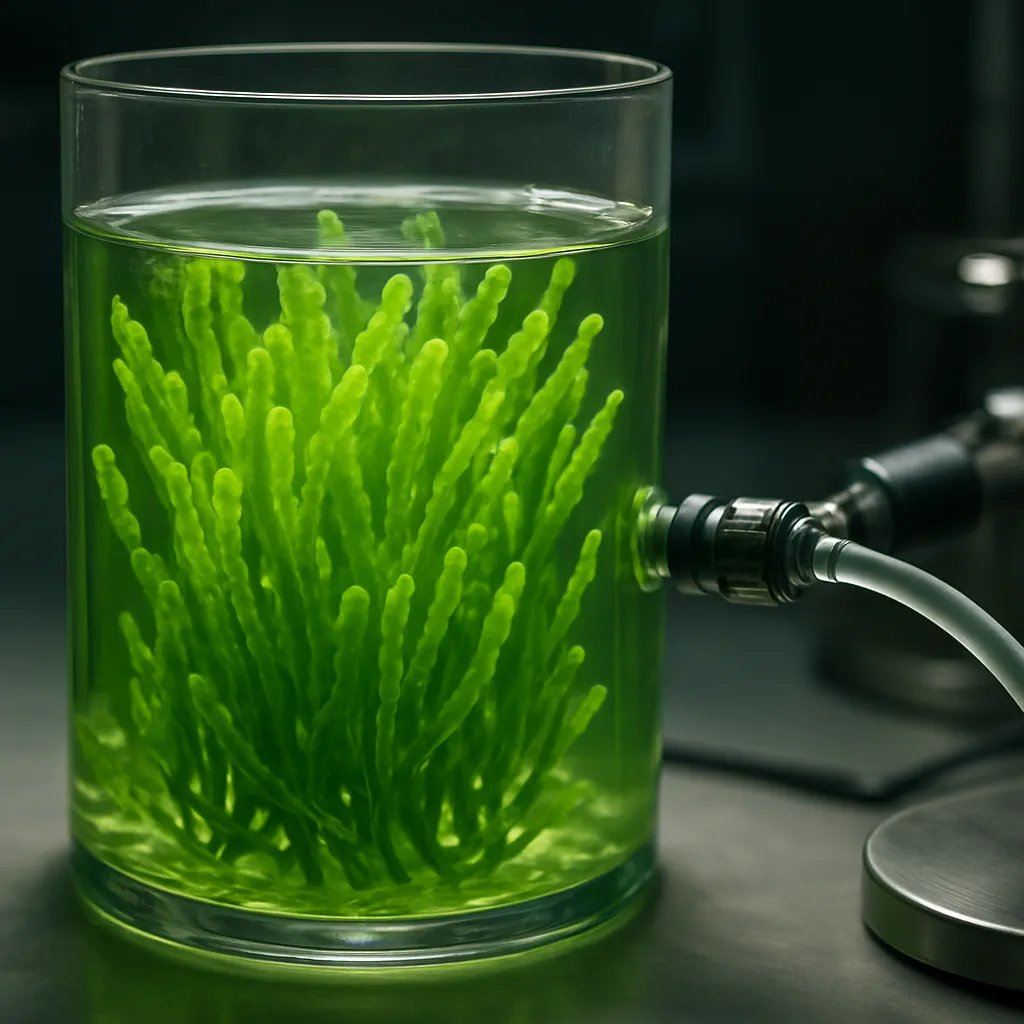
Light quality influences nutrient uptake and assimilation. Under high blue light, plants tend to increase nitrogen demand to support chlorophyll synthesis, while red-enriched environments favor carbon fixation and sugar accumulation. In hydroponic or aeroponic setups, adjusting the root-zone solution concentration in tandem with spectral shifts optimizes:
- Nutrient use efficiency
- Mineral balance in edible tissues
- Flavor profile and phytonutrient content
Such integrated systems ensure that plants receive matched cues above and below ground, which is critical for closed-loop life support where water and fertilizer recycling is paramount.
Physiological Responses and Crop Yield Enhancement
By employing spectral optimization strategies, researchers have documented improvements in:
- Leaf area index (LAI)
- Chlorophyll fluorescence parameters (e.g., Fv/Fm)
- Dry mass and edible biomass yield
Studies on dwarf tomato cultivars under mixed red-blue-far-red regimens achieved a 15% increase in fruit set and elevated concentrations of lycopene and vitamin C. Additionally, microgreens exposed to enriched blue spectra developed higher levels of anthocyanins, boosting their antioxidant capacity. These outcomes underscore the role of tailored lighting in not only enhancing productivity but also improving nutritional quality.
Challenges and Future Directions
Despite remarkable progress, several challenges remain:
- Long-term stability of LED fixtures under radiation
- Managing heat dissipation in closed environments
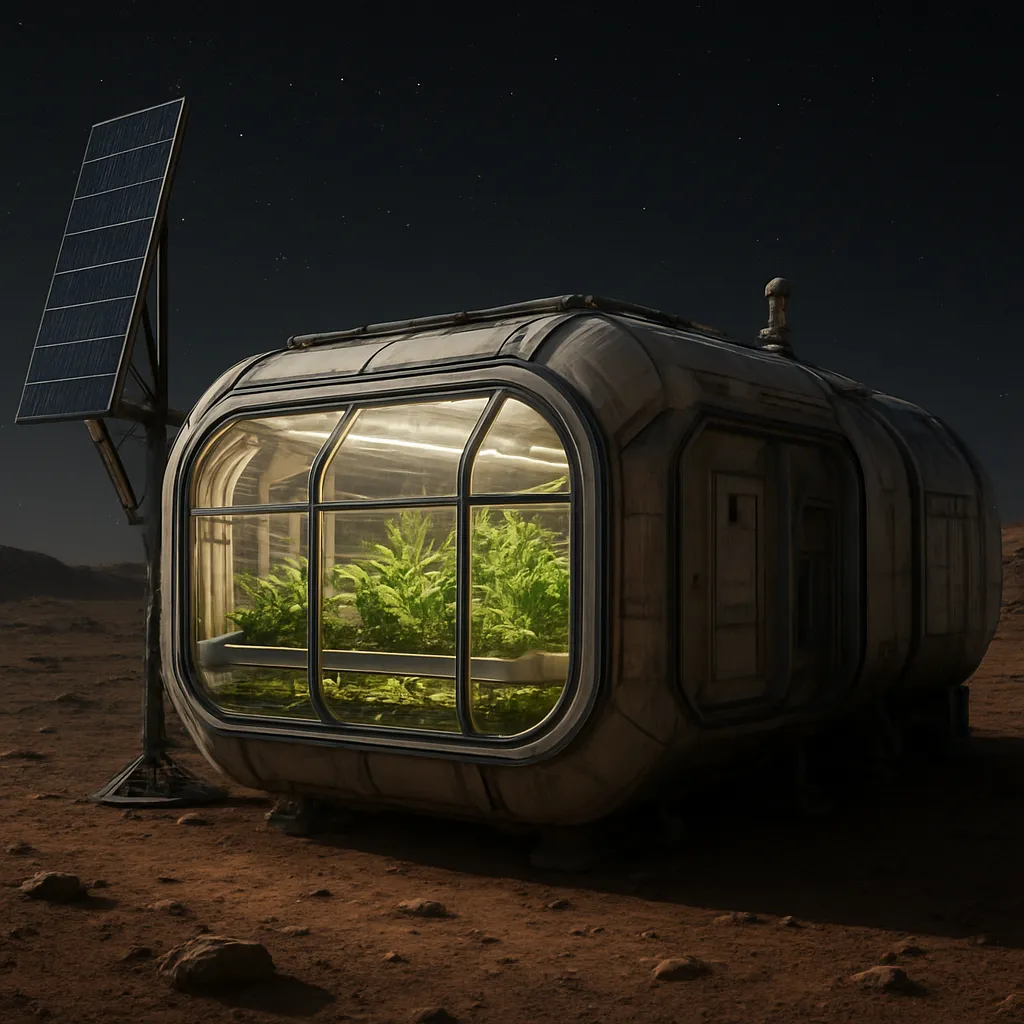
- Scaling up prototypes for lunar or Martian greenhouses
Emerging research explores the inclusion of ultraviolet-A (315–400 nm) and ultraviolet-B (280–315 nm) to stimulate plant defense mechanisms and improve shelf life. Furthermore, AI-driven spectral modeling promises to refine light recipes for diverse crops, adapting to growth stage and mission parameters. Collaboration between plant scientists, aerospace engineers, and data analysts will drive innovations in extraterrestrial agriculture, bringing sustainable food systems within reach for humanity’s expansion beyond Earth.