Exploring the frontier of agriculture in extraterrestrial environments reveals a synergy between advanced computing techniques and innovative sensor arrays. Researchers are harnessing the power of machine learning to transform raw data into actionable insights for monitoring and optimizing plant growth under microgravity conditions. This article delves into key developments in space crop monitoring, examining sensor technologies, analytical frameworks, and the path forward toward sustainable off-Earth farming.
The Emergence of Space Agriculture and Machine Learning
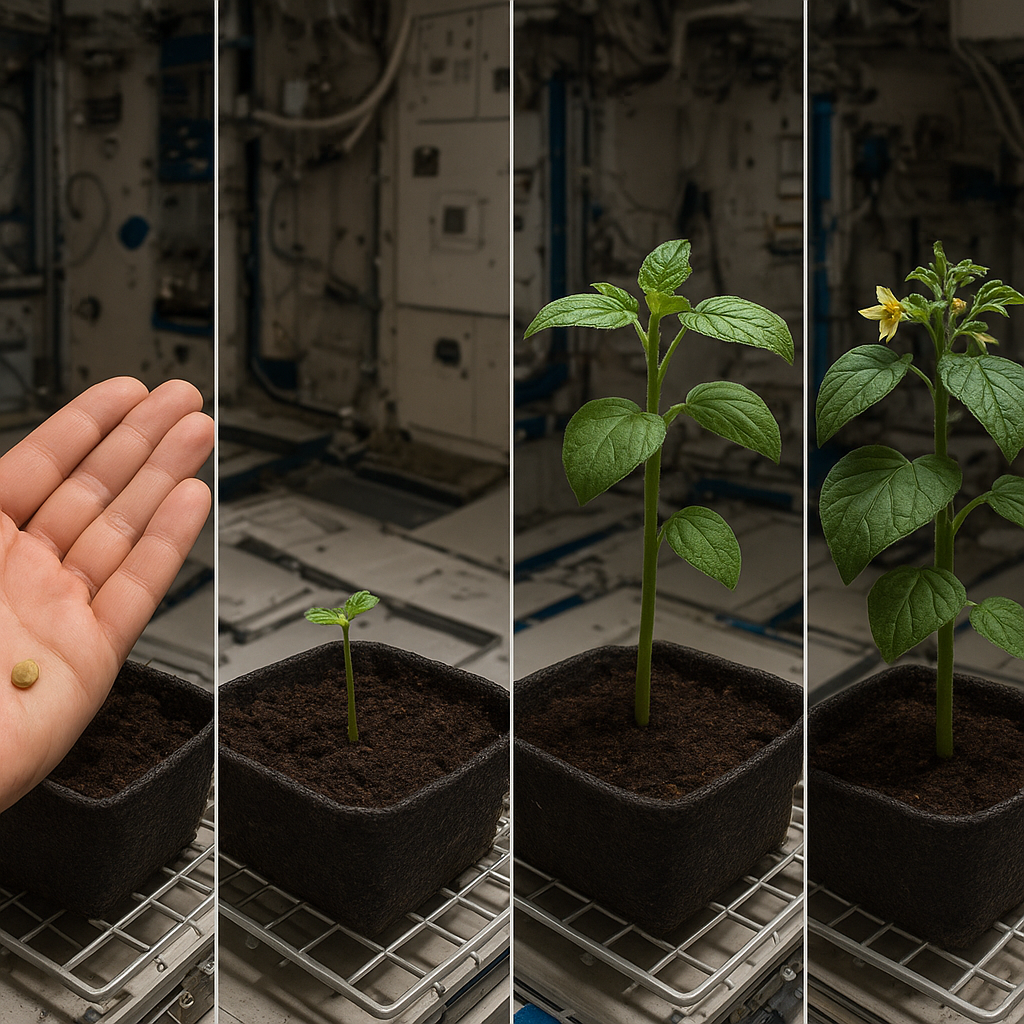
The concept of cultivating crops beyond our planet has shifted from science fiction to practical research. Early experiments on the International Space Station focused on basic germination and root growth in simulated lunar and Martian soils. Today, the integration of remote sensing tools with data fusion algorithms is enabling continuous tracking of environmental variables—temperature, humidity, light spectra—and plant responses. By applying predictive modeling, scientists can forecast potential nutrient deficiencies, water stress events, or disease outbreaks weeks before they become visible to the naked eye.
Key drivers behind this evolution include:
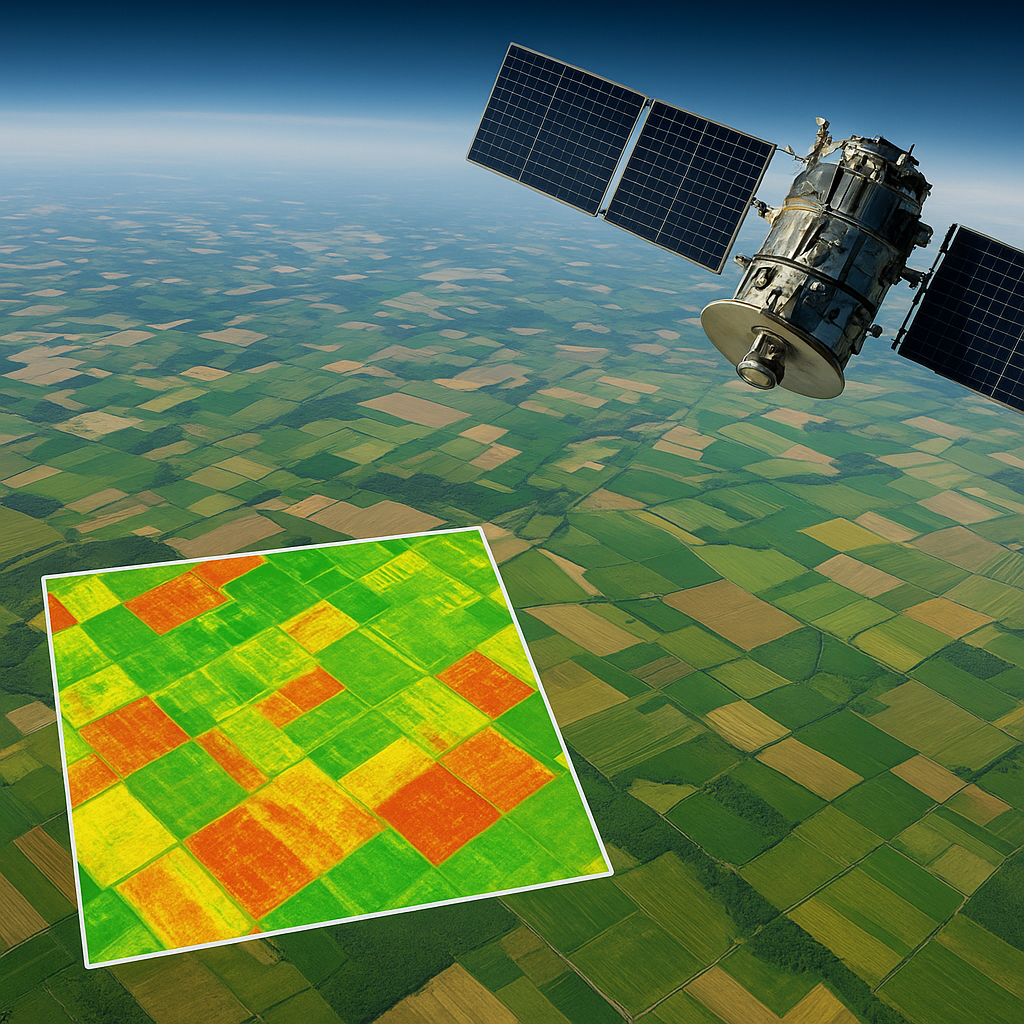
- High-throughput imaging platforms capturing visible, near-infrared, and hyperspectral imaging data
- Miniaturized environmental sensors for logging gas composition, root zone moisture, and atmospheric pressure
- Cloud-based analytics enabling collaborative research and rapid scalability of algorithms
These components converge into a cohesive monitoring system that leverages real-time monitoring loops, allowing for automated corrections to lighting, irrigation, and nutrient delivery in response to detected anomalies.
Sensor Technologies and Data Acquisition
Advancements in sensor miniaturization and wireless communication have been pivotal. Modern phytotrons onboard spacecraft are equipped with multi-modal sensor arrays that continuously sample spectral reflectance, chlorophyll fluorescence, and volumetric water content. These signals provide a rich dataset for crop health assessment:
- Spectral signatures correlate with leaf pigment concentrations, enabling estimation of nitrogen and magnesium levels.
- Fluorescence metrics serve as proxies for photosynthetic efficiency and stress detection.
- Volumetric readings feed into root zone models that predict water uptake dynamics under altered gravity.
To manage the vast influx of data, on-board electronics preprocess signals and transmit compressed feature vectors to Earth-based servers. Cloud platforms then apply advanced data analytics pipelines, combining time-series clustering, principal component analysis, and neural network inference to extract critical trends.
Analytical Techniques and Predictive Models
Machine learning workflows in space crop monitoring typically follow a multi-stage pipeline:
- Preprocessing: Noise reduction, outlier detection, and normalization of multi-sensor readings
- Feature extraction: Computation of vegetation indices such as NDVI (Normalized Difference Vegetation Index) and PRI (Photochemical Reflectance Index)
- Model training: Supervised and unsupervised learning approaches, including convolutional neural networks (CNNs) for image data and random forests for tabular datasets
- Validation: Cross-validation under Earth-analogue conditions and retrograde replay of historical flight data
One notable focus is anomaly detection. By training unsupervised algorithms on normal growth patterns, the system can flag deviations indicative of disease onset or hardware malfunctions. Another critical area is resource optimization: reinforcement learning agents adjust nutrient dosing and lighting schedules to maximize yield while minimizing power and water consumption—a crucial consideration for long-duration missions.
Case Study: Autonomous Lettuce Cultivation on Low Earth Orbit
A recent experiment involved an autonomous growth chamber cultivating lettuce under LED lighting modulated by a reinforcement learning controller. Key outcomes included:
- 20% increase in leaf biomass compared to static lighting schedules
- 15% reduction in energy usage through dynamic light intensity adjustments
- Early detection (up to five days) of fungal growth via time-lapse hyperspectral imaging and anomaly scoring
Such successes underscore the transformative potential of embedding autonomous systems within space agriculture platforms, where crew time is a scarce resource.
Challenges and Future Directions
Despite encouraging results, several obstacles remain:
- Model Generalization: Algorithms trained under Earth gravity may underperform in microgravity or partial-gravity environments.
- Limited Ground Truth: Difficulty in obtaining labeled datasets from spaceflight experiments slows supervised learning progress.
- Hardware Reliability: Sensor drift and calibration issues can introduce biases that propagate through analytical pipelines.
Addressing these challenges will require:
- Development of robust domain adaptation techniques to transfer knowledge across gravity regimes.
- Deployment of synthetic data generation frameworks to augment scarce labeled samples.
- Integration of self-calibrating sensor modules to maintain measurement accuracy over extended missions.
Looking ahead, the fusion of high-fidelity plant growth models with predictive modeling and machine learning promises a future where off-Earth agriculture is not only feasible but highly efficient. As humanity prepares for sustained lunar bases and crewed missions to Mars, the ability to reliably monitor and manage crops via intelligent, automated systems will be a cornerstone of life support and mission success.