As global populations expand and the demand for nutrient-rich food intensifies, researchers and practitioners are turning to highly controlled agricultural systems to ensure consistent delivery of essential vitamins and minerals. These systems range from sealed vertical farms to bioregenerative life support units aboard spacecraft. By harnessing precise environmental control, innovative biotechnology, and advanced automation, it becomes possible to cultivate crops and microbes that boast exceptionally high levels of micronutrients. This article explores the techniques, technologies, and challenges associated with producing **vitamins** and **minerals** in controlled settings on Earth and beyond, while emphasizing the transformative potential of **space agriculture** for sustainable nutrition.
Enhancing Nutrient Profiles with Advanced Farming Techniques
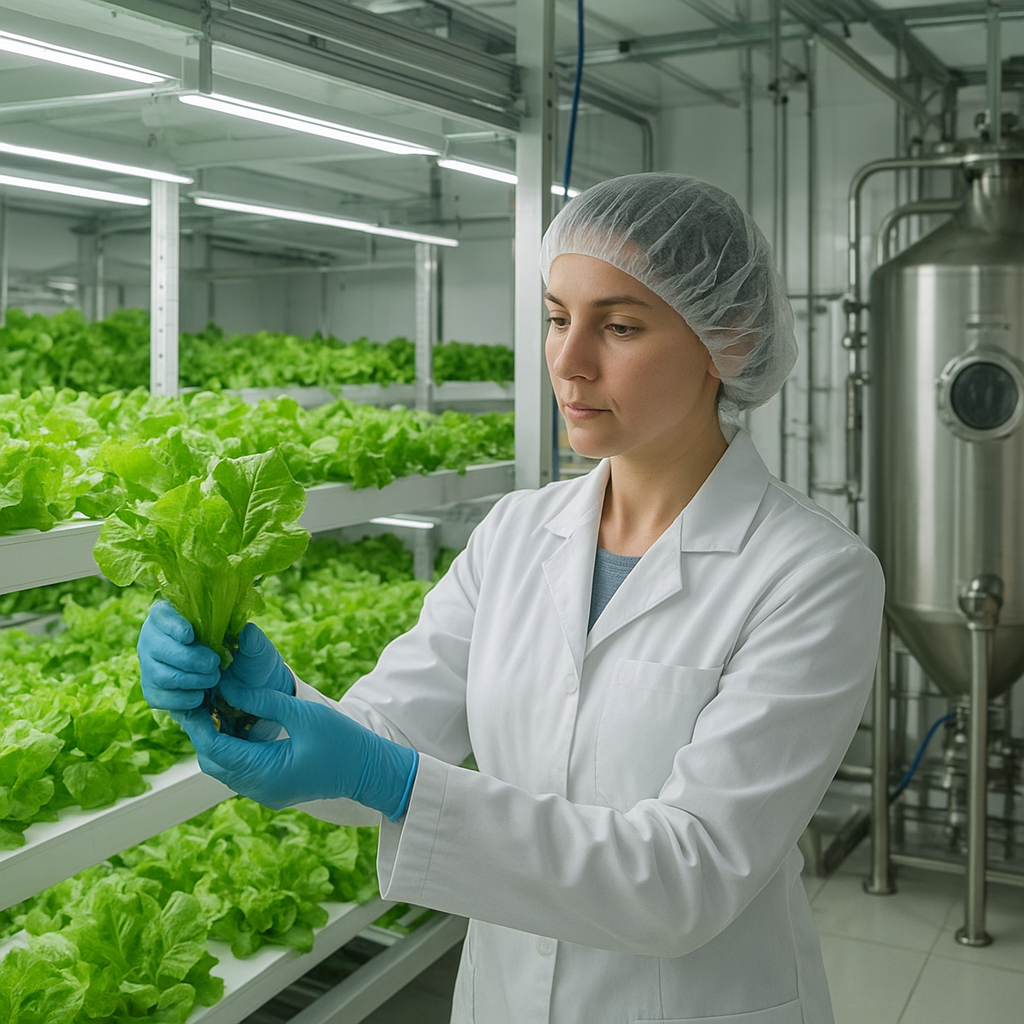
Controlled environment agriculture (CEA) leverages sealed chambers, hydroponic and aeroponic systems, and specialized lighting to optimize the growth conditions for plants. By fine-tuning factors such as temperature, humidity, light spectrum, and nutrient delivery, CEA systems can dramatically increase the **nutrient density** of fresh produce. In conventional field farming, external variables like weather and soil quality introduce unpredictability; in contrast, CEA allows growers to maintain stable parameters year-round, boosting yield and consistency.
Key strategies within this domain include:
- Hydroponics: Growing plants in nutrient-enriched water solutions eliminates soil-borne pathogens and enables precise control over mineral uptake.
- Aeroponics: Roots are suspended in air and misted with nutrient solutions, promoting rapid growth rates and higher **bioavailability** of vitamins.
- Vertical Farming: Stacking multiple growing layers within compact spaces uses less land and offers scalable production of leafy greens and microgreens rich in vitamin C, A, and K.
- LED Lighting: Customizable light spectra stimulate specific metabolic pathways in plants, enhancing synthesis of compounds like lycopene, beta-carotene, and various B vitamins.
These methods are increasingly integrated with **automation** platforms that monitor pH, electrical conductivity, and nutrient concentrations in real time. Automated nutrient dosing ensures plants receive optimal mineral balances, preventing deficiencies or toxicities that could compromise crop quality.
Cutting-Edge Bioreactors and Microbial Fermentation
Beyond plant-based systems, biotechnologists are exploiting microbial cultures to produce high-purity vitamins and essential trace elements. Fermentation bioreactors hosting bacteria, yeast, or algae can yield significant quantities of compounds such as vitamin B12, vitamin K2, and omega-3 fatty acids. These single-cell organisms convert simple carbon sources into complex nutrients through genetically engineered metabolic pathways.
Advantages of microbial fermentation include:
- High volumetric productivity with minimal land usage.
- Controlled growth parameters that minimize contamination risks.
- Ability to fine-tune production of specific vitamin isoforms.
For example, certain strains of Propionibacterium are engineered to overproduce vitamin B12, while photosynthetic microalgae like Chlorella vulgaris generate vitamin A precursors under optimized light conditions. **Photobioreactors** facilitate these processes by exposing cultures to precise light intensities and wavelengths, ensuring maximal photosynthetic efficiency and nutrient synthesis.
Parallel developments in cell culture are opening doors for producing plant-derived phytochemicals and minerals without full-scale cultivation. Using plant cell suspensions in sterile bioreactors, researchers can coax cells to accumulate targeted micronutrients by manipulating hormonal signals and nutrient feeds. This approach offers a rapid, year-round production cycle that bypasses seasonal or climatic limitations.
Adapting to Space Environments: Challenges and Solutions
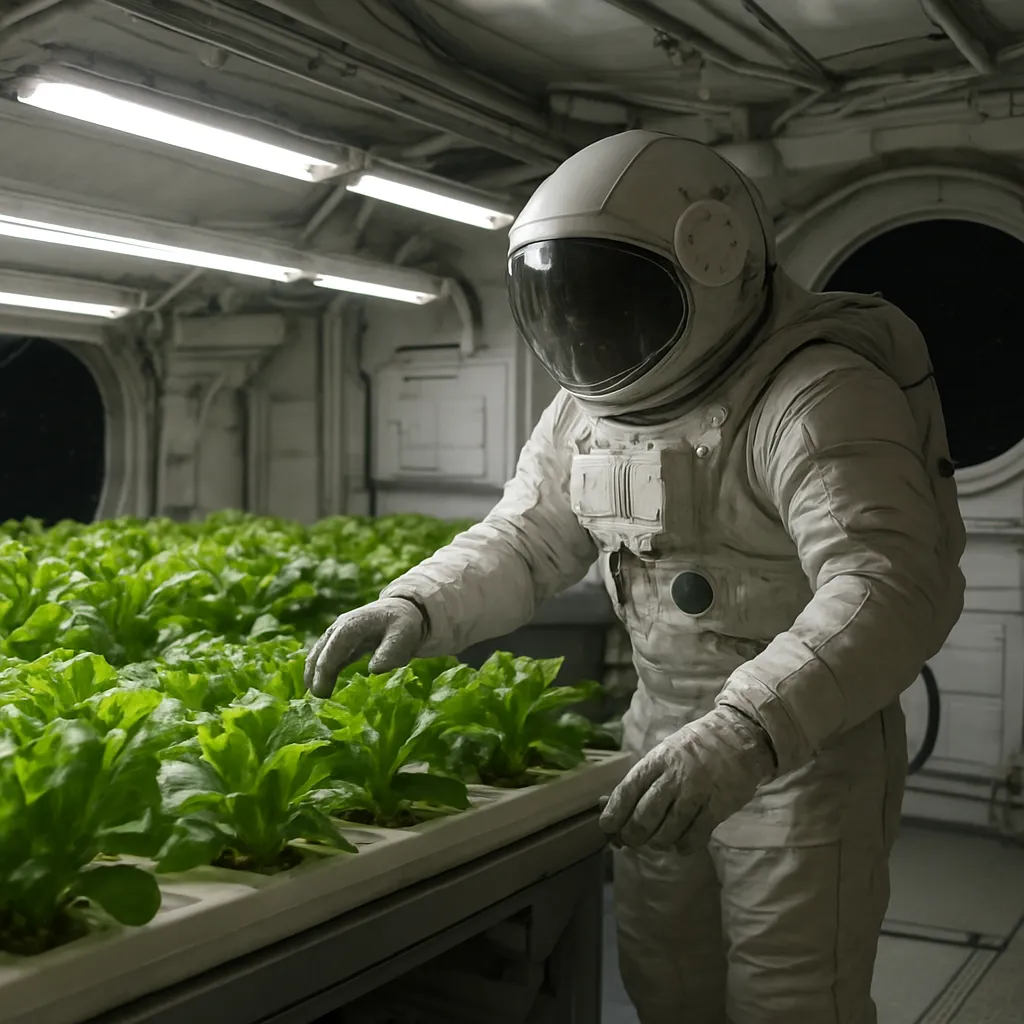
Producing vitamins and minerals in microgravity environments represents a critical frontier for long-duration space missions. Bioregenerative life support systems (BLSS) onboard spacecraft must recycle air, water, and waste while providing fresh food to astronauts. Plants grown in orbit not only supply oxygen but also serve as direct sources of dietary micronutrients.
Unique challenges in space include:
- Microgravity-induced changes in fluid behavior affecting root-zone aeration and nutrient distribution.
- Radiation exposure that can alter plant growth patterns and microbial stability.
- Strict mass and volume constraints for onboard farming hardware.
To address these issues, engineers design root modules with capillary-driven nutrient wicks, ensuring uniform water delivery in the absence of gravity. **Space habitats** employ modular LED arrays that minimize power consumption while delivering optimized spectra for vitamin synthesis. Closed-loop cultivation racks incorporate water recovery systems and carbon dioxide recapture, creating a near-self-sustaining micro-ecosystem. Recent experiments aboard the International Space Station have demonstrated successful cultivation of leafy greens with micronutrient profiles comparable to Earth-grown analogues, indicating the promise of space-based CEA for future Mars or lunar outposts.
Integrating Precision Nutrition into Smart Farming Networks
Advances in data analytics and artificial intelligence enable **precision nutrition** strategies that tailor micronutrient production to specific dietary requirements. By analyzing plant genomics, metabolite profiles, and global nutritional deficiencies, researchers can customize growth recipes to emphasize underrepresented vitamins and minerals. Integration with blockchain technologies ensures full traceability of nutrient provenance, from seed genetics to harvest conditions.
Smart farming networks connect distributed CEA facilities, allowing collaborative optimization across different geographies. This decentralized approach mitigates risks associated with localized crop failures and leverages diverse expertise in horticulture, microbiology, and engineering. Real-time sensor data feed into cloud-based platforms, where machine learning algorithms continuously refine parameters to maximize **yield** and nutrient content.
Future Perspectives in Sustainable Vitamin and Mineral Production
As terrestrial and extraterrestrial demands for nutrient-rich food converge, the intersection of agriculture, biotechnology, and space exploration creates unprecedented opportunities. Emerging areas of research include:
- Genetic editing tools to enhance endogenous vitamin biosynthesis pathways in staple crops.
- Synthetic biology circuits in microorganisms that dynamically adjust nutrient output in response to real-time sensor feedback.
- Compact, deployable CEA units for remote or resource-scarce environments on Earth and other planets.
By continuing to refine **bioregenerative**, resource-efficient systems, humanity can achieve resilient food supplies that address both global nutritional challenges and the requirements of long-term space habitation. The synergy between Earth-bound vertical farms and orbital greenhouses underscores a future where essential micronutrients are reliably produced under any conditions, powering healthier societies both at home and among the stars.