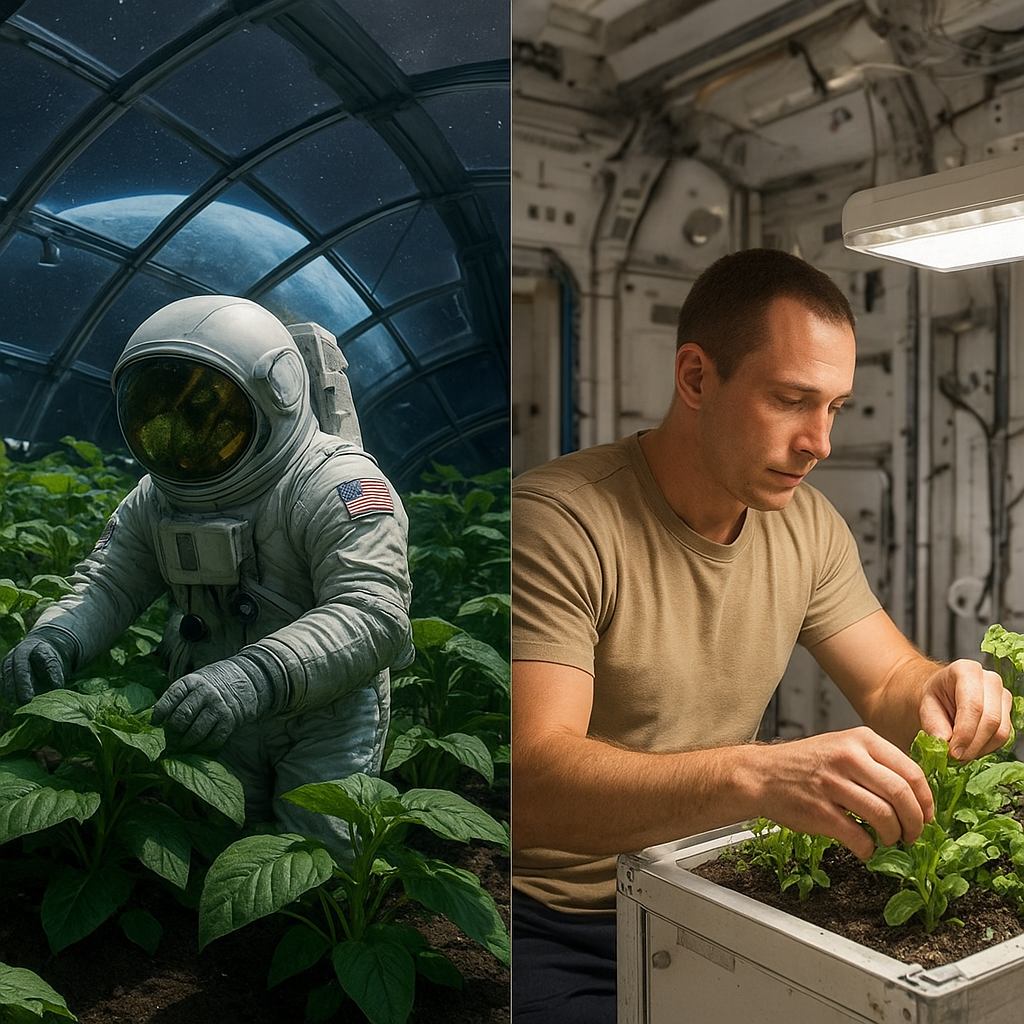
Science fiction has long imagined verdant gardens flourishing in the void of space, while modern researchers race to make these visions a reality. As humanity contemplates extended missions to the Moon, Mars and beyond, the quest for self-sufficient sustainability through space agriculture has never been more urgent. This article explores how imaginative portrayals have shaped expectations, the cutting-edge technologies being developed today, and the challenges that stand between fiction and fact.
Origins of Space Farming in Fiction
The dream of cultivating crops beyond Earth’s surface dates back to early speculative tales. Writers such as Olaf Stapledon and Arthur C. Clarke introduced readers to dome-shaped biospheres orbiting planets, where astronauts harvested food under artificial suns. Those fictional settings often featured bioregenerative ecosystems that perfectly recycled air, water and waste, showcasing an idealized view of off-world photosynthesis.
Early Visions and Utopian Biospheres
In these utopian scenarios, human colonies thrived on large rotating stations, where gravity was simulated to ensure plant growth remained normal. Entire communities depended on hydroponic gardens, which served both practical and social functions. Authors emphasized the psychological comfort provided by green spaces, hinting at the importance of nature for crew resilience during long voyages.
Dystopian Counterpoints
Not all depictions were rosy. Some stories warned of ecological collapse when experiments went awry. In certain novels, malfunctioning life support systems led to crop failures, forcing colonists to face starvation and conflict. These cautionary tales introduced the concept of fragile nutrient cycles, highlighting how delicate closed ecosystems could be when a single variable went off-balance.
Technological Challenges and Innovations
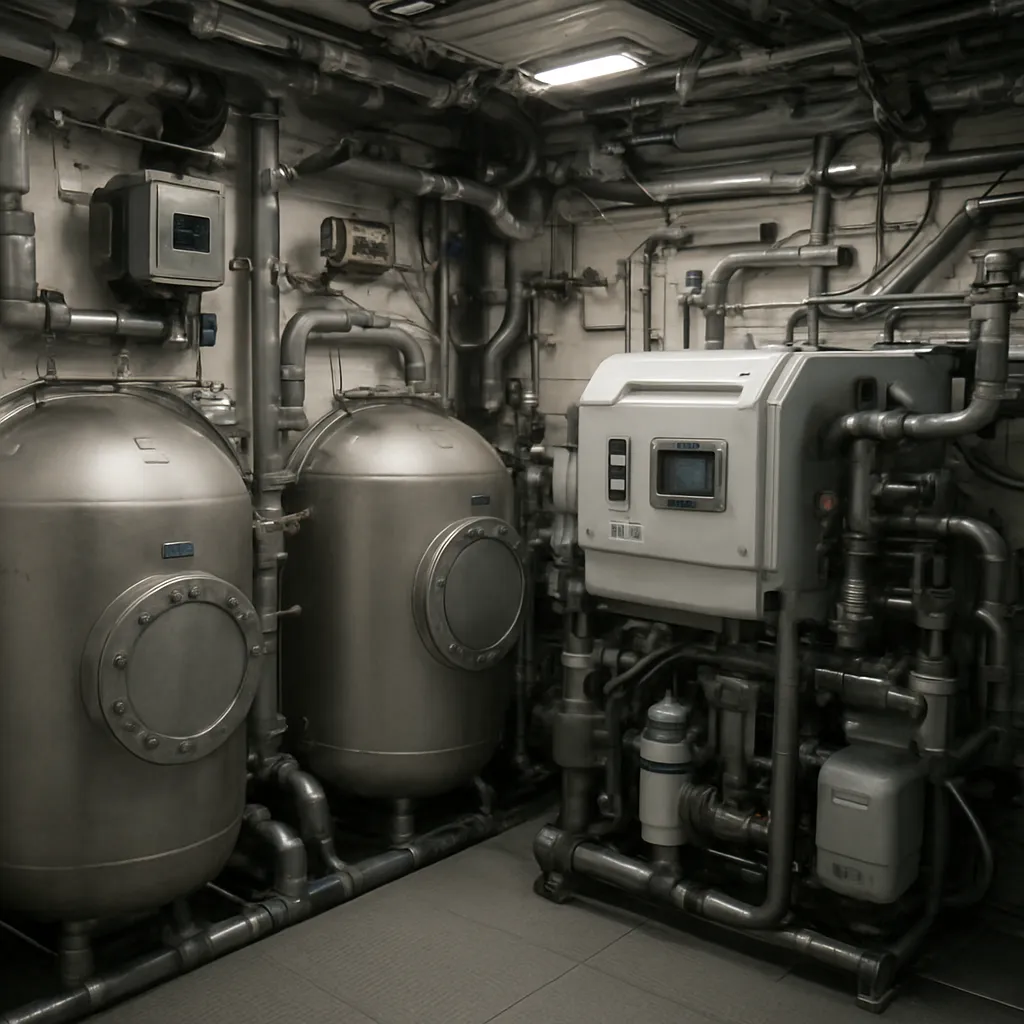
Turning fiction into practice means overcoming numerous hurdles. Gravity, radiation, water management and energy supply each pose significant obstacles. Engineers and biologists have joined forces to design systems that emulate aspects of Earth’s biosphere while accounting for the unique conditions of space.
Microgravity and Plant Physiology
In microgravity, roots no longer grow downward and water distribution becomes unpredictable. Researchers use clinostats and drop towers to simulate low-gravity conditions, observing how tropisms—growth responses to stimuli—change in space. By understanding these mechanisms, scientists aim to harness plant automation of nutrient uptake without constant human intervention.
Light Spectrum and Photobioreactors
Artificial lighting replicates the sun’s spectrum using LEDs tuned to red and blue wavelengths. These wavelengths optimize chlorophyll absorption, boosting photosynthetic efficiency. Photobioreactors equipped with reflective materials ensure uniform light distribution, a key factor for maximizing biomass in cramped habitat modules.
Real-World Experiments and Projects
Actual experiments aboard spacecraft and on planetary analog stations have provided invaluable data. From the International Space Station (ISS) to desert research bases, these projects test the feasibility of growing food in extreme environments.
International Space Station Trials
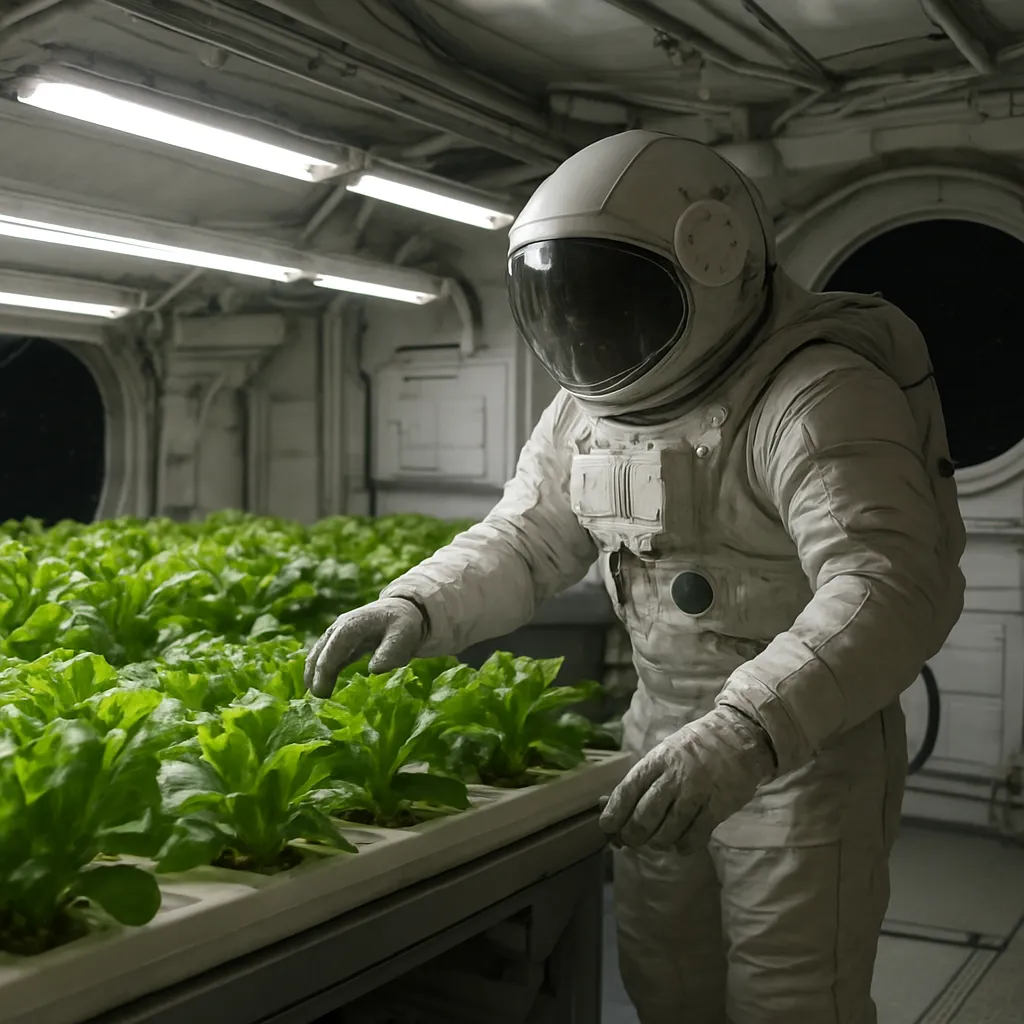
- Veggie Plant Growth System: NASA’s Veggie facility has successfully grown lettuce, zinnias and mustard greens in microgravity.
- Advanced Plant Habitat: This more sophisticated module monitors environmental variables such as temperature, humidity and CO2 levels, enabling precise control over biome conditions.
- Crop Harvests and Taste Tests: Astronauts have consumed fresh produce grown on orbit, demonstrating potential for improving morale and dietary nutrition.
Moon and Mars Analog Stations
On Earth, analog habitats in Antarctica and the Utah desert simulate extraterrestrial conditions. Teams cultivate potatoes in Martian regolith simulant and experiment with hydroponics and aeroponics to conserve water. These analog studies identify challenges in habitat design, from dust mitigation to energy budgeting.
Pioneering Bioreactor Projects
Bioreactors utilizing algae and cyanobacteria offer promising avenues for life support. Beyond food production, these microorganisms produce oxygen and could serve as feedstock for biofuels. Integrating such systems with higher plants may yield fully closed-loop ecosystems for future crews.
The Future of Off-Earth Agriculture
Advancements in synthetic biology, robotics and data analytics now converge to redefine what’s possible. Dreamers inspired by science fiction may soon see their visions take root in lunar greenhouses and Martian farms.
Synthetic Biology and Gene Editing
CRISPR-based techniques allow precise modification of plant genomes for enhanced stress tolerance. Scientists aim to create crops that withstand higher radiation levels, use less water and grow in nutrient-poor soils. Such innovations could transform inert lunar regolith into arable ground.
Robotic Farming and AI Management
Autonomous rovers and drones could carry out planting, harvesting and maintenance tasks, reducing astronaut workload. Machine learning algorithms will monitor plant health in real time, adjusting light, water and nutrient delivery for optimal yields. This synergy of robotics and AI promises scalable agriculture modules capable of supporting larger colonies.
Terraforming and Large-Scale Colonies
While terraforming entire planets remains speculative, small-scale terraforming concepts envision enclosed bio-domes that gradually expand. These structures would replicate Earth’s atmosphere and water cycle, enabling diverse ecosystems to flourish. Though fiction often portrays mega-domes on Mars, realistic plans focus first on modular greenhouses that can be linked to build extensive agricultural networks.
Bold innovations in material science, from lightweight radiation shields to self-healing polymers, will further protect crops from cosmic rays and micrometeorites. As research continues, the line between science fiction and reality blurs, bringing humanity closer to a future where fresh produce grows under an alien sky.