As humanity sets its sights on extended stays beyond Earth, the concept of cultivating plants on the Moon has transitioned from science fiction to serious research. Testing lunar regolith for nutrient viability lies at the heart of developing sustainable agricultural systems in space. By examining the physical, chemical, and biological properties of lunar soil simulants, scientists aim to pave the way for robust crop production that can support future explorers and settlers.
Physical and Chemical Properties of Lunar Regolith
Lunar regolith is the fine, powdery material covering the Moon’s surface, produced over billions of years by meteorite impacts and solar wind interactions. Its unique composition presents challenges and opportunities for space agriculture:
- Particle Size and Texture: Unlike terrestrial soils, lunar regolith particles range from micrometer-scale dust to sharp-edged fragments. This irregular texture affects water retention and root penetration.
- Chemical Composition: Major constituents include silicates, aluminum oxides, and perchlorates. Trace elements like iron and titanium can influence plant growth, while toxic compounds require mitigation.
- Porosity and Water Retention: Porous structure promotes drainage but limits moisture holding capacity. Strategies to amend regolith must balance aeration with sufficient water availability.
Understanding these parameters is crucial before any biological system can thrive. Researchers employ lunar soil simulants that mimic these characteristics, enabling controlled experiments on Earth.
Engineering Growth Media for Lunar Agriculture
Transforming raw regolith into a suitable growth medium involves multiple steps. Scientists evaluate mechanical treatments, chemical amendments, and the integration of living organisms to improve fertility:
Mechanical and Physical Treatments
Reducing particle abrasive effects on delicate root hairs requires smoothing or coating regolith grains. Ultrasonic agglomeration and thermal sintering have emerged as promising methods to modify granule size without altering chemistry significantly.
Chemical Amendments and Nutrient Supplementation
- pH Adjustment: Lunar regolith tends to be alkaline. Adding sulfur compounds or organic acids can lower pH to ranges optimal for plant uptake.
- Essential Macronutrients: Laboratory trials supplement the regolith with nitrogen, phosphorus, and potassium, often derived from recycled waste streams or extraterrestrial in-situ resources.
- Trace Elements and Chelators: Micronutrients like iron, manganese, and zinc are chelated to enhance root absorption, preventing deficiencies that could impede growth.
Biological Amendments
Employing microbial inoculants and organic matter can initiate soil-like processes in the regolith. Mycorrhizal fungi and nitrogen-fixing bacteria improve nutrient cycling, while decomposed plant residues contribute to a nascent organic layer.
Designing Experiments to Assess Nutrient Viability
Rigorous testing protocols are required to determine the capacity of amended regolith to support plant life. Key experimental aspects include:
Controlled Environment Chambers
Simulating lunar environmental conditions—reduced gravity, low pressure, and variable radiation—researchers grow test crops in climate-controlled growth chambers. Variables such as light spectrum, temperature cycles, and atmospheric composition are tightly regulated.
Crop Selection and Growth Metrics
- Model Species: Fast-growing plants like hydroponic lettuce and wheat allow rapid assessment of biomass accumulation and physiological responses.
- Growth Parameters: Germination rate, shoot length, leaf chlorophyll content, and root architecture are measured regularly. Biomass yield, root-to-shoot ratio, and water-use efficiency serve as critical biomass and productivity indicators.
- Nutrient Uptake Analysis: Tissue samples undergo elemental analysis to determine uptake efficiency and potential toxicity from heavy metals or residual perchlorates.
Long-Term Cultivation Trials
Extending growth cycles over multiple generations reveals cumulative effects of regolith amendments. Continuous monitoring of nutrient depletion, salt accumulation, and microbial community dynamics ensures a comprehensive understanding of system resilience.
Interpreting Results and Overcoming Challenges
Initial trials have highlighted both promising outcomes and persistent obstacles:
- Nutrient Availability: Supplemented regolith can support early vegetative growth, yet sustaining flowering and fruiting stages demands optimized N-P-K ratios and trace element balance.
- Salt and Toxin Accumulation: Perchlorates and soluble salts can reach phytotoxic levels without adequate drainage or leaching strategies. Innovative flushing protocols and biofiltration using specific microbial strains show potential to mitigate these effects.
- Redox Dynamics: The oxidative environment of lunar regolith influences iron and sulfur speciation, affecting plant nutrition. Adjusting redox potential by adding organic carbon sources helps maintain nutrient accessibility.
- Physical Stress: Abrasive particles can damage delicate root hairs, reducing water uptake. Protective coatings or interstitial organic matrices soften regolith texture.
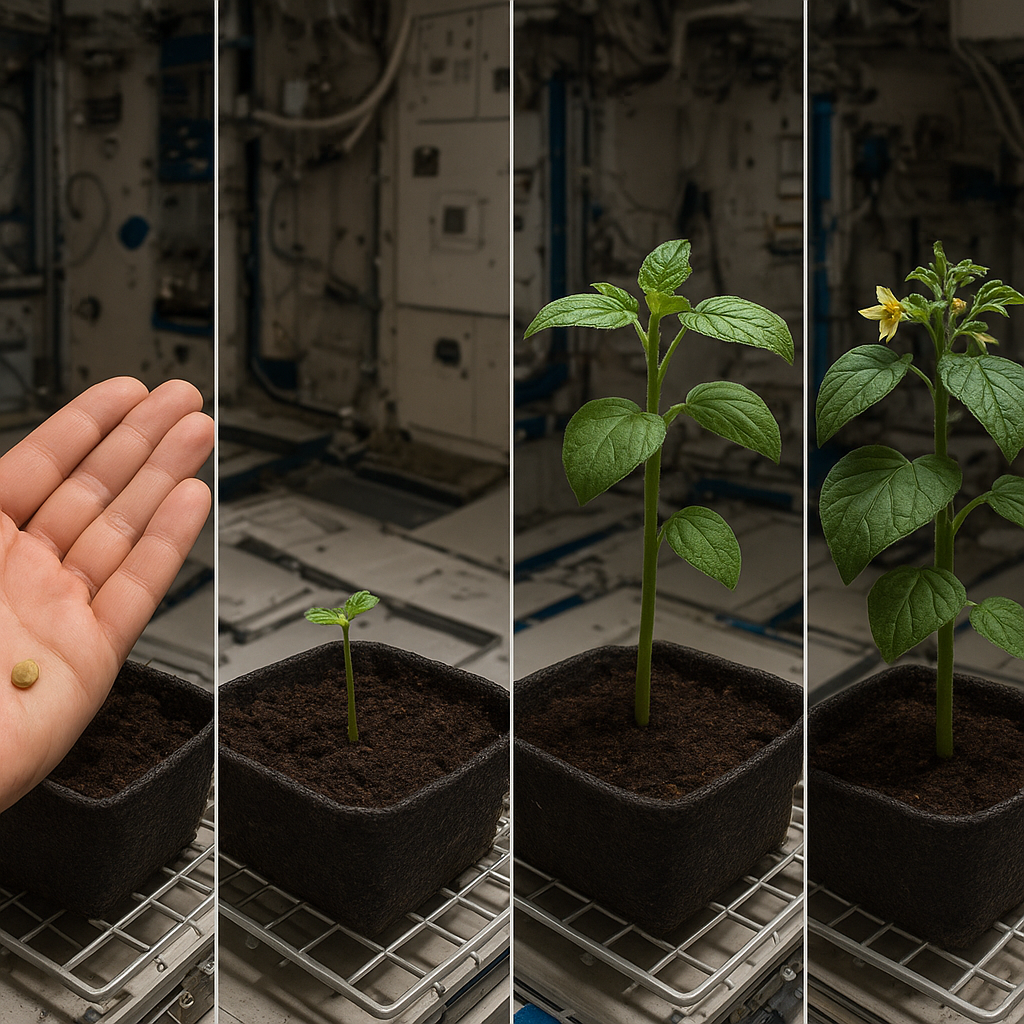
Despite these challenges, successful sprouting of seedlings and measurable photosynthetic activity underscore the possibilities of lunar agriculture.
Implications for Future Space Missions
The ability to cultivate food on the Moon carries profound implications for long-duration missions and off-world settlements:
- Reduced Resupply Dependence: Local food production drastically lowers the mass and cost of supply launches from Earth.
- Closed-Loop Life Support: Integrating plant systems for oxygen generation and carbon dioxide absorption contributes to regenerative life support loops.
- Psychological Benefits: Greenhouses and living plants enhance crew well-being during extended isolation in extraterrestrial habitats.
- Technology Transfer: Techniques developed for lunar regolith improvement can inform terrestrial agriculture in marginal soils, demonstrating a dual benefit to Earth’s food security challenges.
With ongoing research into additive manufacturing of growth trays, advanced irrigation systems, and autonomous monitoring, the path toward thriving lunar farms is clearer than ever. The quest to unlock the viability of lunar regolith stands as a testament to human ingenuity, promising to turn the Moon from a silent rock into a verdant outpost in our solar neighborhood.