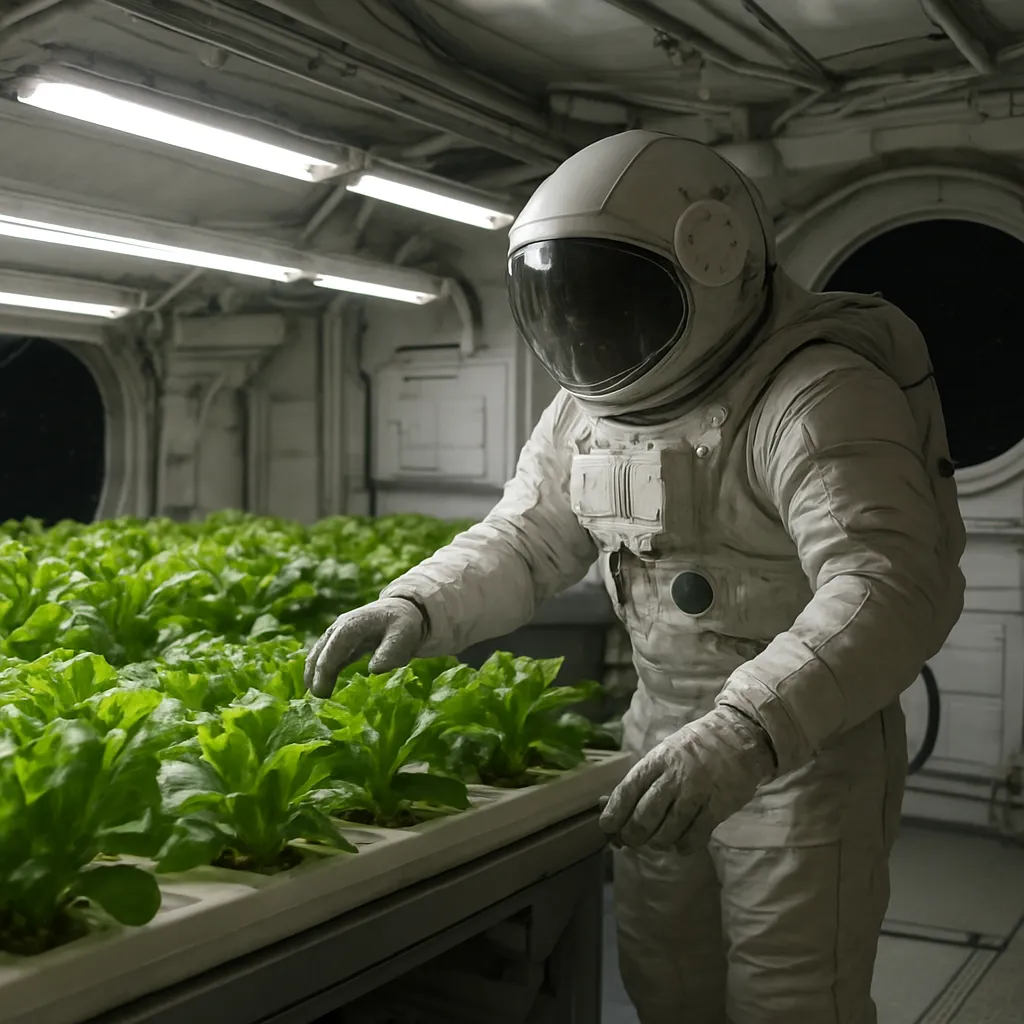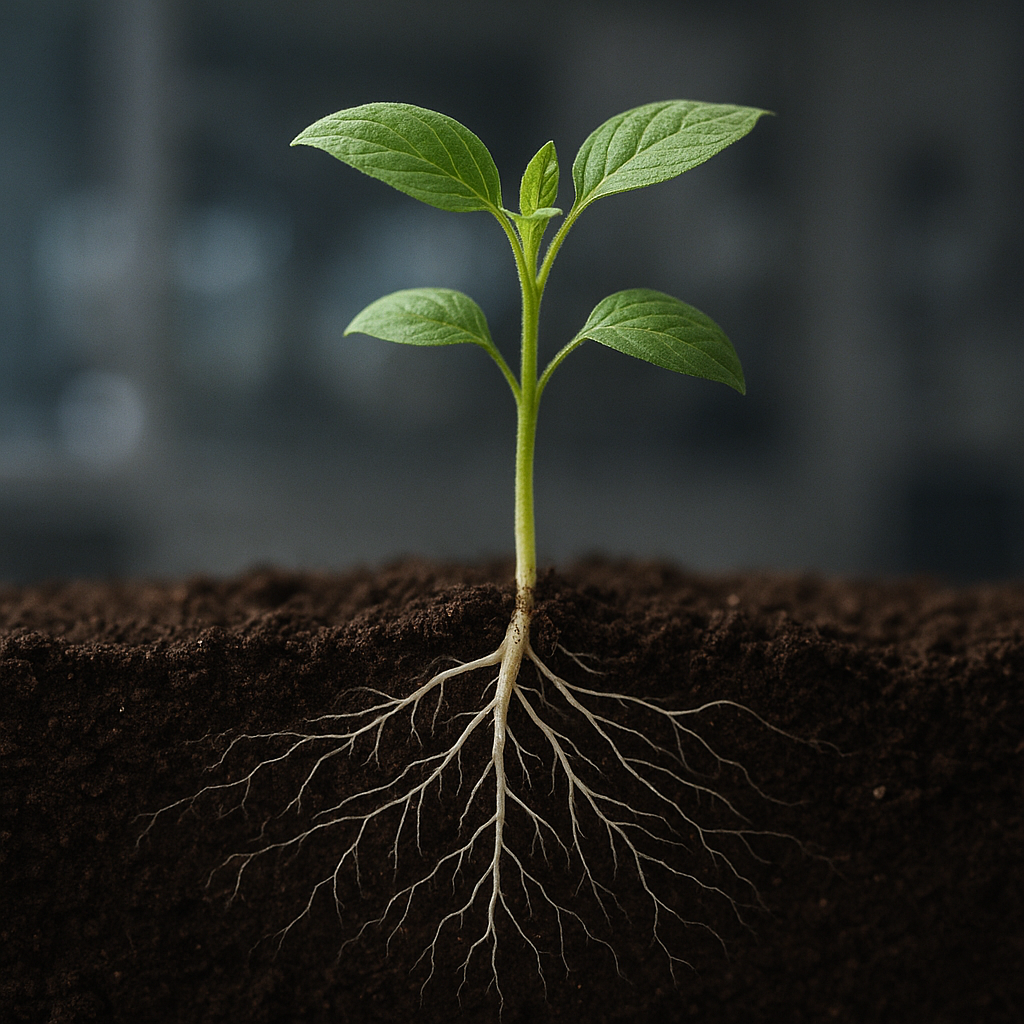
Exploring the influence of altered gravity on plant development reveals critical insights for future long-term missions beyond Earth’s orbit. By focusing on root behavior under reduced gravitational forces, researchers aim to optimize agricultural strategies that ensure reliable food production in space. This article delves into how plants adapt their underground structures, the physiological responses triggered by low-gravity conditions, and the engineering innovations necessary for thriving space-based cultivation systems.
Plant Physiology under Reduced Gravity
When plants are exposed to microgravity, their cellular processes adjust in response to the absence of a strong gravitational vector. In Earth’s environment, gravitropism directs roots downward through auxin redistribution, but in space, this directional cue is weakened. Without a clear “down” direction, roots can grow erratically, altering normal root-to-shoot signaling. Studies aboard the International Space Station (ISS) have demonstrated that the expression of certain genes related to cell wall modification and water transport is significantly different from Earth-based controls. For instance, genes encoding aquaporins, which regulate water flow into root cells, show variable transcription levels, impacting overall hydration status.
Another physiological aspect affected by low gravity is membrane fluidity. The architecture of cellular membranes may become more rigid or more fluid depending on the interplay between lipid composition and mechanical stress. Such changes can influence ion channel activity, leading to modified nutrient uptake rates. Researchers aim to understand these dynamics by using advanced imaging techniques and fluorescent reporters to track real-time ion fluxes in root tissues.
Auxin Transport Alterations
- Microgravity disrupts polar auxin transport by reducing the asymmetry typically established by PIN proteins.
- Experimental data suggest altered localization of transporter proteins in the root tip, which can slow primary root elongation.
- Compensatory mechanisms may include increased lateral root emergence, as plants attempt to enhance soil exploration under uncertain directional cues.
Root Architecture and Directional Growth Mechanisms
In low-gravity conditions, root systems exhibit novel architectural patterns that challenge traditional agronomic models. Without strong gravitational pull, roots may rely more heavily on phototropism—growth toward light sources—to direct their extension. Although shoots primarily respond to light, roots can also sense and grow toward wavelengths emitted by specialized LED arrays in space growth chambers.
Researchers utilize both hydroponic and aeroponic setups to study these phenomena. In hydroponic systems, roots are suspended in nutrient-rich solutions, allowing precise control over mineral concentrations and pH. Aeroponic methods, where roots are misted with nutrient solution, offer high oxygen availability and minimize issues associated with waterlogging in microgravity. Comparative analysis shows that aeroponic cultivation often yields more uniform root branching angles and increased surface area for nutrient absorption.
Modeling Root Network Expansion
- Computational simulation of root growth uses finite-element models to predict stress distribution in root tissues under low mechanical load.
- Fractal analysis helps quantify changes in root branching complexity, providing metrics for performance evaluation across different gravity levels.
- By integrating time-lapse imaging, researchers map dynamic growth trajectories, revealing adaptive strategies such as curvature loops and spiral patterns.
Challenges in Space Agriculture Systems
Designing reliable space farms involves overcoming unique obstacles, including fluid behavior in microgravity, resource recycling, and protection against cosmic radiation. Liquid management becomes particularly problematic when irrigating roots. In low-gravity, water forms spherical droplets that adhere unpredictably to surfaces, risking root suffocation or uneven wetting. Engineering solutions include specialized irrigation wicks and capillary mats that leverage surface tension to distribute moisture evenly across the root zone.
Nutrient delivery presents a similar challenge. Conventional soil-based media are impractical in spacecraft due to mass and containment concerns. Alternative substrates, such as zeolite or perlite, are being tested for their cation-exchange capacity and water retention. Researchers monitor nutrient leaching and adjust solution concentrations through feedback from ion-selective electrodes implanted within the root environment.
Bioregenerative Life Support Integration
- Closed-loop cultivation systems aim to recycle carbon dioxide from crew respiration and convert it into plant biomass, enhancing nutrient delivery efficiency.
- Organic waste from plant senescence is decomposed by microbial consortia, regenerating minerals for subsequent growth cycles.
- Balancing microbial activity and plant uptake is crucial to avoid accumulation of phytotoxic compounds and maintain substrate health.
Technological Innovations for Low-Gravity Cultivation
Advancements in hardware and automation are pivotal to scaling agriculture beyond Earth. One emerging solution is the development of modular growth chambers with embedded sensor networks. These sensors track parameters such as dissolved oxygen, redox potential, and root-zone temperature. Data are transmitted to AI-driven control systems that adjust environmental factors in real time, ensuring optimal growth conditions.
Furthermore, 3D-printing technologies enable on-demand fabrication of custom root support structures. By creating lattice frameworks tailored to specific crop species, engineers can guide root expansion and enhance mechanical stability. Combined with biopolymer composites, these structures are lightweight yet durable, fitting within the strict mass constraints of space missions.
Genetic and Biotechnological Approaches
- Genome editing tools, such as CRISPR-Cas9, are being used to enhance root stress tolerance by targeting genes involved in water uptake and ion transport.
- Introduction of symbiotic microbes, including mycorrhizal fungi, aims to boost nutrient acquisition in low-gravity conditions where natural soil ecosystems are absent.
- Development of synthetic sensing modules in plants allows direct monitoring of intracellular signaling pathways, offering insights into immediate physiological responses to environmental changes.