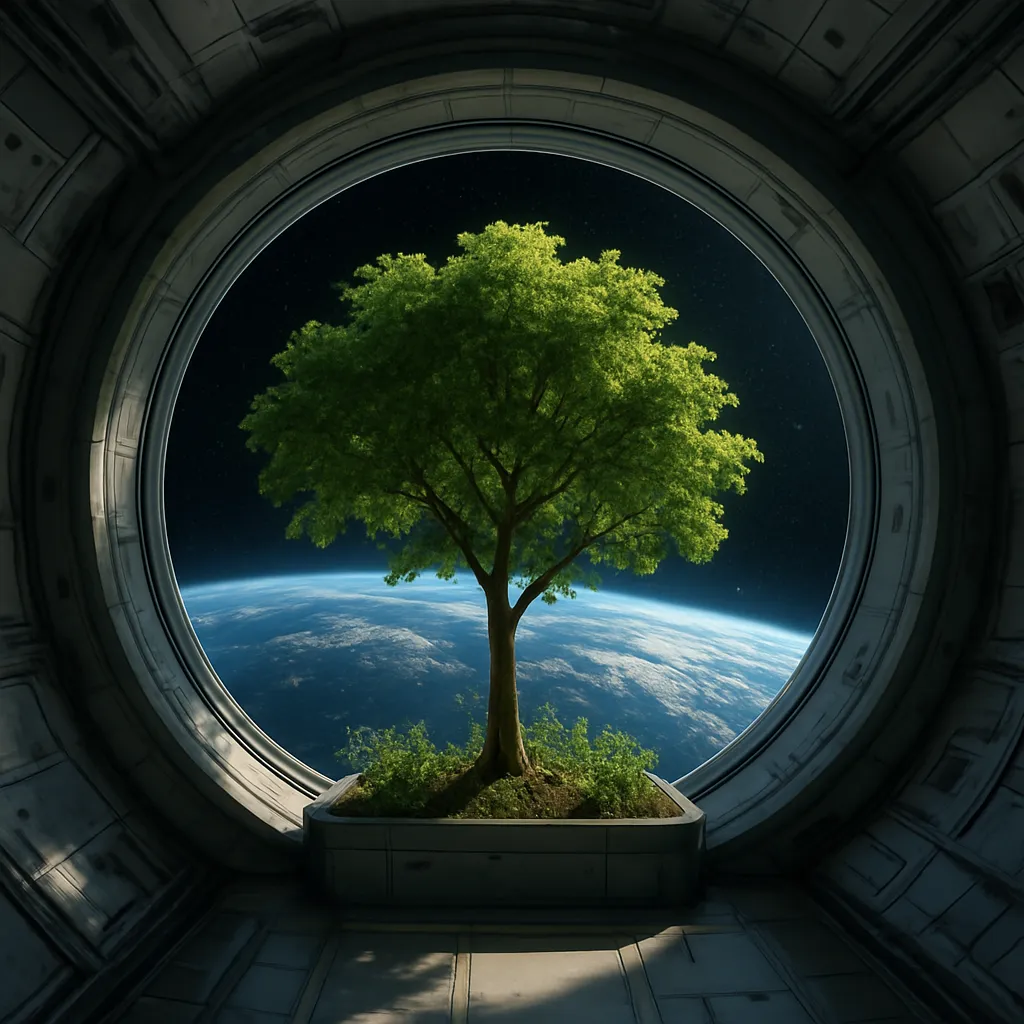
The prospect of cultivating trees within space habitats represents a bold intersection of sustainability, life support innovation, and human adaptability beyond Earth’s confines. As mission planners envision long-term stays on the Moon, Mars, and future orbital settlements, integrating arboreal species into closed ecological systems offers both psychological benefits and practical contributions to air revitalization, water cycling, and food production. This article examines the scientific foundations, experimental endeavors, and design strategies that could enable trees to thrive in engineered extraterrestrial environments.
Understanding the Requirements for Tree Growth in Space Habitats
Tree cultivation in space demands rigorous control over environmental variables that terrestrial forestry often takes for granted. The absence or reduction of gravity alters root distribution and cellular signaling, while confined modules must maintain an optimized atmosphere rich in oxygen and carbon dioxide to support photosynthesis. Achieving these conditions hinges on advanced habitat design and precise life support management.
Gravity and Structural Challenges
Reduced or variable gravity affects geotropism, influencing how roots and shoots orient themselves. On Earth, roots grow downward in response to gravitational cues, ensuring stability and nutrient acquisition. In microgravity or low-g environments, roots exhibit random growth directions, complicating anchorage and water uptake. Structural scaffolds or biodegradable mesh substrates can guide root orientation, mimicking natural soil resistance. Additionally, trunk rigidity must adapt to minimal mechanical stresses; novel composite supports or engineered lignin pathways may compensate for reduced gravitational loading.
Atmospheric and Environmental Controls
Space habitats require closed-loop systems to regulate humidity, temperature, and gas composition. Trees can contribute to air revitalization by absorbing carbon dioxide and releasing oxygen, but they also transpire significant moisture. Water vapor recycling units must capture and condense this moisture to prevent excessive humidity. Precise temperature zones are critical: most temperate tree species flourish between 18 °C and 25 °C, with diurnal fluctuations promoting growth rhythms. Integrating high-efficiency LEDs tuned to red and blue wavelengths supports photosynthesis while minimizing power consumption.
Experimental Efforts and Technological Innovations
Researchers and space agencies have already begun testing seedlings and small plants in orbit. The resulting data provide crucial insights for scaling experiments to tree-sized specimens. From microgravity chambers on the International Space Station to vacuum-sealed test beds on parabolic flights, each experiment elucidates plant behavior under unconventional stresses.
Spaceflight Demonstrations and Bioregenerative Systems
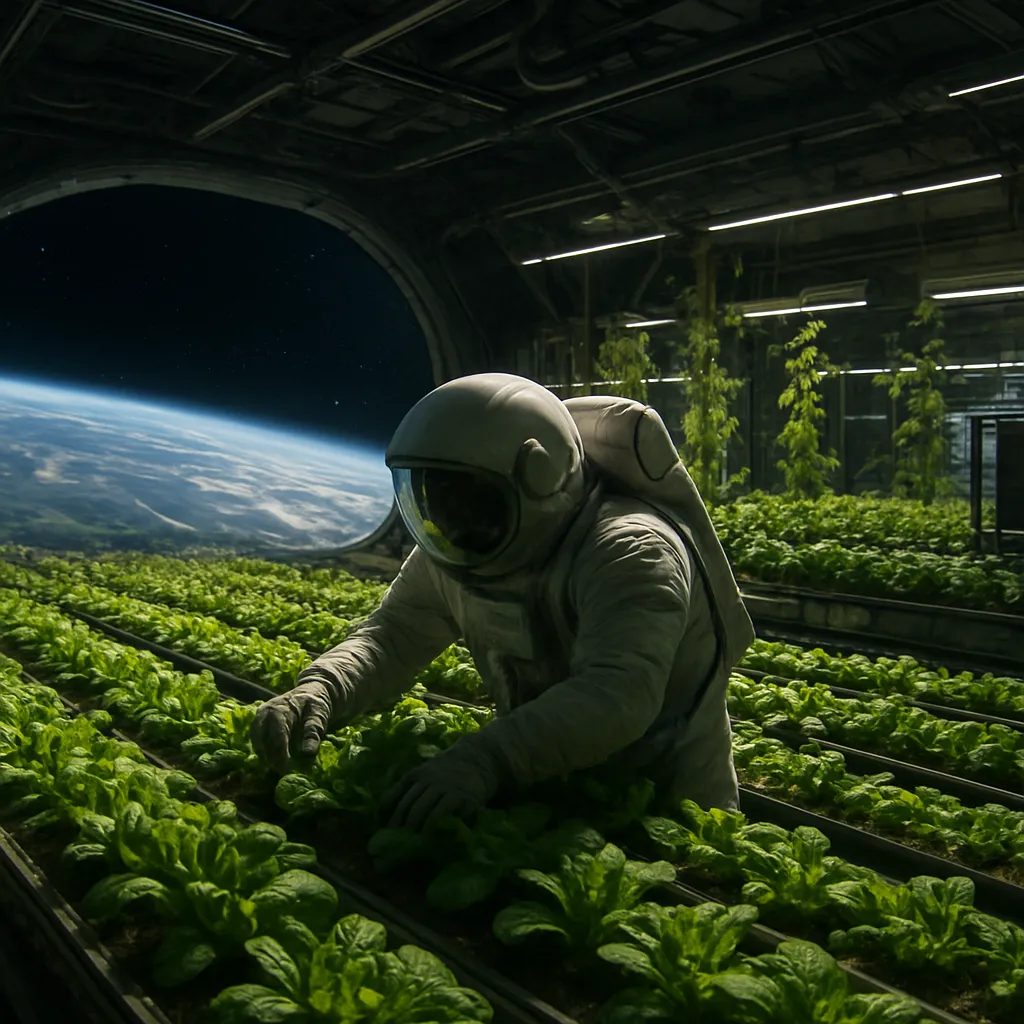
Early plant growth studies aboard the ISS, such as the Vegetable Production System (Veggie) and the Advanced Plant Habitat (APH), focused on leafy greens and small herbs. These facilities rely on a bioregenerative approach, wherein plants recycle waste streams, purify air, and generate food. To transition from herbs to trees, experiments must account for larger root volumes and extended growth cycles. Ongoing investigations explore root containment units filled with porous substrates or aerated gels that facilitate water distribution without soil.
Hydroponics, Aeroponics and Alternative Growth Media
Tree seedlings can be nurtured via hydroponics, where nutrient-rich solutions deliver minerals directly to roots, or through aeroponics, which mists roots in a nutrient solution. Aeroponic systems offer high oxygenation and reduced water usage but require robust humidity control. Alternative media, like foam blocks or volcanic rock analogs, provide structural support while retaining moisture. These media must be carefully sterilized to prevent microbial imbalances in enclosed habitats.
Species Selection and Genetic Adaptation
Choosing ideal tree species for extraterrestrial cultivation involves balancing growth rate, biomass yield, and tolerance to stressors. Pioneer species that demonstrate rapid germination and moderate stature may serve as the initial candidates for orbital or planetary greenhouses.
Choosing Suitable Tree Species
- Fast-growing poplars and willows: Adaptable to hydroponic culture, these species can rapidly produce biomass and contribute to water cycling.
- Citrus and dwarf fruit trees: Offer edible yields and pleasant odors that enhance crew morale but demand more precise nutrient management.
- Conifers and hardy evergreens: Provide structural biomass and potential for resin production, aiding in in-situ resource utilization (ISRU).
Each candidate species must demonstrate resilience to radiation exposure and capacity to complete life cycles in confined photoperiod regimes. Pilot studies on Earth’s analog environments, such as Antarctic greenhouses, help screen species performance under limited resources.
Genetic Engineering and Molecular Approaches
Advancements in CRISPR and synthetic biology enable targeted modifications to enhance stress resistance, nutrient uptake, and lignin composition. Engineering trees with elevated antioxidant pathways can mitigate radiation-induced cellular damage. Altering root exudate profiles encourages beneficial microbial consortia within hydroponic reservoirs, promoting nutrient solubilization and disease suppression. Molecular markers help researchers monitor epigenetic changes arising from prolonged microgravity exposure.
Designing Sustainable Agroforestry in Orbit
Incorporating trees into orbital or planetary habitats requires a systems-level perspective, blending architecture, life support, and crew activities. Agroforestry modules can coexist with crop beds, algae bioreactors, and livestock cell-culture units to form a diverse ecological network.
Bioregenerative Life Support Integration
Trees complement microbial and algal components by stabilizing atmospheric gases and recycling water via transpiration. Their deep root structures reinforce substrate integrity, preventing compaction in multi-tiered growth chambers. Leaves and lignocellulosic branches serve as feedstock for composting units, closing nutrient loops. Integrating sensors that track sap flow and canopy density informs dynamic adjustments to light intensity, humidity, and airflow.
Benefits for Crews and Ecological Cycles
The presence of trees fosters a sense of natural connection, reducing psychological stress and mitigating confinement effects. Biophilic design principles highlight the value of green canopies for mood enhancement and cognitive restoration. Beyond the human dimension, trees stabilize microclimates within habitats by shading sensitive understory crops and moderating temperature spikes during peak lighting cycles.
Future Prospects and Implementation Roadmap
Implementing tree cultivation on lunar or Martian outposts requires phased development, starting with microgravity testbeds and culminating in integrated greenhouse modules on planetary surfaces. Near-term demonstrations on CubeSats and small orbital free-flyers can validate critical subsystems for root support, nutrient delivery, and environmental control.
Near-Term Missions and Cubesat Experiments
CubeSat payloads equipped with miniaturized growth chambers can cultivate saplings under partial gravity analogs generated by rotation. Data on seed germination rates, root architecture, and gas exchange inform scaling decisions. Collaborations between space agencies and academic institutions accelerate innovation by sharing open-source designs for plant habitat hardware.
Long-Duration Missions and Lunar/Martian Habitats
On the Moon and Mars, reduced gravity environments (0.16 g and 0.38 g respectively) present intermediate conditions between microgravity and Earth. These platforms allow testing of full-size arboreal specimens within regolith-based substrates enriched with recycled human waste. Establishing a lunar agroforestry outpost during the Artemis program could demonstrate tree cultivation’s viability under cosmic radiation and regolith dust exposure.
Ultimately, integrating trees into space habitats advances mission self-reliance and fosters a regenerative paradigm for extraterrestrial living. By combining cutting-edge technologies, ecological design, and genetic innovation, humanity moves closer to bringing forests among the stars.