Agricultural land has never been static. Over the past decades, fields, pastures and orchards have been reshaped by technology, demographics and climate pressure. Today, understanding how agricultural space and land use are changing is essential for farmers, planners and citizens who depend on stable food systems. From the expansion of irrigation to the rise of large-scale greenhouses and solar farms, every new investment in agricultural land development influences local ecosystems, rural communities and global markets. As land becomes a scarcer and more contested resource, society must balance production needs with environmental protection, social justice and long‑term resilience.
Historical evolution of agricultural space
For most of human history, agricultural space expanded by clearing forests, wetlands and grasslands. This extensive model relied on relatively low yields per hectare and abundant land at the frontier. As populations grew, societies intensified production through crop rotation, manure use and later mineral fertilisers. The twentieth century’s Green Revolution strongly increased yields with improved varieties, synthetic inputs and mechanisation, allowing food production to rise faster than population in many regions.
However, this revolution also accelerated the specialisation of regions. Some areas focused on **cash** crops for export, while others specialised in cereals, livestock or horticulture. Mixed farms that once combined crops and animals on the same land declined in many industrialised countries. This reorganisation of agricultural space left some landscapes highly simplified and dependent on external inputs, while marginal lands were abandoned or converted to other uses.
Drivers of contemporary land use change
Several interacting forces now reshape where and how agriculture takes place. Population growth and urbanisation increase demand for food but also convert farmland into housing, transport corridors and industrial zones. Economic globalisation encourages farmers to focus on **competitive** products for international markets, sometimes at the expense of local food crops. Climate change alters rainfall patterns, temperatures and extreme events, pushing some crops to new regions while reducing viability elsewhere.
Technological innovation is another powerful driver. Precision farming, new irrigation systems and digital tools can make marginal areas more productive or profitable. Meanwhile, consumption patterns – more meat, dairy and processed products in many countries – change land use by increasing demand for animal feed, grazing land and industrial oilseeds. Policy frameworks, including subsidies, trade agreements and conservation rules, shape the relative attractiveness of different land uses and management systems.
Urbanisation and the loss of peri-urban farmland
Urban sprawl is among the most visible transformations of agricultural space. As cities expand, peri-urban farmland is often the first to disappear, replaced by housing estates, logistics centres and commercial infrastructure. This land is typically fertile, well connected by roads and close to markets, making its loss particularly significant for local food supply and short value chains.
The conversion of farmland at the urban fringe fragments remaining plots, complicates farm operations and increases conflicts over noise, smells and traffic. Yet peri-urban areas also host innovative forms of agriculture, including direct marketing, farm shops and community-supported agriculture. Strategic planning and zoning can protect key agricultural belts, but success depends on political will, land prices and the competitiveness of farming compared to real estate development.
Intensification, consolidation and farm structure
In many regions, the number of farms is declining while average farm size grows. Land consolidation is driven by ageing farmers, limited succession, and economies of scale in machinery and input use. Larger commercial units can deploy advanced technologies, negotiate better contract conditions and access capital more easily. This process reshapes the social and physical landscape, replacing diverse mosaics of small fields with large, uniform parcels.
Intensification – producing more output per hectare – often accompanies consolidation. Higher-yielding crop varieties, **synthetic** fertilisers, pesticides and concentrated animal feeding operations increase production but also increase environmental pressures on soils, water and biodiversity. Where land is scarce or expensive, such as in parts of Europe and East Asia, intensification is frequently seen as the only way to maintain or increase output. The challenge is to move toward sustainable intensification, raising productivity while reducing negative impacts.
Expansion into new frontiers
While some regions face farmland loss, others experience agricultural expansion into forests, savannas and wetlands. Soybean cultivation, cattle ranching and oil palm plantations have driven significant deforestation in tropical regions. These new agricultural frontiers often emerge along new roads, dams or mining projects that open previously remote areas to markets and speculation.
Such expansion provides jobs, export earnings and infrastructure, but typically at the cost of carbon-rich ecosystems and traditional livelihoods. When land tenure is unclear or customary rights are not recognised, local communities can be displaced. Monitoring tools based on remote sensing now make it easier to track deforestation and land conversion, but enforcement of protective regulations and incentive schemes remains uneven across countries.
Climate change and spatial shifts in production
Climate change is gradually redrawing the map of suitable areas for many crops and livestock systems. Warmer temperatures may expand potential cultivation zones for certain crops into higher latitudes and altitudes. At the same time, heat stress, droughts and floods can reduce yields or make traditional crops unviable in their current locations. Farmers adapt by changing crop varieties, altering planting dates or even switching to entirely different species.
These adjustments are not only agronomic; they also have spatial implications. Some regions may see increased irrigation infrastructure and reservoir construction, while others may shift toward more drought-tolerant species or extensive grazing. Coastal agricultural lands are threatened by sea level rise and saltwater intrusion, leading to the abandonment of low-lying fields or conversion to aquaculture. Over time, the cumulative effect of countless local decisions can profoundly reconfigure regional agricultural landscapes.
Digitalisation, precision agriculture and spatial data
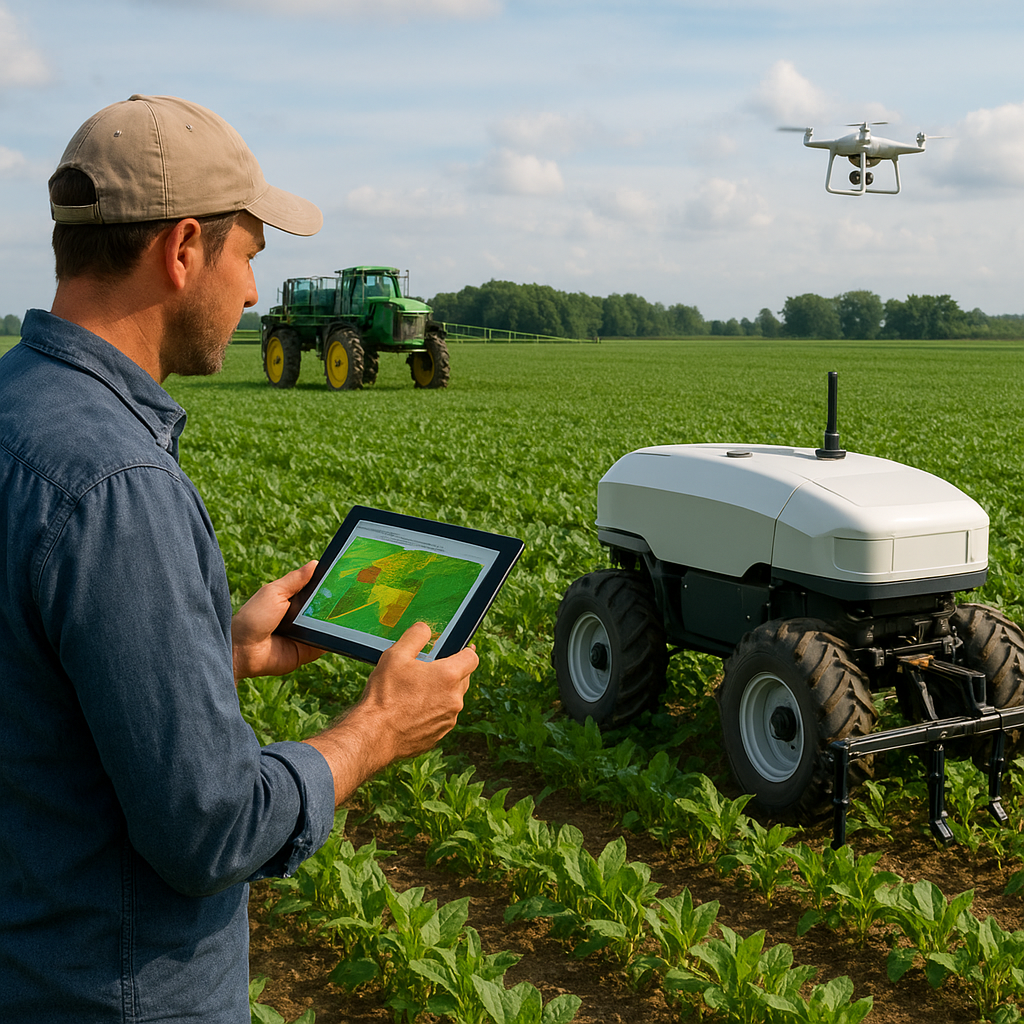
Digital tools enable a new level of spatial detail in land management. Precision agriculture uses satellite positioning, sensors, drones and yield monitors to apply inputs only where needed, reducing waste and environmental pressure. Variable-rate fertilisation, site-specific irrigation and targeted crop protection rely on detailed maps of soil properties, plant health and microclimatic conditions.
This fine-grained approach shifts the concept of agricultural space from uniform fields to heterogeneous patches with distinct management prescriptions. It also generates large datasets that inform decisions about crop choice, rotation design and long-term investment in land improvement. While such tools are widely adopted in mechanised, capital-intensive systems, they are gradually spreading to smaller farms through service providers, cooperatives and shared platforms.
Agroecology and diversified land use
In response to environmental concerns and rural social issues, **agroecology** proposes a different way of organising agricultural space. Instead of simplifying landscapes, agroecological systems increase diversity within and between fields. Examples include intercropping, hedgerows and buffer strips, agroforestry, integrated crop–livestock systems and the maintenance of semi-natural habitats for pollinators and natural enemies of pests.
These practices change land use patterns by reserving space for ecological functions, not just direct production. Mixed mosaics of crops, trees and pastures can stabilise yields, improve soil structure and water infiltration and support biodiversity. Although such systems may sometimes yield less of a single commodity per hectare, they can deliver multiple products and ecosystem services, including carbon sequestration and climate resilience.
Renewable energy and competing land claims
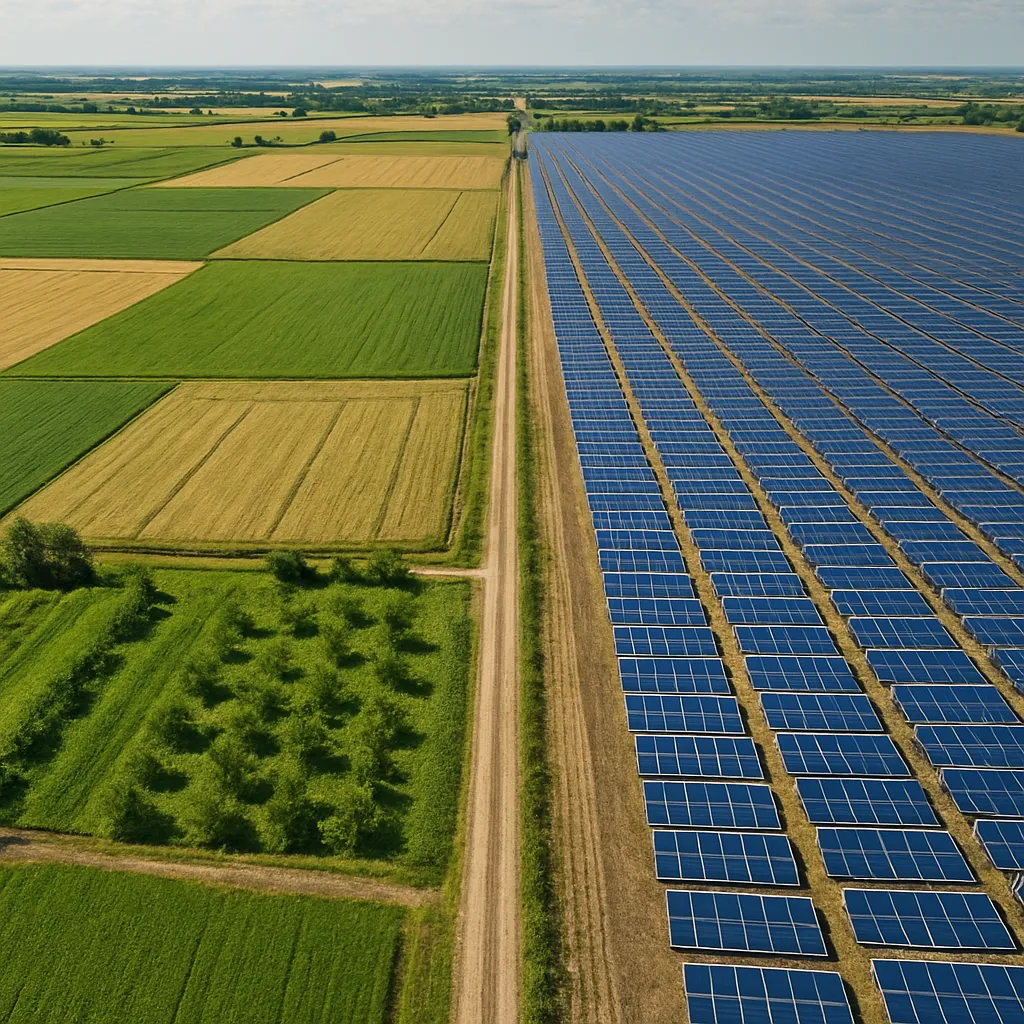
The transition to low-carbon energy systems adds new pressures on agricultural space. Bioenergy crops such as maize for ethanol or oilseeds for biodiesel compete with food crops for land and water. Large-scale solar farms and wind turbines require surface area and associated infrastructure, often located on or near farmland. While these projects provide new income streams for landowners, they can also reduce the area available for cultivation or fragment habitats.
Innovative approaches like agrivoltaics – combining solar panels with crops or grazing – attempt to reconcile energy production with agricultural use. The spatial design of these projects, including panel height, spacing and orientation, determines whether crops can grow underneath or animals can graze between rows. As renewable energy deployment accelerates, integrated planning is essential to minimise trade-offs and support multifunctional landscapes.
Soil degradation, restoration and land quality
Not all hectares are equal. The quality of agricultural land depends on soil structure, organic matter content, depth, drainage and contamination. Intensive cultivation without sufficient soil care leads to erosion, compaction and declining fertility. Over time, this degrades productive potential and may push farmers to clear new land elsewhere, perpetuating a cycle of expansion and abandonment.
Land restoration efforts seek to reverse this trend by rebuilding soil organic matter, improving water management and re-establishing vegetation cover. Practices such as cover crops, reduced tillage and organic amendments can, over several years, transform degraded fields into productive, resilient systems. At landscape scale, rewetting drained peatlands, restoring riparian zones and stabilising slopes reduce off-site impacts like flooding and sedimentation. These interventions change not only soil health but also the visible pattern of land use.
Land tenure, ownership and social dimensions
The way agricultural space is owned, leased and governed strongly influences land use decisions. Secure tenure encourages long-term investment in soil conservation, irrigation and tree planting. In contrast, insecure or short-term arrangements incentivise extraction and minimal maintenance. Concentrated ownership structures can sideline smallholders and tenant farmers, while fragmented parcels complicate efficient management.
Land reforms, inheritance laws and market dynamics constantly reshape who controls agricultural land. Foreign investment and corporate land acquisitions introduce new actors into rural territories, sometimes promising infrastructure and employment but also raising concerns over local displacement and food sovereignty. Inclusive governance mechanisms and transparent cadastral systems can help balance interests and avoid conflict.
Future scenarios and pathways
Looking ahead, agricultural space will continue to evolve under the combined influence of technology, demography, climate and policy. One possible trajectory is further intensification and consolidation, with highly specialised regions supplying global markets through long supply chains. Another pathway emphasises territorial approaches, where regions seek to align production with local dietary needs, ecological limits and circular resource use.
In both scenarios, the spatial configuration of agriculture will be shaped by choices made today: where to protect high-quality soils, how to integrate biodiversity corridors, which areas to prioritise for irrigation or renewable energy, and how to ensure equitable access to land. Recognising agricultural land as a multifunctional resource – providing food, livelihoods, ecosystem services and cultural value – is essential for designing resilient landscapes.
Conclusion: navigating change in agricultural space
Transformations in agricultural land use are neither inevitable nor uniform; they are the cumulative outcome of policies, markets, technologies and local practices. Farmers, planners and citizens share responsibility for steering these changes toward sustainability. Integrating **climate** resilience, biodiversity protection, social equity and economic viability into land use decisions will determine whether future generations inherit landscapes that can feed people while maintaining ecological integrity.
By observing ongoing trends, investing in knowledge and experimentation, and supporting governance systems that value long-term public goods, societies can adapt agricultural spaces to new realities. The challenge is to move beyond narrow efficiency metrics and recognise the full range of functions that well-managed agricultural land provides to humanity and the planet.