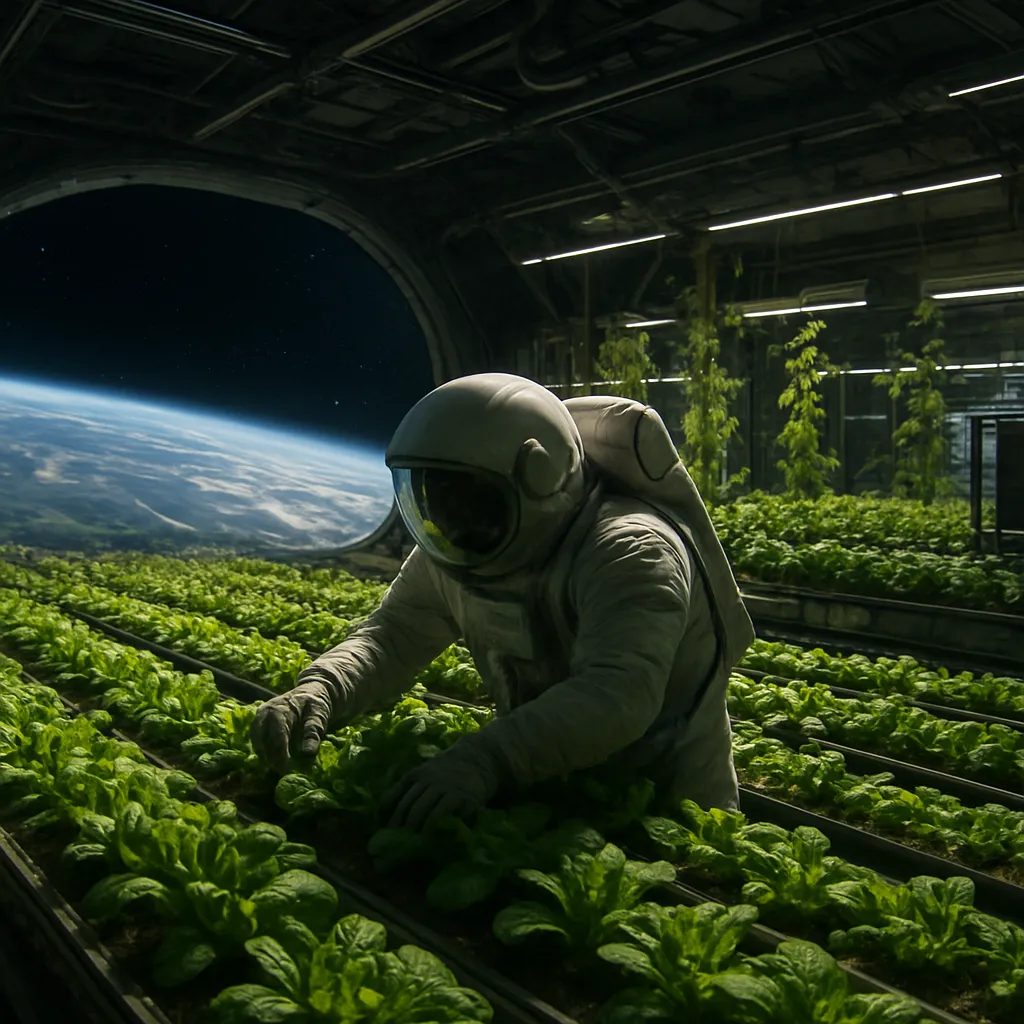
As humanity sets its sights beyond Earth, the quest for reliable **food production** in space habitats grows increasingly vital. Among the myriad of biological tools at our disposal, fungi offer unique capabilities that can revolutionize extraterrestrial agriculture. From enhancing **nutrient** cycling to bolstering plant health through intricate **symbiosis**, these organisms could play a pivotal role in sustaining long-duration missions. This article explores the multifaceted contributions of fungi to space-based agriculture systems, examining their potential applications, biotechnological innovations, and the challenges inherent in cultivating them beyond Earth’s gravity.
Harnessing Fungal Capabilities in Extraterrestrial Soils
In terrestrial ecosystems, fungi serve as masterful decomposers and **bioremediators**. They break down complex organic matter, releasing essential elements such as nitrogen, phosphorus, and potassium—elements that are scarce in many extraterrestrial regoliths. By incorporating select fungal strains into Martian or lunar soils, researchers aim to transform barren substrates into fertile growing media.
Key processes include:
- Biodegradation of waste biomass, converting plant residues and human byproducts into humic compounds.
- Mycorrhizal associations, whereby the fungal mycelium network extends plant root systems and enhances water and nutrient uptake.
- Bioremediation of toxic elements, such as perchlorates on Mars, through fungal metabolic pathways that immobilize or neutralize harmful substances.
Experimental trials in simulated lunar regolith have demonstrated a 30–40% increase in plant biomass when inoculated with arbuscular mycorrhizal fungi. These promising results suggest that harnessing fungal-driven transformations may be key to achieving **sustainability** in off-world agricultural systems.
Fungal Biotechnology for Enhanced Crop Growth
Beyond their natural roles in soil conditioning, fungi can be engineered or selected for advanced functions that directly boost crop performance. Through modern biotechnological approaches, scientists are exploring how fungal metabolites and secreted enzymes can improve plant growth, resilience, and even **photosynthesis** efficiency under controlled environment agriculture (CEA) conditions.
Production of Growth-Stimulating Compounds
Certain endophytic fungi produce phytohormones such as auxins, cytokinins, and gibberellins. When introduced to seedlings in space greenhouses, these compounds can enhance root development, leading to:
- Improved water retention in hydroponic systems.
- Faster germination rates under microgravity.
- Increased resistance to abiotic stressors like radiation and low humidity.
Enhancing Nutrient Bioavailability
Fungal secretion of organic acids and siderophores can chelate minerals within growth substrates, making them more accessible to plant roots. By leveraging these mechanisms, space agriculture systems can:
- Reduce dependence on synthetic fertilizers, lowering payload mass.
- Recycle nutrients from inedible plant parts and microbial biomass.
- Maintain a closed-loop ecosystem where waste is cycled into new growth.
Overcoming Challenges in Space-Based Fungal Cultivation
Cultivating fungi in extraterrestrial environments presents unique technical and biological hurdles. Microgravity alters fluid dynamics and gas exchange, potentially affecting fungal growth morphology and spore dispersal. Additionally, radiation outside Earth’s magnetosphere can damage fungal DNA, compromising their metabolic functions.
Microgravity Effects on Fungal Physiology
Studies aboard the International Space Station (ISS) have documented changes in fungal colony structure, including increased radial growth but reduced hyphal density. To mitigate these effects, bioreactor designs incorporate:
- Dynamic mixing systems to ensure uniform nutrient distribution.
- Controlled airflow patterns that mimic terrestrial gas exchange.
- Substrate carriers that anchor mycelium and prevent free-floating spores.
Radiation Resistance Strategies
Fungi such as Cryptococcus neoformans exhibit remarkable **resilience** to ionizing radiation. By isolating radiosensitive pathways and using genetic editing, researchers aim to develop strains with enhanced **radioprotection**. Potential solutions include:
- Overexpression of melanin-producing genes, as melanin can absorb and dissipate radiation energy.
- Integration of DNA repair enzymes from extremophiles to improve genomic stability.
- Shielded cultivation chambers utilizing water or regolith barriers for passive protection.
Integrating Fungi into Closed-Loop Life Support
Long-duration missions to Mars or deep-space outposts require fully closed-loop life support systems. Fungi can act as critical components in these systems by facilitating the conversion of human waste and inedible biomass into reusable resources. Their roles can be categorized as follows:
- Organic Waste Recycling: Fungal consortia break down cellulose and lignin from plant stems and leaves, producing compost-like material for new crop beds.
- Atmospheric Management: Certain fungi consume carbon dioxide and release oxygen via synergistic interactions with algae, contributing to air revitalization.
- Biomaterial Production: Mycelium-based composites offer lightweight, biodegradable alternatives for construction or packaging within habitat modules.
By integrating fungal bioprocessors into habitat design, mission planners can significantly reduce resupply needs from Earth, cutting costs and increasing crew autonomy. Ongoing research focuses on automating these bioreactors, ensuring they operate reliably under variable gravity and resource availability.