The vision of cultivating crops beyond Earth’s bounds is rapidly shifting from science fiction to feasible reality. Building robust interplanetary supply chains for food production demands a fusion of cutting-edge engineering, biological innovation, and strategic planning. As humanity sets its sights on Mars, the Moon, and beyond, securing a reliable food supply becomes an indispensable pillar of long-term space exploration. This article explores key facets of extraterrestrial agriculture, outlining critical infrastructure, logistics solutions, technological breakthroughs, and environmental considerations essential for sustaining life on distant worlds.
Infrastructure for Extraterrestrial Agriculture
Constructing agricultural facilities on the Moon or Mars requires meticulous design to withstand harsh environmental conditions. The Martian surface features extreme temperature swings, cosmic radiation, and lower gravity, all of which influence plant development. A combination of sealed growth modules, energy-efficient lighting, and advanced waste-recycling systems forms the backbone of any successful farming outpost.
Sealed Growth Environments
Pressure-controlled habitats emulate Earth-like conditions, maintaining optimal CO₂ levels, humidity, and temperature. Innovations in transparent shielding and anti-radiation materials protect plant tissues from harmful particles while allowing sufficient sunlight or artificial spectra to penetrate. These modules integrate:
- Bioregenerative life-support systems that recycle air and water
- Modular framework for quick assembly and expansion
- Redundant power sources, including nuclear and solar arrays
Vertical and Layered Systems
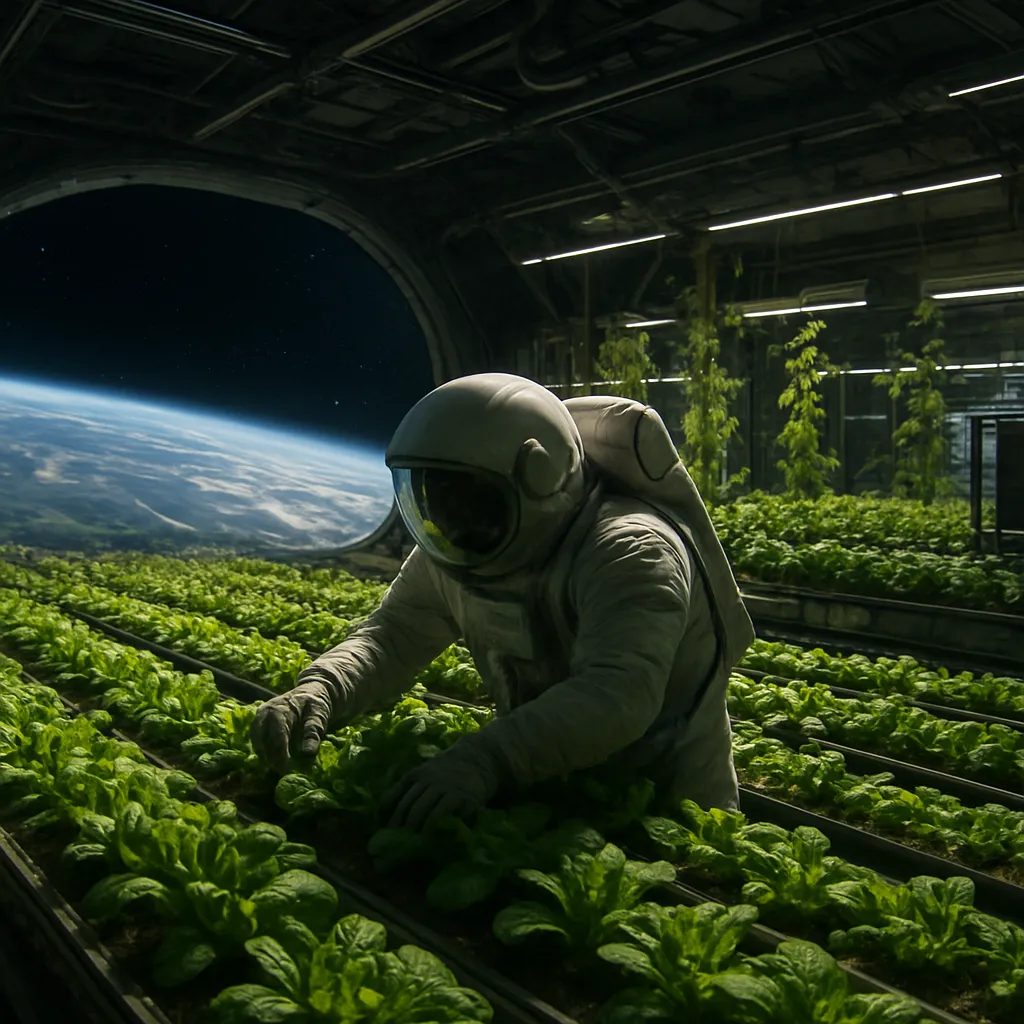
With precious floor area at a premium, vertical farming racks maximize yield per cubic meter. Combined with hydroponics and aeroponic misting, these configurations deliver nutrients directly to plant roots, reducing water use by up to 90%. Sensors continuously monitor pH, electrical conductivity, and root-zone oxygenation to guarantee healthy growth in microgravity or reduced gravity environments.
Logistics and Supply Chain Strategies
Establishing an interplanetary supply chain hinges on optimizing launch schedules, payload mass, and in situ resource utilization (ISRU). By sourcing water, minerals, and building materials from celestial bodies, mission planners can significantly reduce Earth-dependent resupply missions.
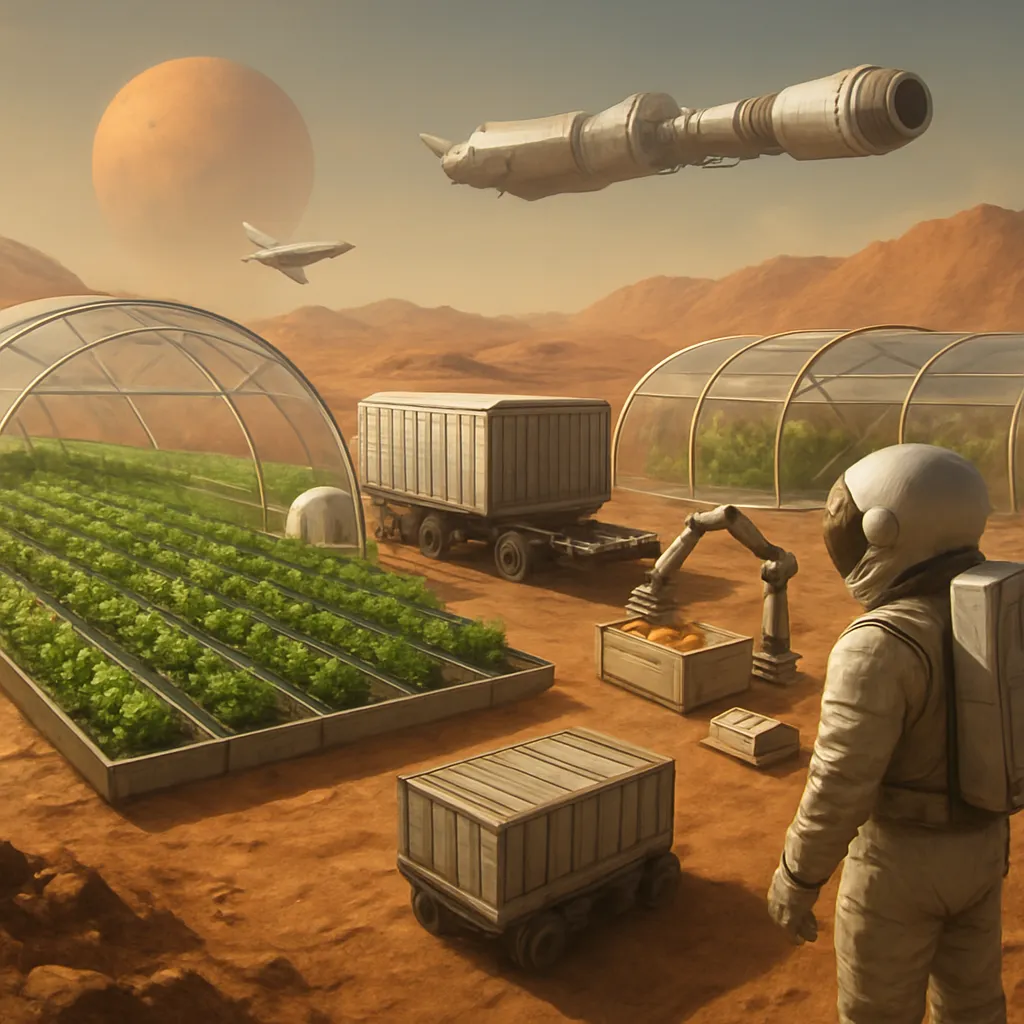
- Pre-deployment of infrastructure: Automated robotic systems deliver habitat components and initial seed stock months or years before crew arrival.
- ISRU integration: Extracted water ice and regolith-derived nutrients serve as the foundation for hydroponic media and 3D-printed greenhouse panels.
- Orbital staging points: Supply caches in lunar orbit or Mars’s moons streamline cargo transfers and provide emergency reserves.
- Flexible transportation: Advanced propulsion, such as nuclear thermal rockets, cut travel time and enable more frequent trips.
Advanced Technologies Driving Space Farming
Breakthroughs in robotics and automation are pivotal for reducing crew workload and ensuring continuous agricultural operations. Autonomous drones and rovers handle seeding, harvesting, and system maintenance, while AI-driven management systems predict crop health issues before they arise.
Artificial Intelligence in Crop Management
Machine learning algorithms analyze multispectral imagery to detect nutrient deficiencies, pest outbreaks, or light anomalies. Real-time data feeds allow the system to adjust lighting spectra, nutrient mixtures, or growth rates, maximizing output and minimizing resource waste.
Biotechnology and Genetic Optimization
Tailored plant varieties are engineered for enhanced resilience and accelerated growth cycles. By modifying genes related to stress tolerance, photosynthetic efficiency, and nutrient uptake, researchers aim to create strains capable of thriving under reduced atmospheric pressure and variable radiation exposure.
Environmental and Resource Management
Sustaining a closed-loop agricultural ecosystem demands careful balancing of inputs and outputs. Effective water reuse, waste composting, and oxygen regeneration are interdependent processes that ensure long-term mission viability.
- Water Recovery: Advanced filtration and catalytic purification systems reclaim moisture from transpiration and graywater.
- Nutrient Cycling: Organic waste is decomposed by microbial consortia, converting biomass into fertilizer for future growth cycles.
- Atmospheric Control: Algae bioreactors complement plant photosynthesis, stabilizing oxygen and carbon dioxide levels.
Robust monitoring networks track system health, environmental parameters, and resource inventories, feeding into predictive maintenance schedules. By integrating redundancy and fail-safes, habitats can adapt to unexpected challenges, from dust storms on Mars to equipment malfunctions in lunar tunnels. The synergy of these elements paves the way for a sustainable and resilient presence beyond Earth, enabling humanity to thrive on multiple worlds.