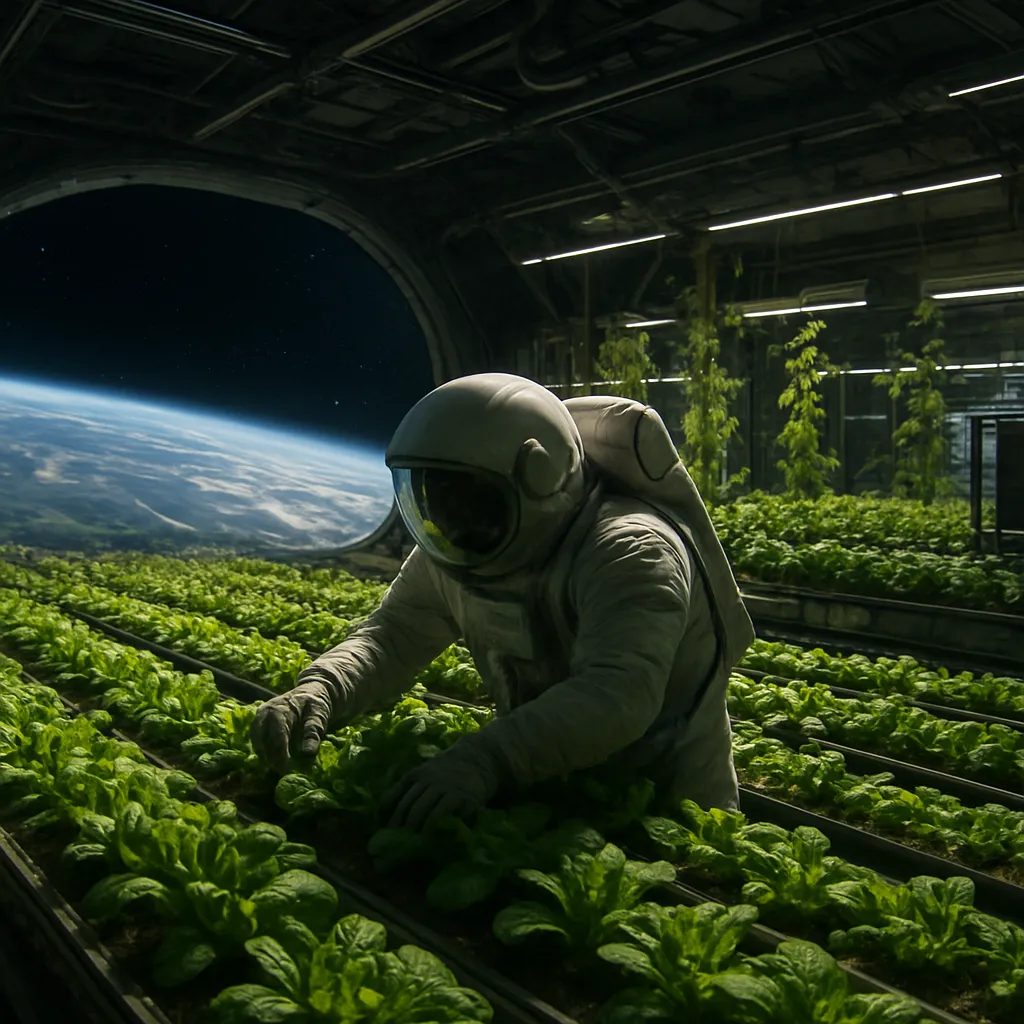
As humanity sets its sights on the Red Planet, establishing sustainable food production has become a critical objective. Implementing vertical farming models on Mars offers a pathway to ensure a reliable supply of fresh produce, reduce resupply dependency from Earth, and support long-duration crewed missions. This article explores the key considerations and innovations necessary to design, deploy, and operate high-efficiency agricultural modules under Martian conditions.
Martian Environmental Constraints and Challenges
Atmosphere and Temperature Extremes
The thin, CO2-rich atmosphere of Mars presents significant hurdles for plant cultivation. With surface pressure averaging less than 1% of Earth’s and temperatures ranging from –125 °C at the poles to 20 °C at the equator, any agricultural habitat must maintain strict thermal regulation and pressurization. Insulation and active heating systems are essential to create a suitable climate within growth chambers.
Radiation and Dust Storms
Cosmic radiation and ultraviolet flux are far greater on Mars due to its lack of a global magnetic field and thin atmospheric shielding. Prolonged exposure can damage plant DNA and degrade materials. Multi-layered shielding, using regolith or specialized polymers, helps mitigate this risk. Frequent global dust storms, which can last for months, challenge external solar power input, necessitating robust energy storage and diversification strategies.
Resource Scarcity and Logistics
Water and nutrients are limited resources on Mars. Extracting water from subsurface ice or atmospheric humidity traps requires energy-intensive processes. Supplying fertilizers and substrates from Earth could become economically prohibitive. Therefore, closed-loop systems that maximize circularity and waste valorization are critical to ensure long-term viability.
Designing Vertical Farming Systems for Mars
Structural Considerations and Modular Design
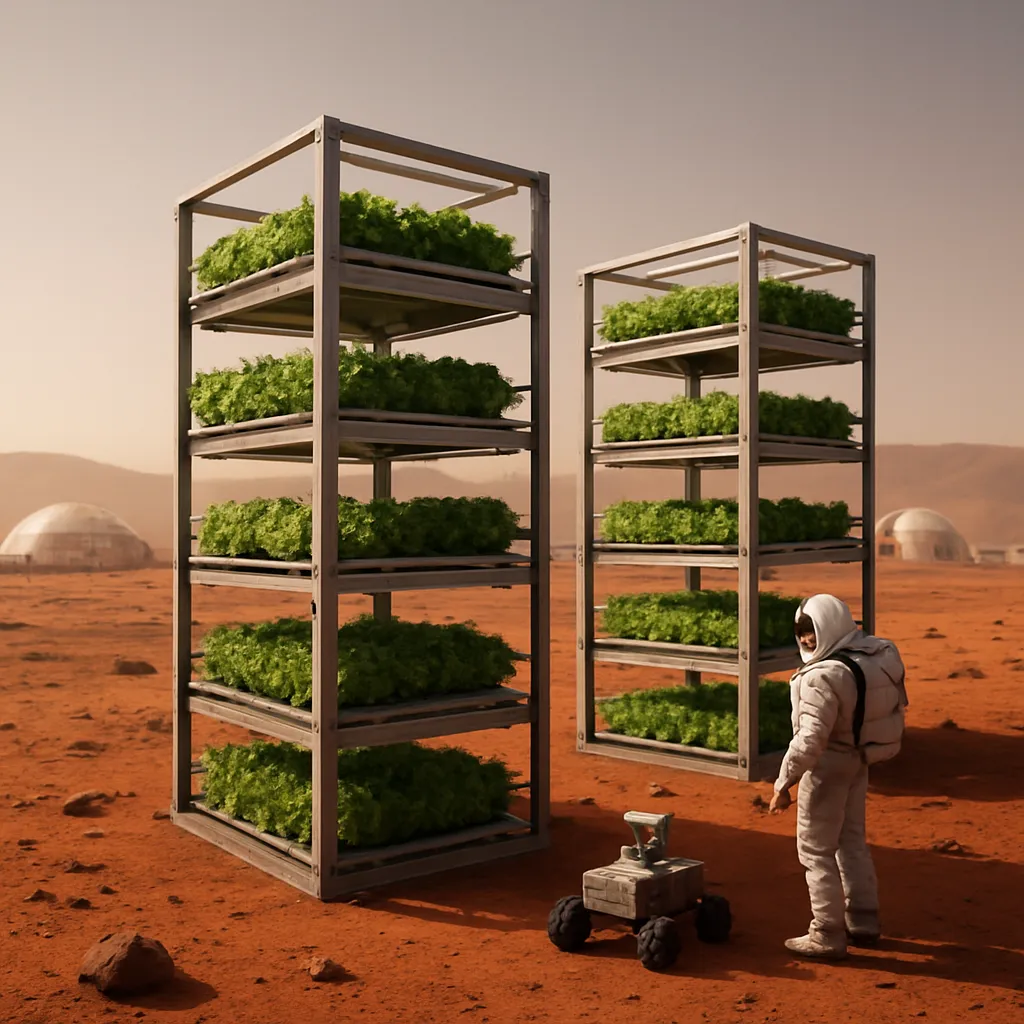
Vertical farms on Mars will likely adopt stacked rack architectures within pressurized modules. Lightweight composite materials, possibly reinforced with in-situ regolith bricks, form the skeleton. Modular racks allow for incremental expansion and straightforward replacement of faulty components. Integration with habitat architecture demands airtight seals and vibration damping to withstand landing and seismic events.
Advanced Lighting Technologies
Since Martian solar irradiance is about half that of Earth’s, artificial lighting is indispensable. LED lighting systems tuned to photosynthetically active radiation (PAR) wavelengths can optimize plant growth while minimizing energy consumption. Dynamic spectrum control permits tailoring of blue, red, and far-red light ratios to regulate morphology, flowering, and nutrient content.
Hydroponic and Aeroponic Solutions
Hydroponics and aeroponics excel at conserving water and nutrients. In hydroponic systems, plants grow in inert media with nutrient-rich solutions circulated through roots. Aeroponics suspends roots in mist environments, further reducing water usage by 90% compared to conventional farming. Both approaches rely on precise control of pH, conductivity, and oxygenation to maintain root health and maximize resource-efficiency.
Sustainability and Closed-Loop Life Support
Water Recycling and Nutrient Management
Water reclamation from plant transpiration, crew wastewater, and condensation loops is imperative. Membrane filtration, catalytic oxidation, and biological reactors can purify water to agricultural grade. Nutrient redistribution systems capture and reconstitute mineral-rich brines, closing the loop on fertilization and reducing resupply frequency.
Waste Valorization and Composting
Plant residues, inedible biomass, and human waste constitute a potential nutrient reservoir. Thermophilic composting and anaerobic digestion break down organic matter into humus and biogas, respectively. The resulting compost supports soil-less substrates, while captured methane and CO2 feed energy and plant metabolism. Such bioregenerative processes exemplify sustainability in extraterrestrial agriculture.
Integration with Energy Systems
Vertical farms require uninterrupted power for lighting, climate control, and pumping. Solar arrays, nuclear reactors, and energy storage units must interlock seamlessly. Demand-response algorithms can throttle lighting during dust storms, drawing on batteries or reactor output to maintain critical functions. Energy balance modeling ensures the farm remains net-positive over extended mission timelines.
Biological and Genetic Innovations
Crop Selection and Genetic Optimization
Fast-growing, nutrient-dense species such as lettuce, radishes, kale, and dwarf tomatoes are prime candidates. Genetic engineering can enhance stress tolerance, accelerate growth cycles, and boost phytonutrient content. Genes governing drought resistance and low-light adaptation may be incorporated to suit Martian conditions, producing superlative cultivars for space agriculture.
Microbial Symbiosis and Probiotics
Beneficial microorganisms promote root health, nutrient uptake, and disease resistance. Engineered microbes can fix nitrogen, solubilize phosphates, and degrade toxic compounds. Maintaining a balanced microbiome in closed habitats demands rigorous monitoring and periodic reseeding to prevent monoculture collapse.
Automation, AI, and Remote Monitoring
- Sensor Networks: Deploy networks of pH, humidity, CO2, and temperature sensors for real-time feedback.
- Robotic Handling: Automated arms and conveyor systems handle planting, harvesting, and cleaning without human intervention.
- Machine Learning: Predictive algorithms optimize nutrient dosing, lighting schedules, and growth trajectories based on historical data.
- Teleoperation: Earth-based agronomists can remotely adjust parameters and troubleshoot anomalies via high-latency communication links.
- Fault Detection: AI-driven diagnostics detect early signs of system failure, triggering redundant subsystems to ensure continuous operation.
Automation reduces crew workload and minimizes human error, making the agricultural module a self-sufficient habitat component.
Economic and Logistical Perspectives
The economics of Martian agriculture hinge on launch mass, in-situ resource utilization (ISRU), and lifecycle costs of equipment. Upfront investments in specialized growth chambers and lighting infrastructure are offset by reduced cargo deliveries. Collaborative development with private space firms can drive down unit costs through mass production. Furthermore, technologies matured for Mars can find terrestrial applications in arid regions and urban centers, amplifying return on investment.
Implementing vertical farming on Mars demands an interdisciplinary approach that integrates aerospace engineering, plant science, environmental systems design, and artificial intelligence. By leveraging genetic engineering, bioregenerative processes, and advanced automation, future settlers can achieve robust food security, advancing human presence beyond Earth.