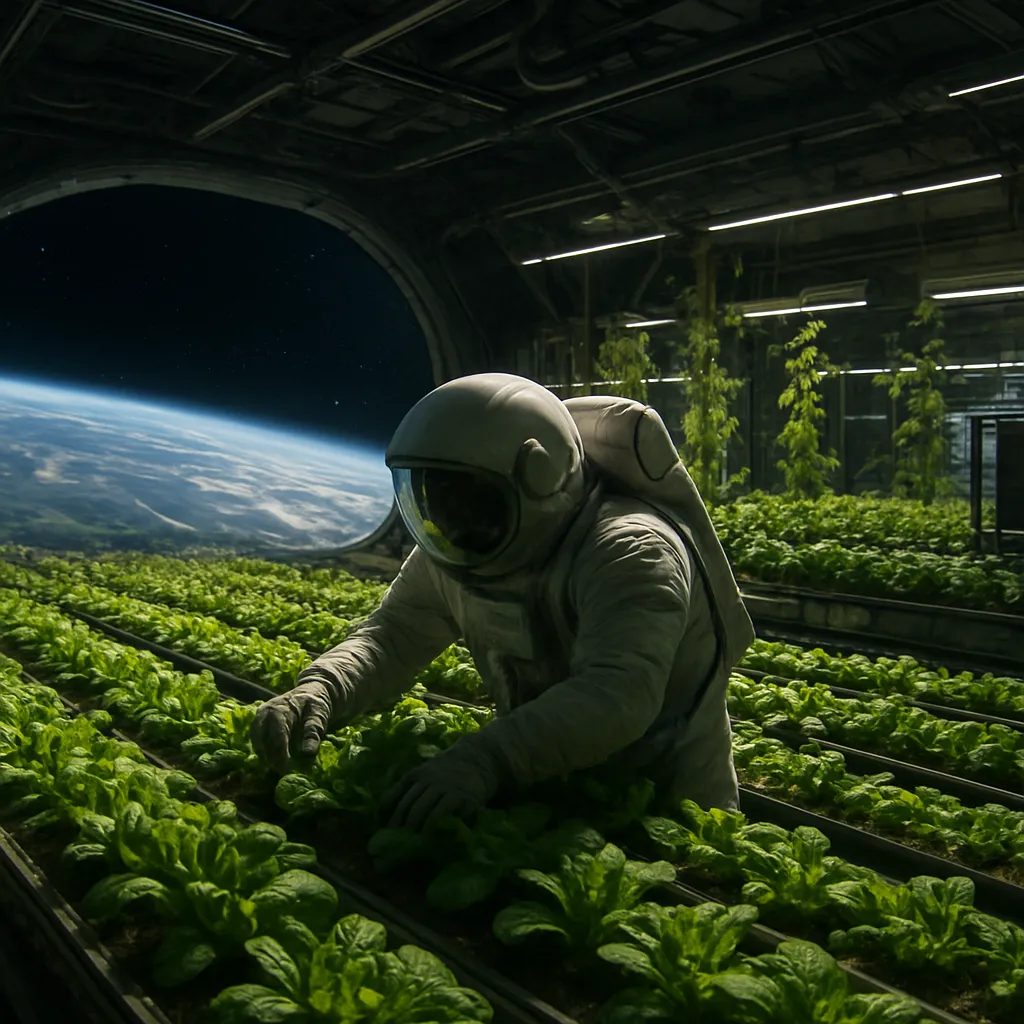
As humanity ventures beyond Earth’s atmosphere for prolonged missions and establishes permanent outposts on the Moon and Mars, agricultural systems become vital for life support. Efficient cultivation modules will enable crews to produce fresh food, recycle waste, and maintain psychological well-being. Designing modular agriculture pods for spacecraft demands an integration of engineering, biology, and advanced automation to create closed-loop ecosystems that thrive in unique environments.
Background and Rationale
Space agriculture projects have evolved from simple plant growth studies aboard the International Space Station (ISS) to ambitious proposals for large-scale greenhouses on Mars. The shift toward deep-space habitation underscores the need for resource efficiency and reliable bioregenerative life support systems. Modular pods offer the opportunity to expand capacity incrementally, adapt to mission profiles, and minimize launch costs by standardizing components.
Historical Milestones
- Early experiments with wheat and lettuce on Skylab and Mir.
- Veggie and Advanced Plant Habitat on the ISS demonstrating real-time monitoring.
- Ground analogs like BIOS-3 and NASA’s Lunar Greenhouse concept informing Mars habitat designs.
Key Drivers
- Long-duration missions requiring in situ food production.
- Reducing reliance on resupply from Earth by closing the loop.
- Psychological benefits of living plant materials for crew morale.
Core Design Considerations
Designing a functional agriculture pod for spacecraft presents challenges in volume constraints, power availability, and the harsh environment of space. A successful design merges botanical science with robust engineering, emphasizing modularity to facilitate maintenance and scalability.
Modularity and Scalability
Embracing a modular architecture means each pod is a self-contained unit, managing its own nutrient delivery, lighting, and air handling. Modules can be stacked or arrayed in clusters, allowing for mission-specific configurations. This concept reduces single-point failures and enables gradual capacity growth.
Lighting and Photosynthesis
- LED fixtures tuned to optimized red and blue spectra for maximum photosynthesis efficiency.
- Dynamic light scheduling to mimic diurnal cycles and support circadian rhythms.
- Light distribution systems that minimize shadows and ensure uniform plant development.
Nutrition and Hydroponics
Nutrient delivery in a closed habitat relies heavily on hydroponics techniques. Recirculating solutions reduce water use by over 90% compared to soil-based methods. Key components include:
- Sensors for real-time pH and electrical conductivity monitoring.
- Automated dosing pumps to maintain optimal nutrient concentrations.
- Filtration systems to remove organic debris and microbial contaminants.
Environmental Control in Microgravity
Operating in microgravity or reduced gravity environments introduces unique challenges for fluid management, thermal regulation, and gas exchange. Gravity-independent designs often rely on capillary action or centrifugal forces to ensure uniform distribution of water and nutrients.
Air Circulation and Gas Exchange
- Active airflow systems to prevent stagnant zones and facilitate CO₂ and O₂ exchange.
- Membrane-based CO₂ scrubbers and O₂ generators integrated with life support architecture.
Temperature and Humidity Regulation
Precise thermal control is critical for plant metabolism. Cooling loops tied to spacecraft radiators dissipate excess heat from lights and electronics. Dehumidifiers recover water vapor, feeding it back into the hydroponic loop and promoting sustainability of resources.
Radiation Challenges
Outside low-Earth orbit, cosmic rays and solar particle events pose threats to both crew and crops. Integrating radiation shielding into pod walls using water jackets or polymer composites protects delicate plant tissues and living organisms while doubling as structural support.
Automation and Monitoring
Automation is crucial for minimizing crew workload and ensuring consistent crop yields. Intelligent control algorithms adjust environmental parameters in real time based on sensor feedback.
Sensor Networks
- Optical sensors tracking plant health indicators such as leaf color and canopy density.
- Environmental sensors measuring temperature, humidity, CO₂, and irradiance.
- Fluid sensors ensuring proper nutrient solution levels and quality.
Robotic Maintenance
Robotic arms and mobile platforms can perform tasks such as planting, harvesting, and pod reconfiguration. This reduces manual labor and exposure to confined spaces. Advanced vision systems guide robotic operations, ensuring precision and reliability.
Data Analytics and Machine Learning
Machine learning models analyze historical growth data to predict crop performance under varying conditions. Predictive analytics inform adaptive control strategies, improving yield while conserving resources. A centralized user interface provides crew members with actionable insights and alerts.
Operational Strategies and Mission Integration
Implementing modular agriculture pods requires seamless integration with spacecraft life support and resource management systems. Efficient scheduling and operational protocols optimize crew time and power usage.
Mission Phases and Pod Deployment
- Transit Phase: Compact, low-power pod modules focus on quick-germination crops with rapid turnaround times.
- Surface Operations: Expanded pod arrays incorporate diverse crop sets, including fruiting plants and grains for nutritional balance.
- Emergency Redundancy: Standby modules maintain minimal essential crop production in case of primary system failures.
Resource Sharing and Closed Loop Integration
Pods interface with water recovery systems, waste processing units, and atmospheric control. Crop residue becomes feedstock for composting or microbial bioreactors, closing the loop on carbon and nitrogen cycles. This synergy amplifies overall habitat resource efficiency.
Challenges and Future Directions
Despite significant progress, challenges remain in optimizing plant varieties, reducing power draw, and ensuring robust operation under unpredictable conditions. Ongoing research priorities include:
- Developing crop cultivars specifically tailored for space environments through genetic selection and editing.
- Enhancing pod designs to accommodate larger root volumes and vertical farming techniques.
- Integrating on-board manufacturing methods, such as 3D printing, for rapid replacement of worn or damaged components.
- Advancing closed-loop water and nutrient recovery to approach 100% recycling rates.
As efforts continue, the convergence of modular design, advanced automation, and systems biology will transform agriculture pods into indispensable elements of sustainable space exploration. By mastering these technologies, humanity moves one step closer to becoming a multiplanetary species.