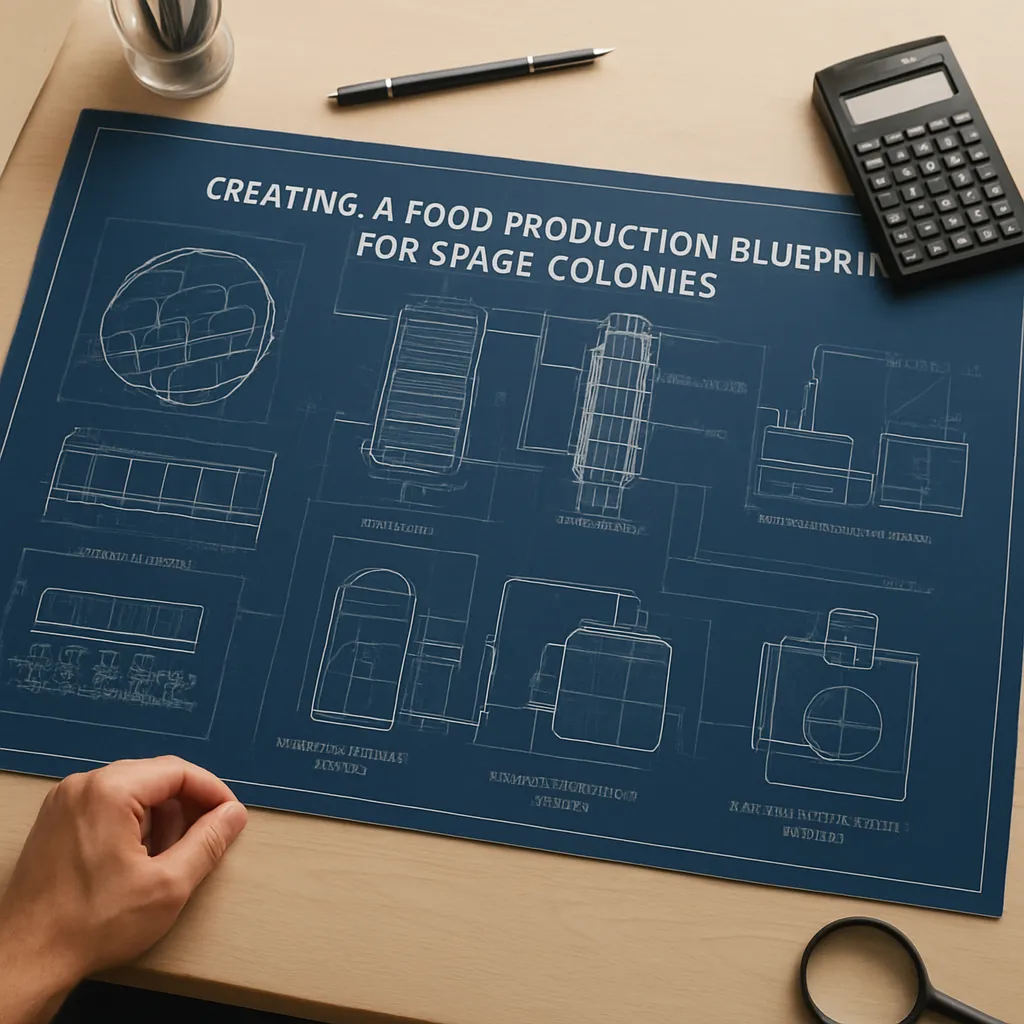
Establishing a thriving agricultural system away from Earth requires a comprehensive approach that blends technology, biology, and engineering into a unified framework. As humanity ventures into remote outposts on the Moon, Mars, and beyond, creating a reliable source of fresh produce will be critical for crew health, mission success, and long-term sustainability. This article explores key strategies for developing a robust food production blueprint for space colonies, covering innovative growth methods, resource management, life support integration, and future directions driving off-world agriculture forward.
Designing Sustainable Growth Systems
Traditional soil-based farming is impractical in extraterrestrial environments due to weight constraints, unknown regolith composition, and closed enclosed habitats. Instead, advanced soilless methods offer high yields in compact volumes. Hydroponics systems circulate nutrient-rich water directly to plant roots, enabling precise control over mineral delivery and eliminating dependence on native soil. Variations include nutrient film technique (NFT) channels and deep flow systems in which plants float on rafts. These approaches minimize water use by up to 90% compared to Earth farming and reduce the risk of pathogen spread.
Another promising technique is aeroponics, wherein plant roots are suspended in air and misted with a fine droplet spray of nutrient solution. This maximizes oxygen access, accelerates photosynthesis rates, and can produce harvests 20–30% faster than conventional hydroponics. Aeroponic towers can be arranged vertically, further optimizing habitable volume. To mitigate pump failures, redundant misting nozzles and buffer reservoirs must be incorporated, ensuring uninterrupted operation during power fluctuations.
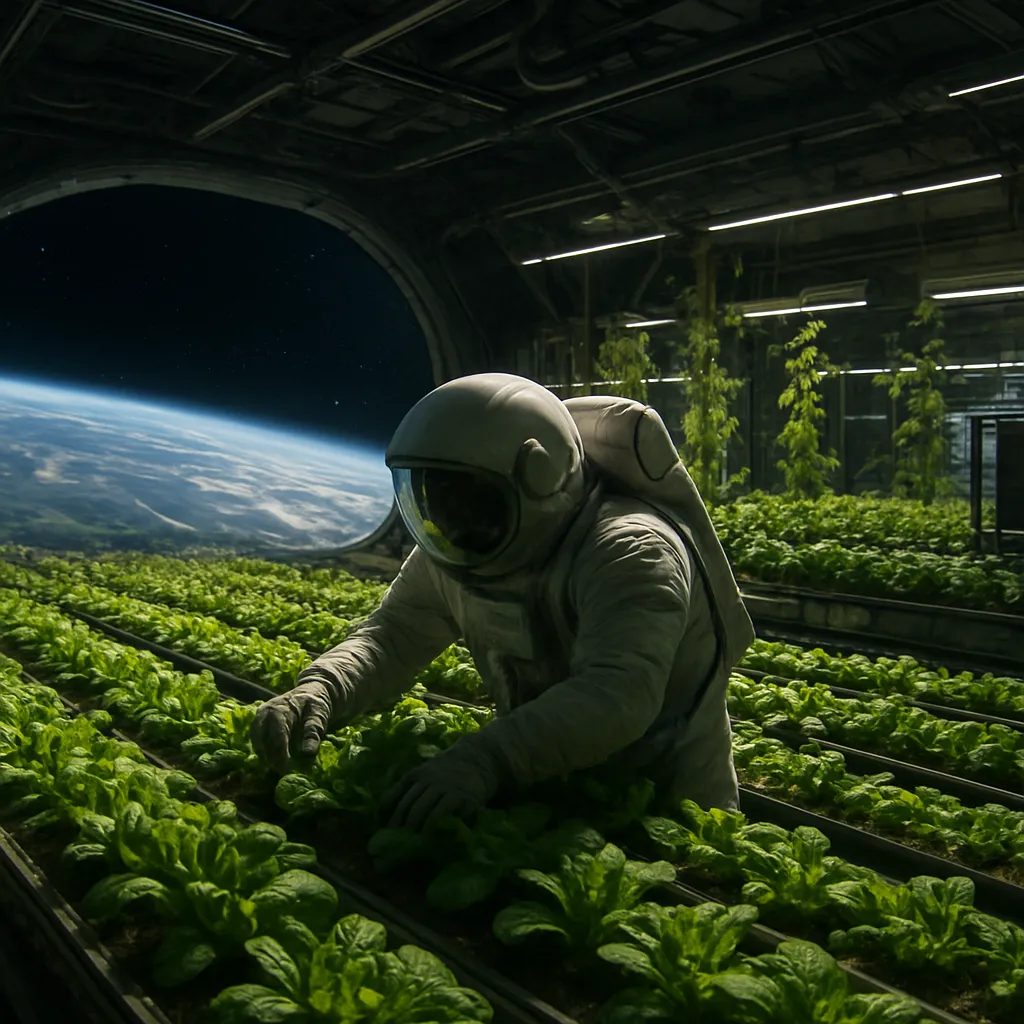
Vertical farming modules can be integrated into habitat walls or ceilings, layering crops to maximize yield per square meter. LEDs tuned to specific wavelengths enhance leaf and fruit growth while minimizing energy waste. Combined with advanced climate controls that adjust temperature, humidity, and CO2 levels, these systems create microenvironments tailored to each crop’s lifecycle.
To ensure long-term viability, all cultivation modules must prioritize resilience. Modular rack designs allow for rapid replacement or repair of individual units. Automated diagnostics embedded in sensors detect early signs of mold, nutrient imbalance, or mechanical wear, triggering maintenance alerts. By layering redundancy into every component, from grow lights to water pumps, space farmers will maintain uninterrupted food production throughout extended missions.
Optimizing Resources and Environmental Controls
Space missions operate under strict mass and volume constraints, making efficient resource allocation paramount. Water recycling systems reclaim moisture from transpiration, waste processing, and even astronaut exhalation, feeding it back into growth modules. Multi-stage filtration and UV treatment ensure potability and eliminate microbial contaminants. Reclaimed water then enters recirculating loops for both plant cultures and life support, forming a closed-loop architecture that minimizes resupply needs.
Light is the primary energy input for plant growth in habitats shielded from solar radiation. High-efficiency LEDs emitting in the blue and red spectra target chlorophyll absorption peaks, optimizing energy usage. Adaptive lighting schedules mimic diurnal cycles or accelerate growth by extending “daylight” periods. Photoperiod manipulation can also trigger flowering or dormancy phases, granting cultivators control over harvest timing and crop cycles.
Regulating ambient CO2 enhances biomass productivity by up to 30%. Carbon dioxide scrubbed from crew respiration is partially diverted to grow chambers, while excess is sequestered or vented. Humidity control balances transpiration with system integrity; overly humid conditions promote fungal growth, whereas arid atmospheres stress plants. Precision environmental monitoring—tracking temperature, pH, oxygen levels, and volatile organic compounds—feeds AI-driven control loops that maintain optimal conditions without constant human intervention.
Outside the habitat, space radiation poses a threat to plant DNA and yields. Shielding grow rooms with regolith blocks or magnetic fields reduces exposure to cosmic rays. Certain crops demonstrate innate radioresistance, and selective breeding or genetic engineering can introduce protective genes. By combining physical shielding with biological countermeasures, cultivators safeguard both seeds and mature plants from mutation or stunted growth.
Harnessing Bioregenerative Life Support
Going beyond plant cultivation, a truly bioregenerative life support system integrates microorganisms, algae, and waste processing organisms to recycle air, water, and nutrients. Photobioreactors cultivate microalgae that fix CO2 and produce oxygen while generating biomass rich in proteins and omega-3 fatty acids. Species such as Spirulina and Chlorella can be processed into nutrient-dense supplements, diversifying the crew diet and reducing reliance on stored rations.
Composting chambers decompose organic waste—crop residues, inedible plant parts, and human refuse—into nutrient-rich compost and microbial inoculum. Vermiculture units introduce earthworms or worm analogs adapted to microgravity, accelerating the breakdown of cellulose and lignin. Resulting humic substances improve substrate structure in hybrid soil analogs, enabling occasional direct planting of root vegetables or legumes that benefit from structured media.
Integrating aquaponics combines plant growth with fish farming in shared water loops. Waste produced by fish supplies ammonia, which nitrifying bacteria convert into nitrates consumed by plants. This synergy reduces synthetic fertilizer requirements and diversifies protein sources through edible fish species. Closed fish tanks must include oxygenators and waste separators to maintain water quality for both animals and plants.
By linking microbial reactors, hydroponic arrays, and aquaculture systems, space colonies can approach near-100% recycling of key resources. Each subsystem complements the others, forming an ecological network that mimics Earth’s biosphere on a miniature scale. Ongoing research into extremophiles—organisms that thrive in harsh environments—promises to introduce novel players capable of withstanding microgravity stressors and high-radiation locales.
Innovations and Future Directions
Advancements in automation and robotics are streamlining cultivation tasks, reducing crew workload and minimizing contamination risks. Mobile robotic platforms equipped with vision systems inspect plants, detect disease, and perform targeted pruning or harvesting. Automated nutrient dosing robots navigate rack structures, calibrating delivery to each plant’s growth stage. Machine learning algorithms optimize system parameters over successive crop cycles, continuously improving yield and resource efficiency.
Genetic engineering offers pathways to develop crops tailored for space environments. By editing genes responsible for water use efficiency, radiation tolerance, or nutrient content, scientists can create superlative varieties. Researchers are exploring plants that package themselves in edible casings, slowing spoilage and simplifying processing. Synthetic biology could enable de novo synthesis of key vitamins or pharmaceuticals on demand.
3D printing technology will extend to living tissues, depositing cell-laden bioinks to create custom plant structures or fungal mycelium scaffolds. These printed constructs could serve as living walls, providing both food and radiation shielding. On-demand printing of modular cultivation units allows rapid habitat reconfiguration as mission needs evolve.
As humanity pushes toward permanent bases on the Moon and crewed missions to Mars, the integration of these technologies will be essential. Developing a scalable, resilient blueprint for off-world agriculture not only ensures food security but also fosters psychological well-being through contact with living green spaces. By converging hydroponics, aeroponics, bioregenerative life support, and cutting-edge automation, we lay the foundation for self-sufficient resilience in the most challenging frontiers of exploration.