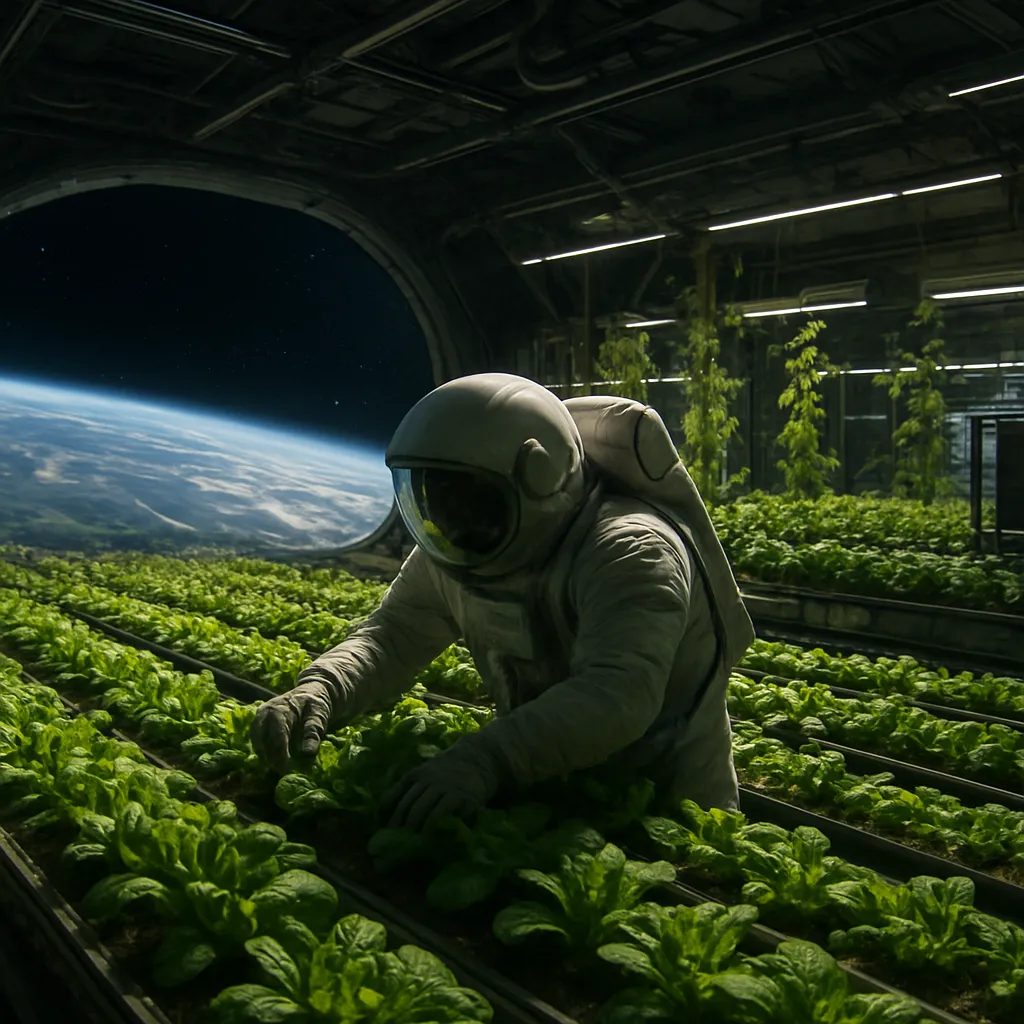
The convergence of agriculture and space exploration opens the door to revolutionary advances in how we grow and utilize biological resources beyond Earth. Among the most promising frontiers is molecular farming, a method that leverages genetically engineered organisms to produce high-value compounds under controlled conditions. This approach promises not only to support long-duration missions but also to transform terrestrial industries by enabling the production of biopharmaceuticals, recombinant proteins, and other bioresource materials in the unique environment of space.
Molecular Farming: Opportunities in Microgravity
Harnessing Microgravity for Enhanced Yields
The microgravity environment onboard the International Space Station (ISS) and future orbital platforms offers a suite of advantages for molecular farming. In microgravity, fluid dynamics differ dramatically, allowing more uniform nutrient distribution around plant roots and microbial bioreactors. This phenomenon can lead to:
- Increased cell proliferation rates in suspension cultures
- Enhanced metabolite accumulation due to optimized mass transfer
- Reduction in shear stress, protecting delicate cells and proteins
Production of High-Value Compounds
By integrating synthetic biology circuits into microbial or plant chassis, astronauts can produce:
- Pharmaceutical intermediates, including antibody fragments and vaccines
- Specialty enzymes for on-demand food processing or waste recycling
- Polymer precursors for in-situ resource utilization (ISRU) and repair materials
Such in-space production reduces dependency on Earth-supplied goods and opens up pathways for decentralized manufacturing in lunar or Martian habitats.
Technological Platforms and Systems
Advanced Bioreactors and Cultivation Modules
Developing reliable bioreactors for space demands overcoming constraints of volume, power, and crew time. Key features include:
- Automated nutrient delivery systems to maintain optimal pH, oxygen, and temperature
- Compact designs integrating photobioreactor and gas exchange modules
- Remote monitoring via sensors and AI-driven control to minimize crew intervention
Integration with Regenerative Life Support
Molecular farming platforms complement bioregenerative life support systems by:
- Recycling carbon dioxide through plant photosynthesis
- Generating fresh oxygen and edible biomass
- Using microbial consortia for waste treatment and nutrient recovery
Coupling these systems creates a closed-loop habitat capable of supporting long-duration missions to Mars and beyond.
On-Ground Testbeds and Validation
Before deployment in orbit, comprehensive testing occurs in:
- Simulated reduced-gravity clinostats and random positioning machines
- Ground-based closed ecological life support system (CELSS) facilities
- High-fidelity analog habitats such as underwater analogs and desert research stations
These testbeds allow researchers to optimize genetic constructs, validate hardware, and refine operational protocols under Earth-bound constraints.
Challenges, Risk Mitigation, and Future Directions
Addressing Genetic Stability and Containment
Maintaining the integrity of engineered genetic circuits over extended mission durations is critical. Strategies include:
- Incorporating genetic safeguards such as kill-switches or auxotrophy dependencies
- Periodic sequencing and phenotypic assays to monitor mutation rates
- Physical containment measures within bioreactor modules to prevent cross-contamination
Ensuring Crew Safety and Sterility
Microbial systems and genetically modified plants introduce potential biohazards. Robust protocols must ensure:
- HEPA-grade air filtration around cultivation chambers
- Sterile sampling and waste inactivation procedures
- Real-time microbial load monitoring to detect inadvertent release
Scaling Up for Martian and Lunar Outposts
Translating small-scale demonstrations to full-scale production involves overcoming logistical and environmental hurdles:
- Designing modular, expandable bioproduction units tolerant to radiation and temperature fluctuations
- Utilizing in-situ resources, such as regolith-derived water and carbon dioxide, for nutrient synthesis
- Implementing AI-driven predictive maintenance to maximize uptime and minimize consumables
Prospects for Terrestrial Spin-Offs
Technologies developed for space-based molecular farming will have profound impacts on Earth:
- Decentralized biomanufacturing hubs in remote or resource-limited regions
- Precision agriculture integrations, merging hydroponic and vertical farming with real-time genetic engineering
- Accelerated drug discovery pipelines leveraging microgravity-induced expression profiles
These spin-offs position molecular farming as a dual-use technology, addressing both extraterrestrial exploration and global sustainability challenges.